Madeira: The Garden Island of the Atlantic

photo by andreia lopo

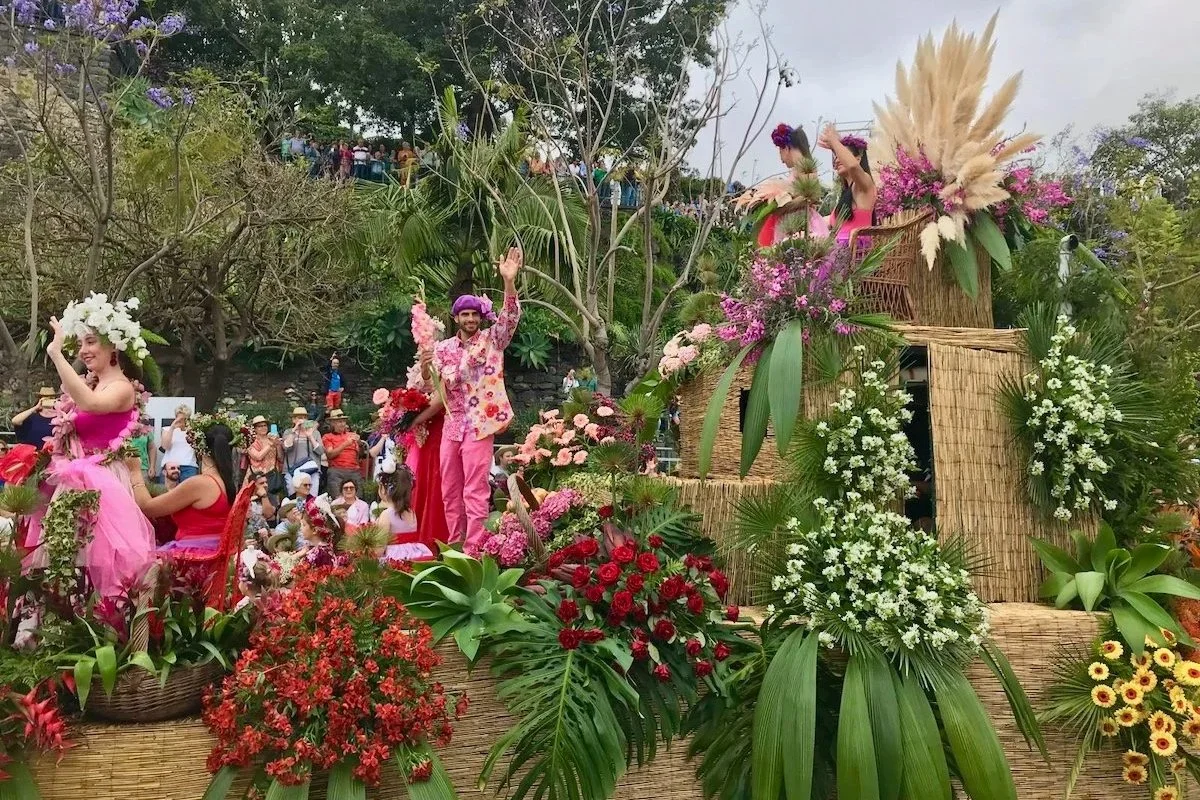
I will soon announce a brand new garden tour of beautiful the Portuguese island of Madeira, with a couple of days in Lisbon. The tour will be organized by Lois Moss of Visit Gardens and Portugese tour guide Andreia Lopo, who will accompany us on the trip, which is scheduled for late September 2027.
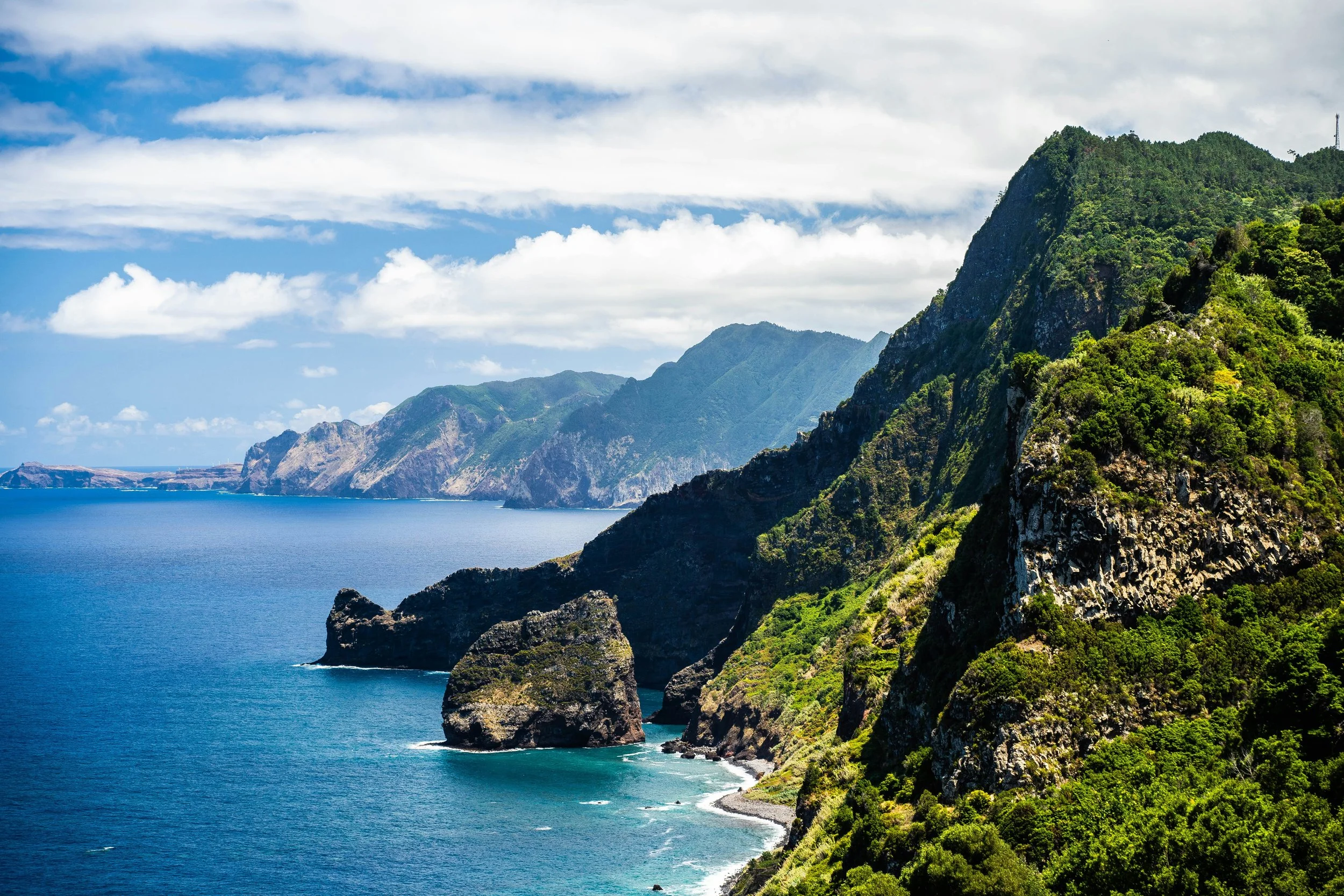
photo by Jan Tokarczyk, unsplash

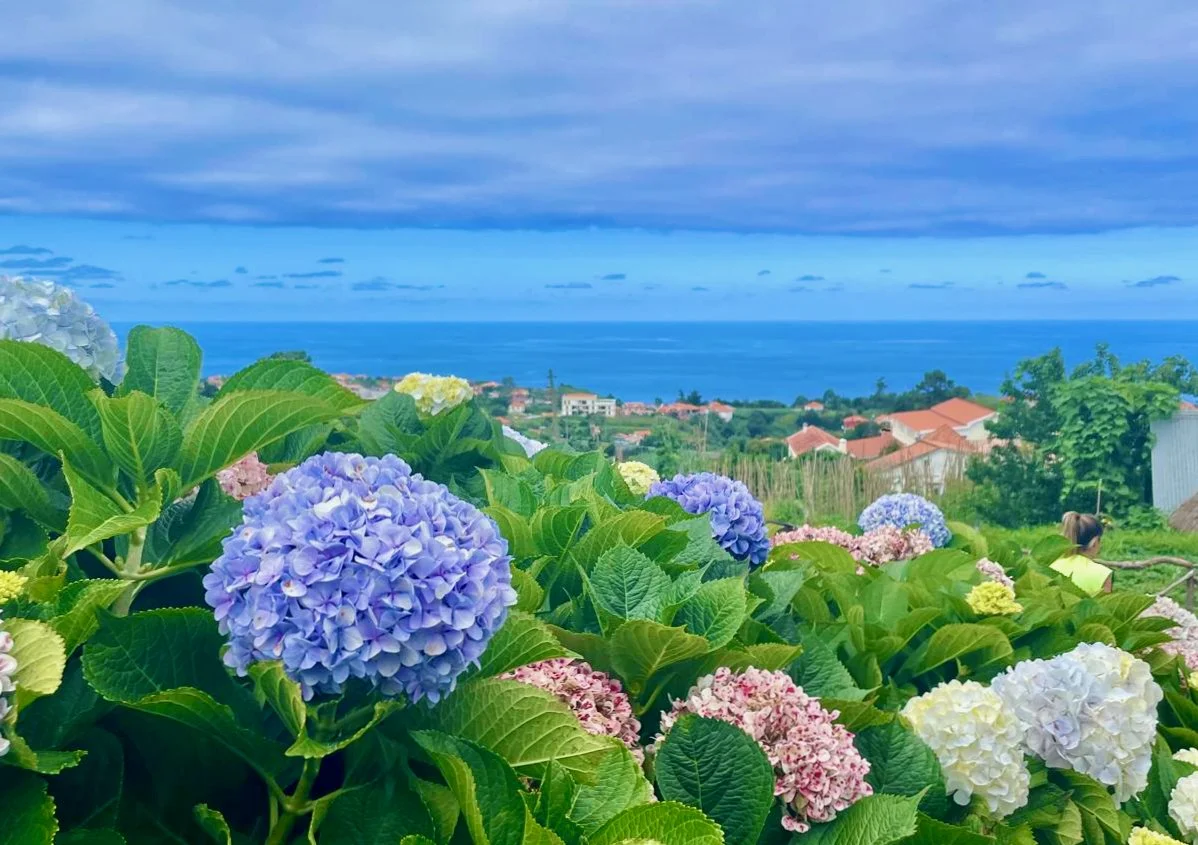
Rising dramatically from the Atlantic Ocean, Madeira is an island where mountains, forests, gardens, and the sea come together in an extraordinary botanical landscape. Often called the “floating garden of the Atlantic,” Madeira enjoys a mild subtropical climate that allows an astonishing range of plants to flourish. For gardeners, the island is both a horticultural destination and a living lesson in how climate, topography, and plant collecting can shape a garden tradition.

Madeira was reached by Portuguese navigators in 1419, when João Gonçalves Zarco and Tristão Vaz Teixeira landed at Machico. The island’s name, meaning “wood” in Portuguese, reflected its abundant forests. Colonization began in 1425, and Madeira soon developed an economy based on sugar, followed later by its celebrated wine trade.

The island’s rugged topography is central to its horticultural character. Volcanic mountains rise steeply from the coast, creating deep valleys, dramatic cliffs, and a series of distinct microclimates. Funchal, on the sheltered south coast, benefits from a particularly favorable climate, with average temperatures around 18°C in winter and 25°C in summer. Higher elevations are cooler and wetter, while the north coast receives more rainfall. This remarkable variation enables plants from tropical, subtropical, Mediterranean, and temperate regions to grow within a relatively small area.
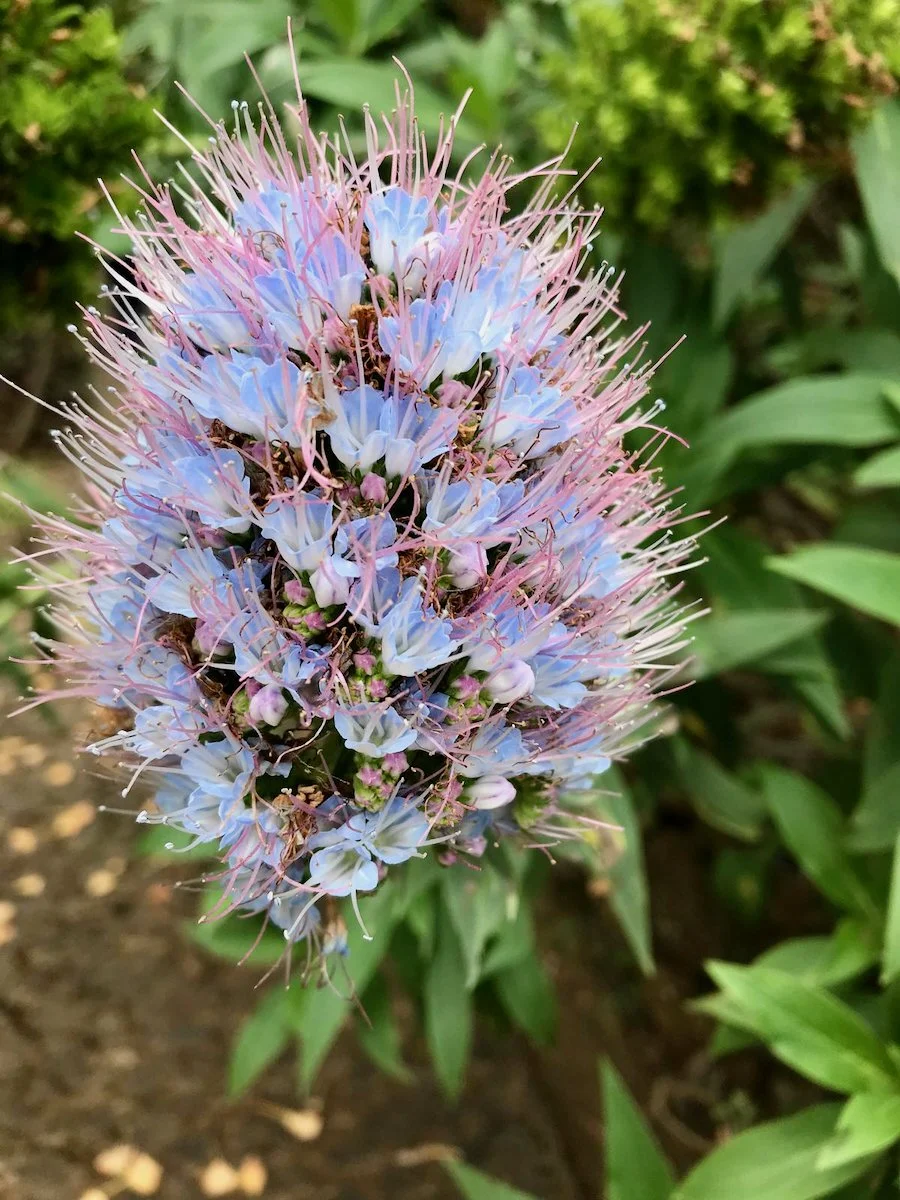
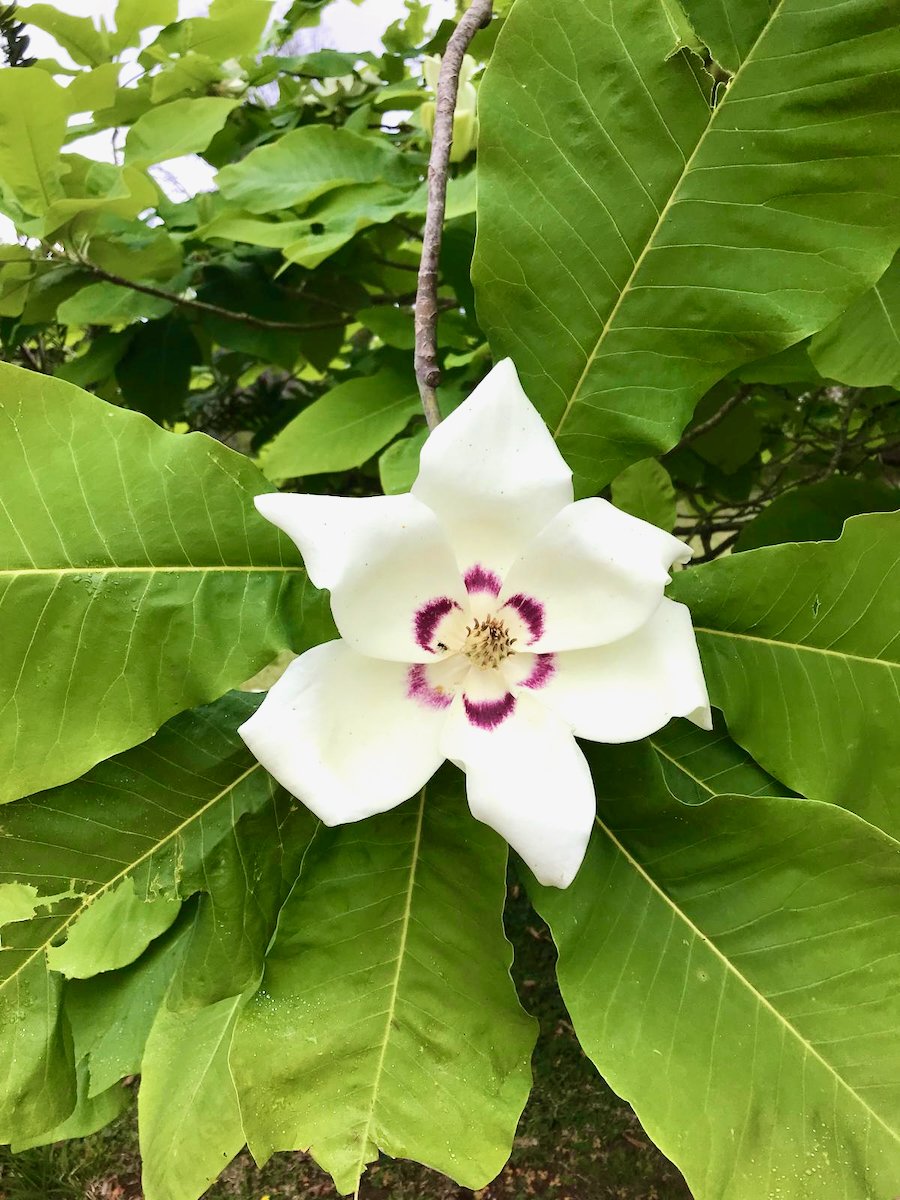
photos by ANdreia lopo

“Madeira is a wonderful destination because it offers such an incredible variety on a relatively small island — dramatic landscapes, lush nature, charming villages, beautiful gardens, excellent food and a rich cultural heritage. Even when I am there working, I always get that feeling of being on holiday: the pleasant climate throughout the year, the relaxed atmosphere and, of course, a good Poncha (a traditional sugarcane rum cocktail) at the end of the day make it very easy to slow down and enjoy the island,” says Andreia who also vacations frequently on the island.


photos by ANdreia lopo

“For gardeners, Madeira is fascinating because its mild subtropical climate allows an incredible range of plants from around the world to flourish. What I find particularly interesting is the balance between its cultivated landscapes and its extraordinary natural heritage — from the ancient Laurisilva laurel forest, a UNESCO World Heritage Site, to the terraced banana plantations and the island’s remarkable gardens. It is almost like seeing nature and cultivation coexist in layers, creating an extraordinary botanical landscape where native vegetation, agriculture and exotic plants all have their place,” notes Andreia, who is a gardener herself, and can appreciate the special beauty of the island.

The island’s famous gardens reflect centuries of plant collecting and international exchange. British merchants involved in the Madeira wine trade established elegant quintas, or country estates, during the eighteenth and nineteenth centuries, introducing exotic plants from around the world.
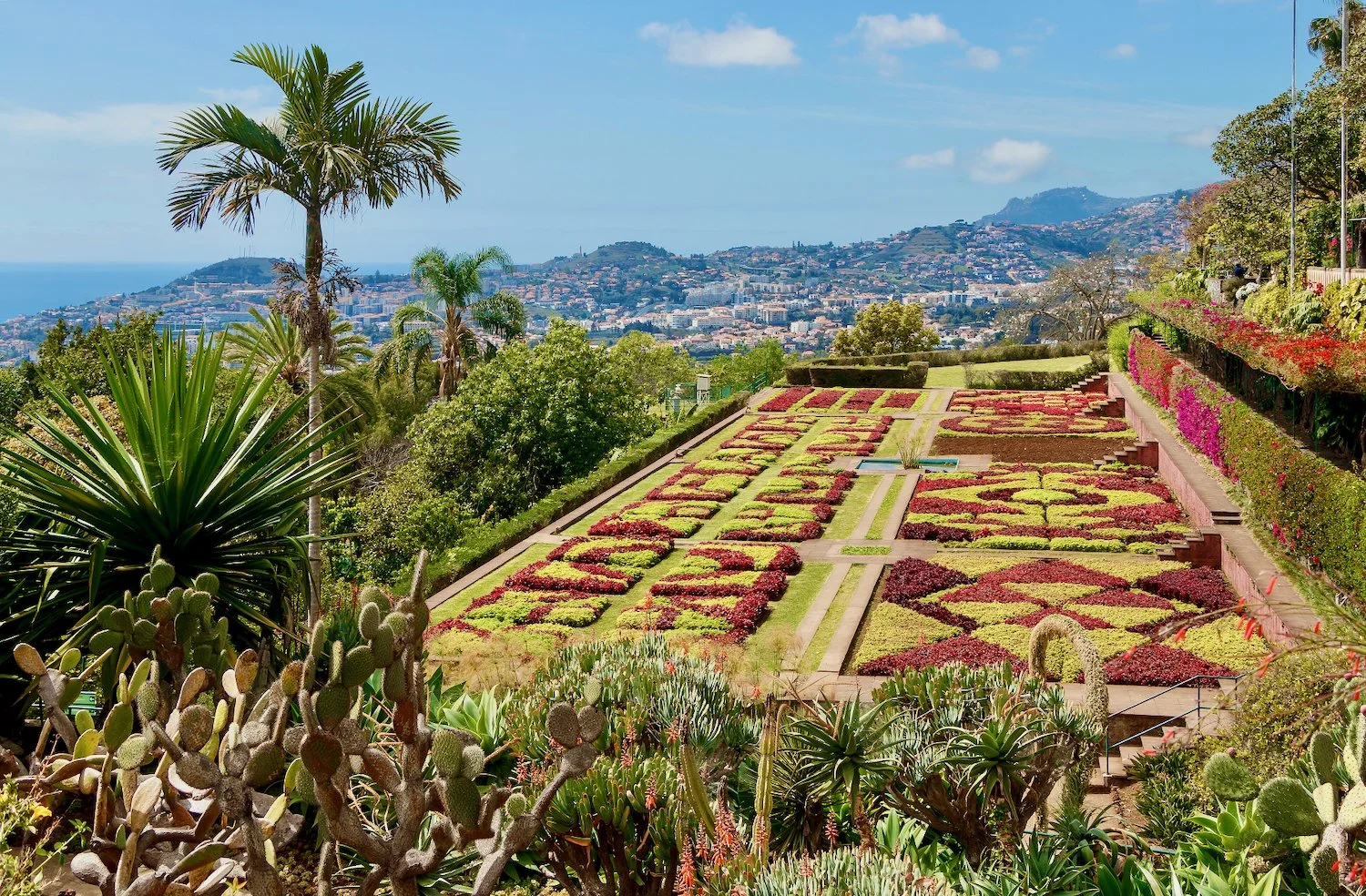
photo by Dr. Thomas Liptak, Wikimedia

The Madeira Botanical Garden, established in Funchal in 1960 on the former Quinta do Bom Sucesso, contains more than 2,000 exotic plants, along with orchids, ornamental shrubs, endemic species, and conservation collections. Its hillside setting provides spectacular views across Funchal and the Atlantic.

Above Funchal, Monte Palace Madeira is one of the island’s most spectacular garden experiences. Its 70,000-square-meter grounds combine tropical planting with koi ponds, sculpture, historic tiles, and Oriental-inspired garden features. The estate originated as an eighteenth-century leisure property and was transformed into the garden seen today beginning in the 1980s.
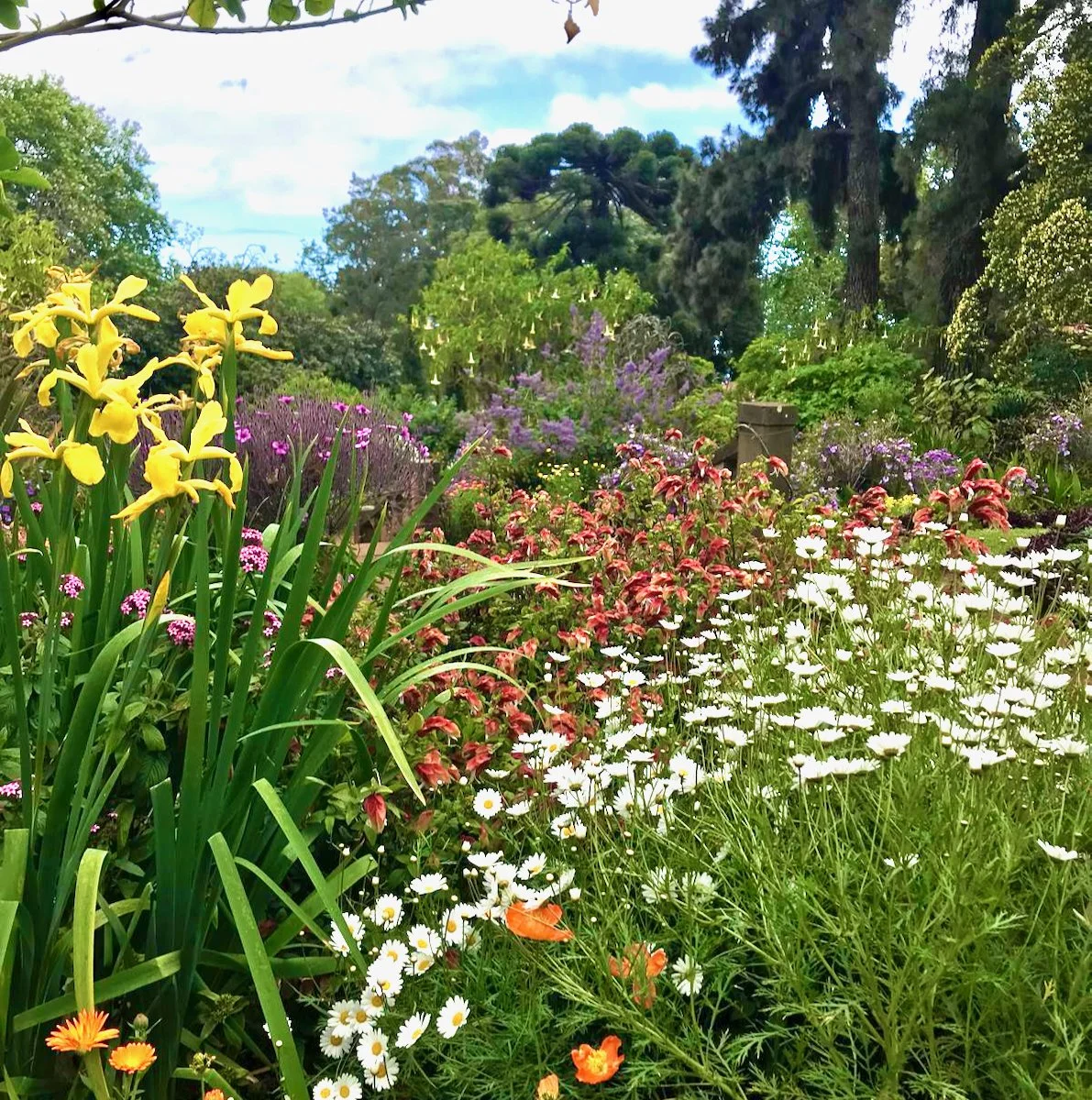
photo by ANdreia lopo

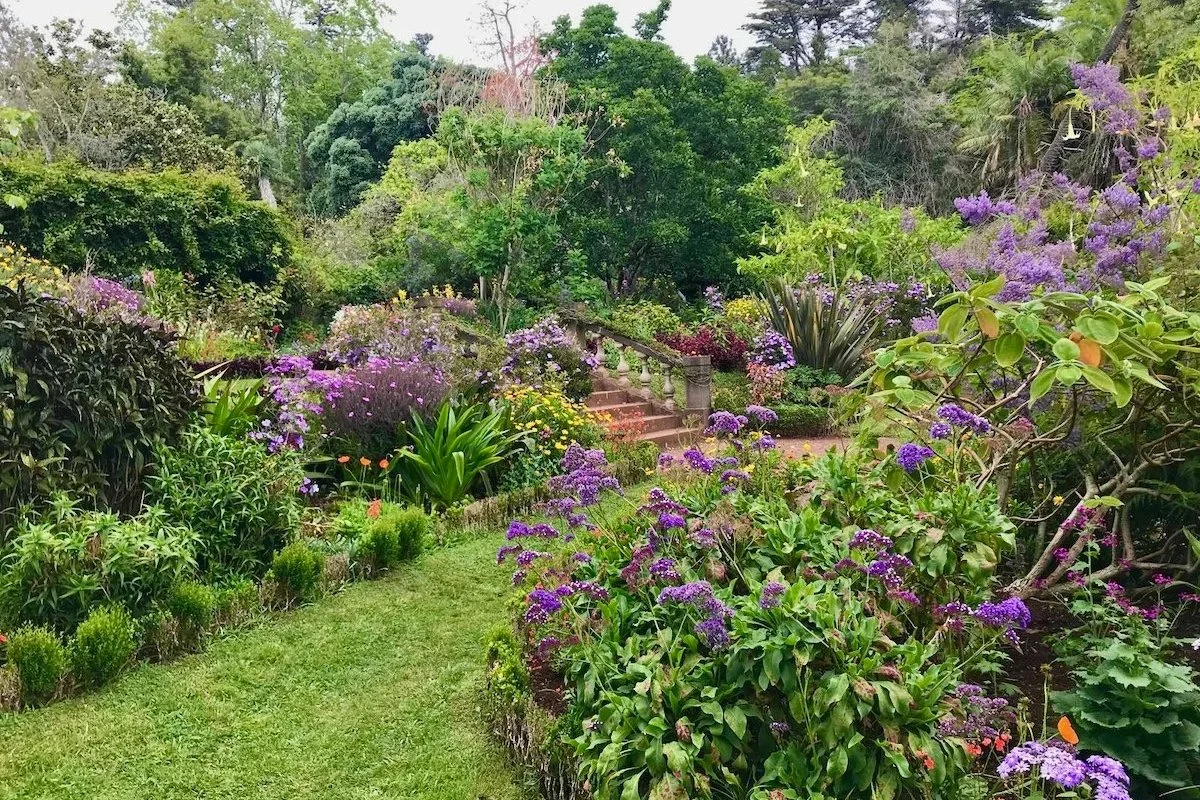
Another essential destination is Palheiro Gardens, a nineteenth-century estate renowned for its mature trees, lawns, lakes, and remarkable collection of camellias. Acquired by the Blandy family in 1885, the gardens occupy a hillside about 500 meters above Funchal and demonstrate beautifully how Madeira’s elevation can create ideal conditions for a wide range of ornamental plants. “Palheiro Gardens is my favorite garden,” says Andreia,  “because of the extraordinary care and delicacy with which it is tended. I particularly love the way the gardeners thoughtfully combine flowers, colors and textures throughout the garden; you can feel that they care for it as something truly precious and take great pride in keeping it beautiful.”
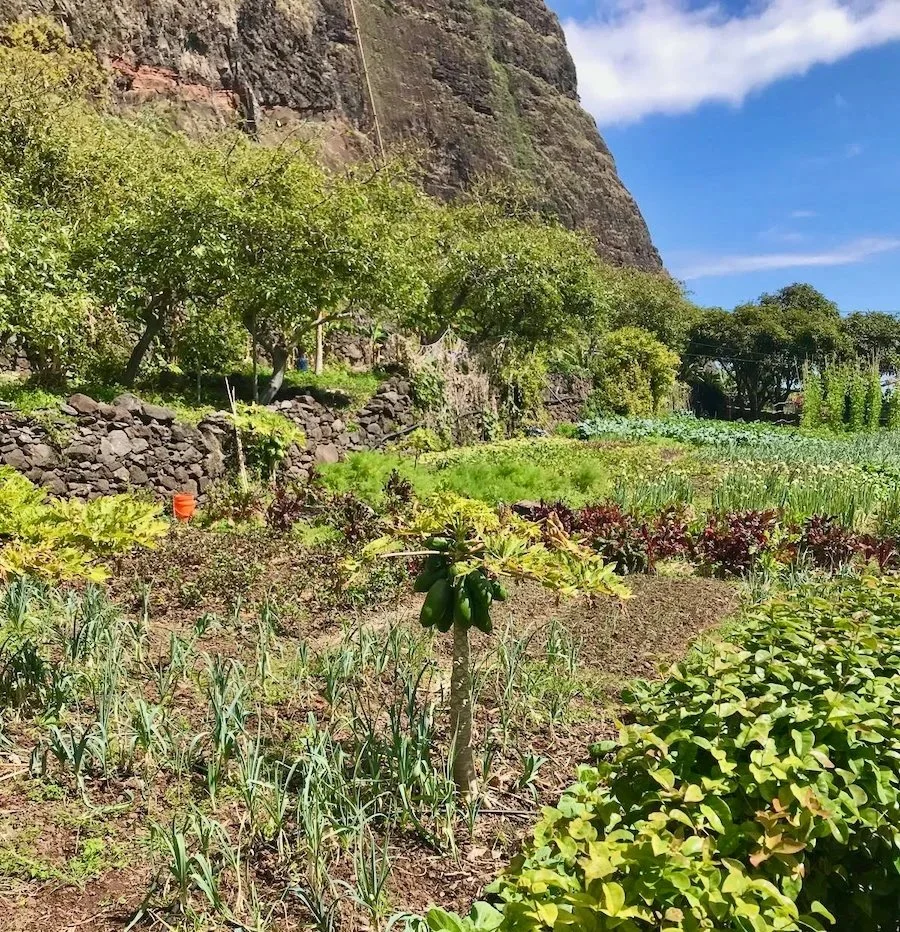
photo by andreia lopo

Andreia also brings her groups to Fajã dos Padres, a secluded area on the south side of Madeira separated from the rest of the island by a steep cliff. It can only be reached by boat or cable car. It is the site of an organic farm planted with tropical fruit trees, such as mango trees, banana trees and avocado trees, a vineyard and a restaurant set right by the sea. “What makes the experience so special is that many of the ingredients grown there are served at lunch, allowing you to literally taste the garden while enjoying this extraordinary landscape,” says Andreia. “Fajã dos Padres also has a remarkable history of wine production, particularly its famous Malvasia, connecting this beautiful little agricultural oasis with Madeira’s long and fascinating wine tradition—the same Madeira wine that was famously used to toast American independence.”
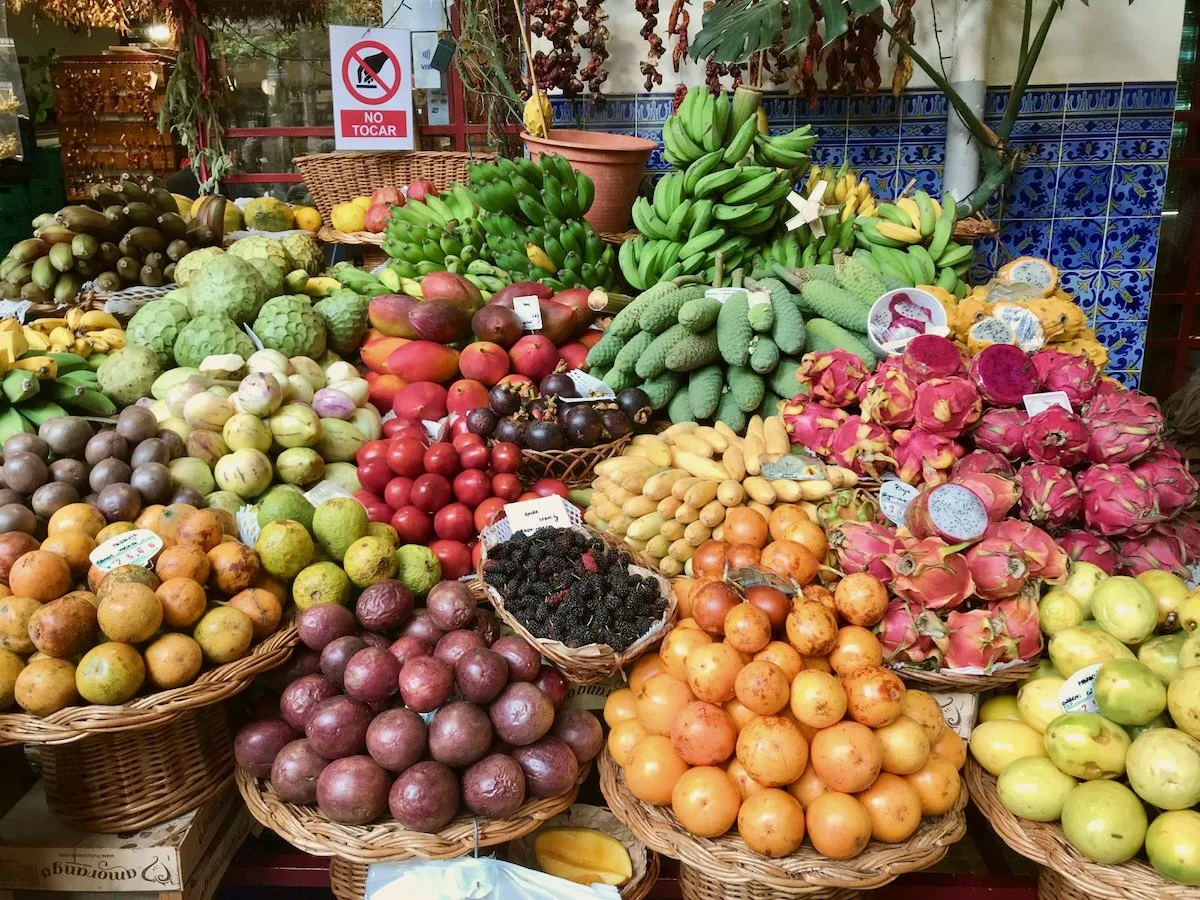
photo by andreia lopo

For gardeners, Madeira is ultimately more than a collection of beautiful estates. It is an island-sized botanical experiment where ancient forests, imported plants, historic estates, and dramatic volcanic terrain have combined to create one of the world’s most distinctive garden landscapes.

photos by andreia lopo

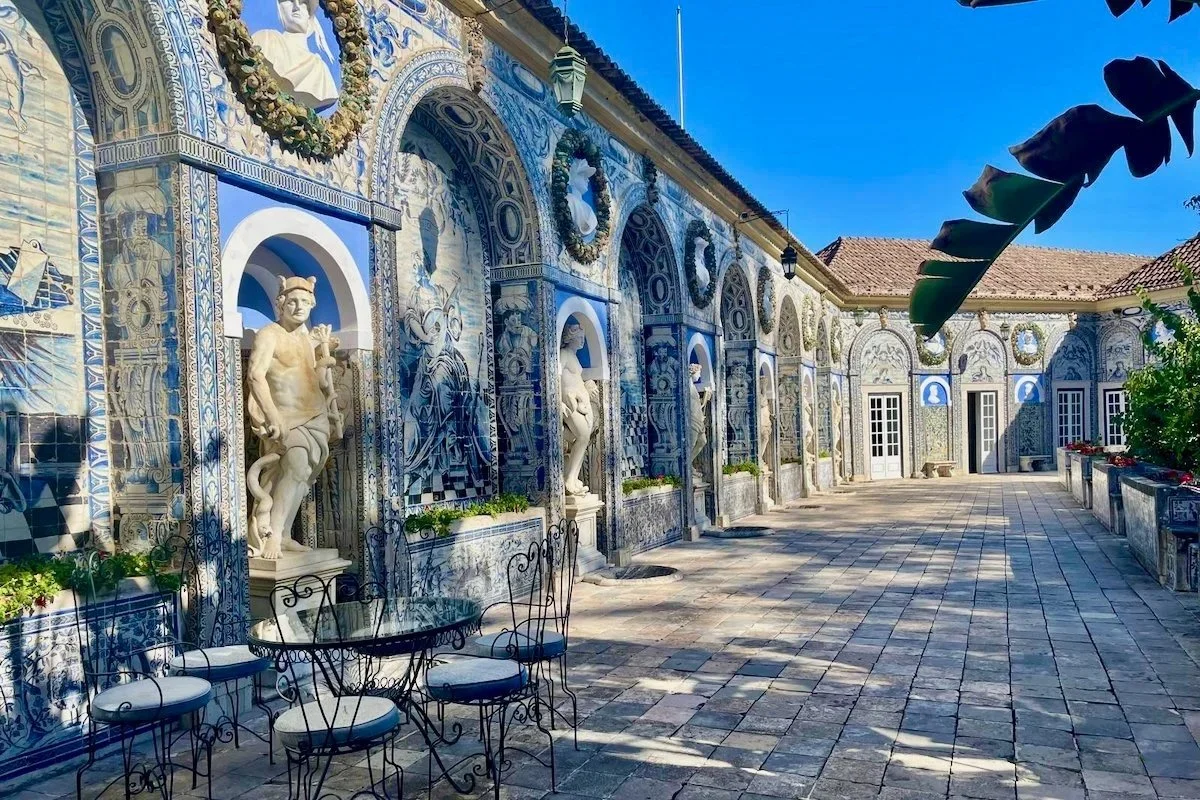
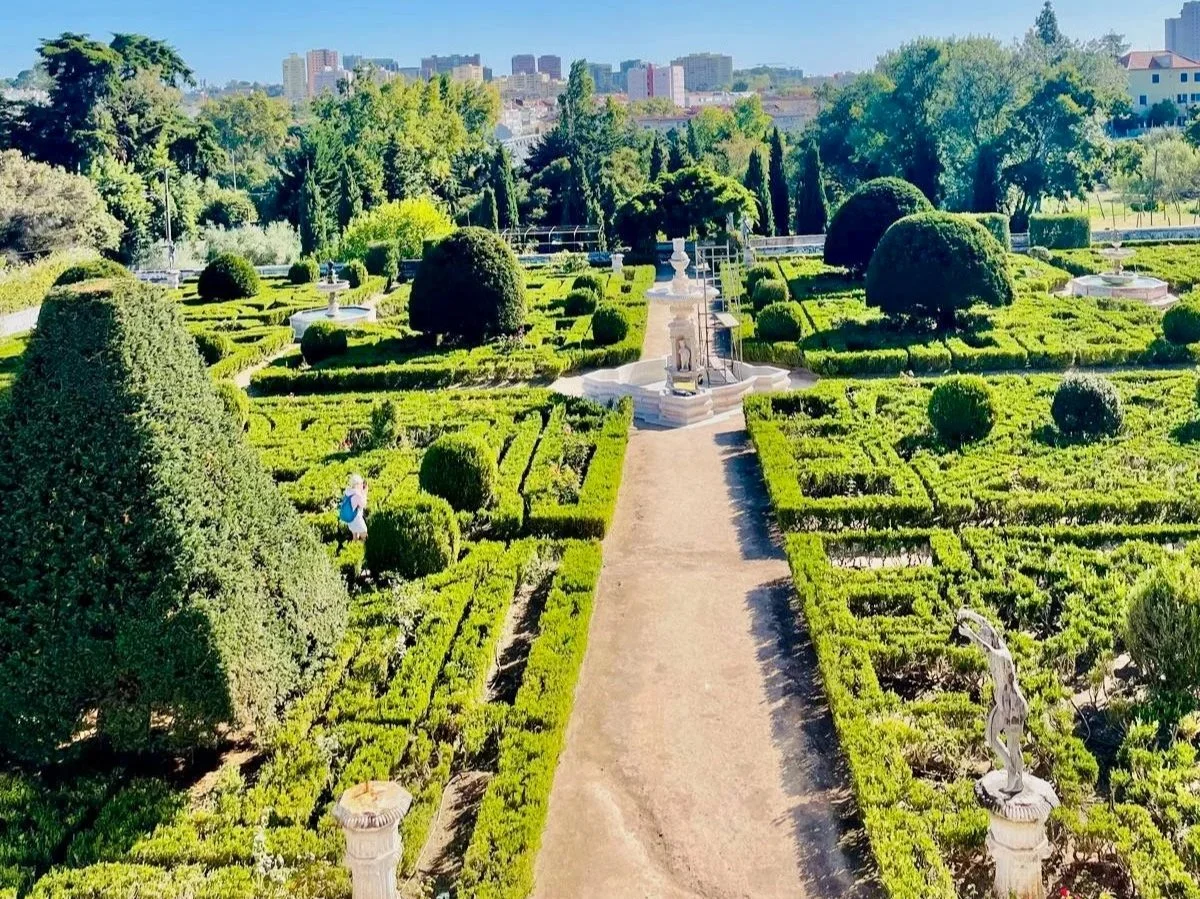
In addition to Madeira, we will visit several gardens in Lisbon, including the Fronteira Palace. We hope that you will join us on this special adventure! Please see the Garden Travel page for all my garden tours.

Lois Moss, Jana Milbocker, and Andreia Lopo at Keukenhof Gardens

The Lost Gardens of Heligan
Tim Smit, a successful composer and musical entrepeneur, and two acquaintances were looking for a suitable piece of land in Cornwall to start a rare breeds farm when they stumbled upon this derelict garden in 1990. The ancient shelter belts had come crashing down in the storms of 1987 and 1990, crushing everything in their path. Overgrown with vines, bamboos, and self-sown trees, the property was basically inaccessible.

 As Smit wrote: “It was the silence, the unearthly silence, that struck you first…you could hear no birdsong, no rustlings, not even the far-off murmur of life elsewhere. This dank, dark place had its own strange beauty. We had cut our way through what had once been a formal laurel hedge, which had grown massive, and was now thirty yards wide. Having crawled on hands and knees, climbed, cut, pulled and pushed our way through the hedge, we found brambles snaking everywhere…”

Smit and his companions stumbled upon the decaying remains of walls, buildings and greenhouses, with their roofs caved in, glass smashed, and walls obscured by brambles and vines

thunderbox.jpg

On the wall of what was once the Thunderbox, or privy, they found the barely legible signatures of the men that had worked in this garden, and the date August 1914. This historic estate, belonging for hundreds of years to the Tremayne family, lost the great bulk of its staff to the First World War, and it never recovered.

the-lost-gardens-of-heligan-cornwall-gardeners-1900.jpg

As the gardens were excavated, it looked as though the gardeners had left in the midst of their work one day, and never returned. Those same names found on the Thunderbox wall were later discovered on World War I memorials in neighboring burial grounds.

IMG_1999.JPG

Smit and his partners, along with crews of volunteers, spent several years cutting, clearing, burning and replanting. Much of the property was steep valley, inaccessible to large machinery, so the work had to be done by hand. When you visit Heligan today, you find a stunning garden and an archealogical resurrection of an old way of life in an affluent country house.

IMG_1985.JPG

The core of the estate was this magnificent kitchen garden, which was painfully restored to its original design.

air_shot.jpg

Brick and stone walls were carefully rebuilt, wooden panes and frames were milled to the original profiles, and glass mullions were replaced. The gardeners replanted cold frames, mellon houses and the antique pineapple pit with heirloom plants. After many attempts, they successfully grew pineapples using the traditional method of heating the pit with freshly rotting horse manure. 

DSC_0251.JPG

Heligan’s gardeners employ the gardening methods that were used in the 1800s, when the garden was in its prime. Our tour guide even demonstrated the correct way to use a Cornish shovel.

IMG_2002.JPG

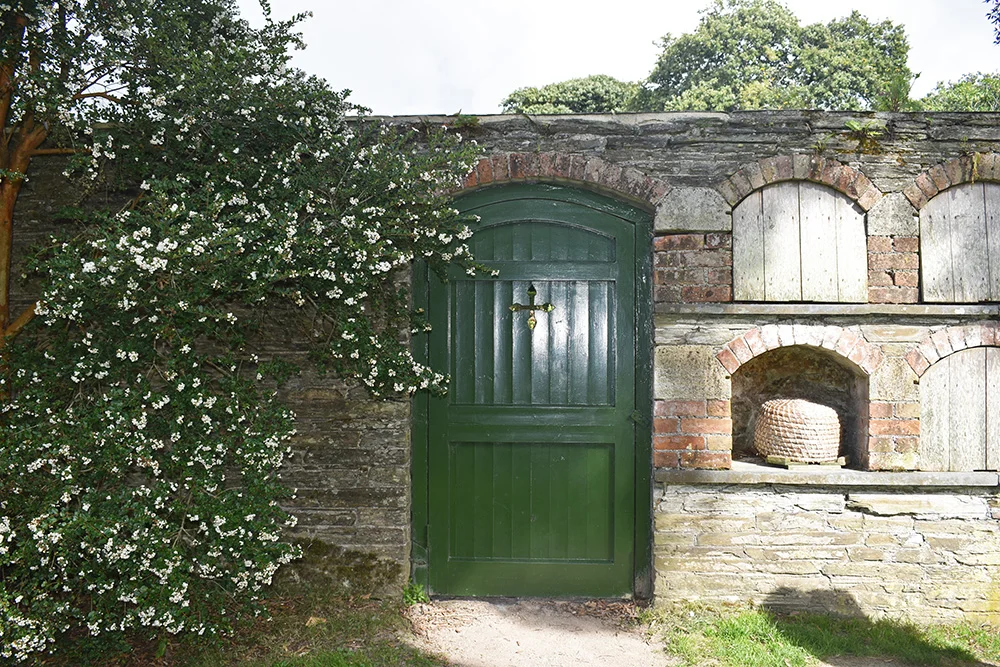
The southfacing walls of the kitchen garden were planted with espaliered stone fruit trees. The walls absorbed the warmth of the sun and created a mild microclimate for the delicate trees. One of the walls was filled with alcoves for bee skeps that ensured pollination of the gardens.

IMG_1996.JPG
DSC_0256.JPG

Heligan’s goal is to champion and conserve heritage varieties, so the vegetable gardens are planted with crops that would have been there in 1910. The vegetables are used for meal preparation in the café and sold to the public.

IMG_1986.JPG

Sumptuous flowers are grown in the kitchen garden as they would have been historically for decorating the manor.

DSC_0261.JPG

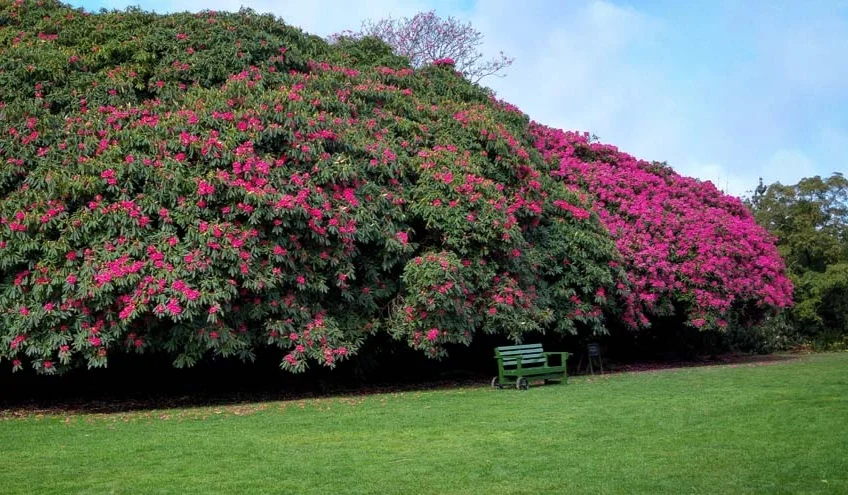
The Tremaynes were keen botanists and plant collectors. Many of the rhododendrons encircling Floras Green were grown from seed collected by plant explorer John Hooker in India and the Himalayas in the 1850s.

The Jungle garden was created in the late 1800s in a steep valley. Jack Tremayne wanted a wild place that contained as many exotic plants as he could find. He dug three ponds, and planted swaths of different bamboos, huge gunneras, exotic palms, and conifers from all over the world.

DSC_0264.JPG

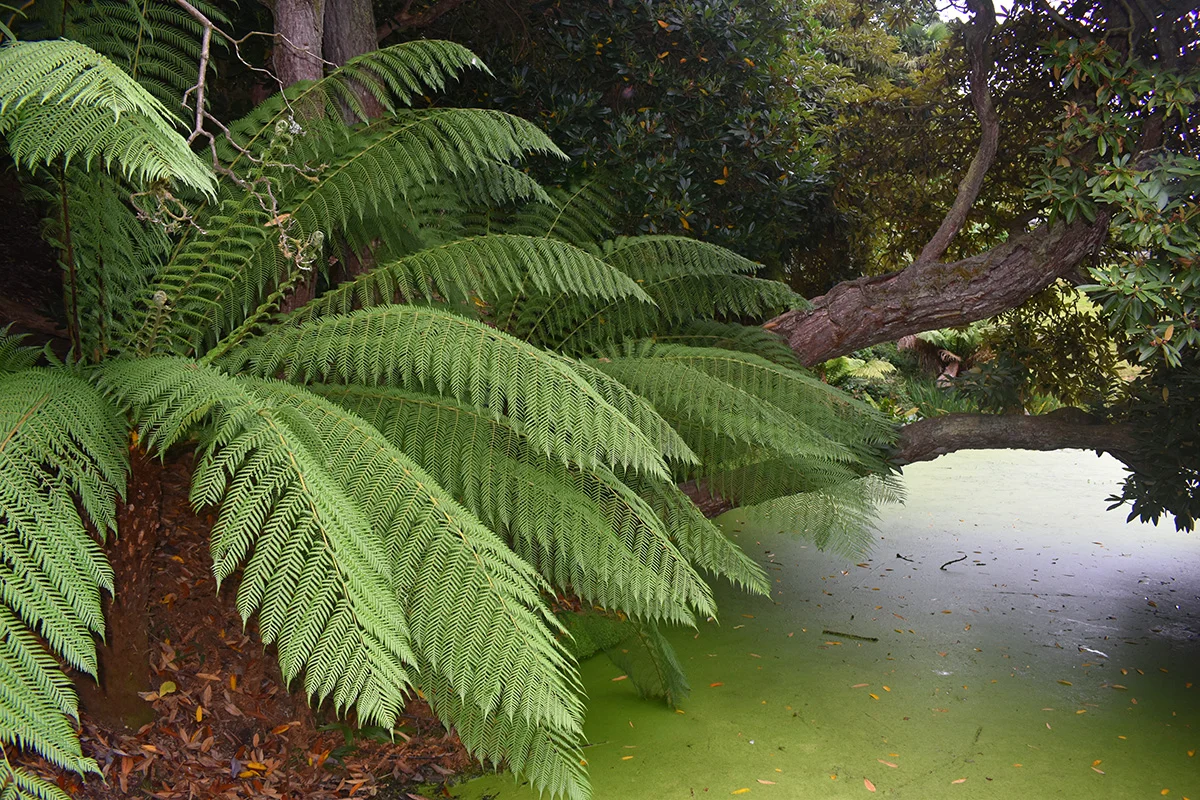
Heligan has the largest collection of tree ferns in Britain. These arrived stowed as ballast on boats from Australia. When they arrived in Cornwall, the large dry rooty stumps were thrown into the river to be rehydrated before distribution among the Cornish gardens.

DSC_0275.JPG

Smit wrote: “When we first entered the Jungle, we felt like explorers coming on a lost world. Hundreds of self-seeded sycamores and ash trees obscured the landscape. Ferns, mosses and lichens covered everything in this dank place. The trees were so dense, it was easy to get lost.”

IMG_2907.jpg

Some of us faced our fears and crossed the Jungle valley on this rope bridge.

DSC_0271.JPG

These are some of the beautiful gingers growing in the Jungle garden.

This is just a quick preview of The Lost Gardens of Heligan. The vast estate has other formal garden as well as pastures, woodlands, a farmyard of heritage livestock breeds, poultry, and horses, and a cafe. It takes a full day to tour the entire property. For more information, see heligan.com. Tim Smit’s book, The Lost Gardens of Heligan, provides a fascinating account of the resurrection of this garden.


You Might Also Like

English Exotica: Tresco Abbey Garden

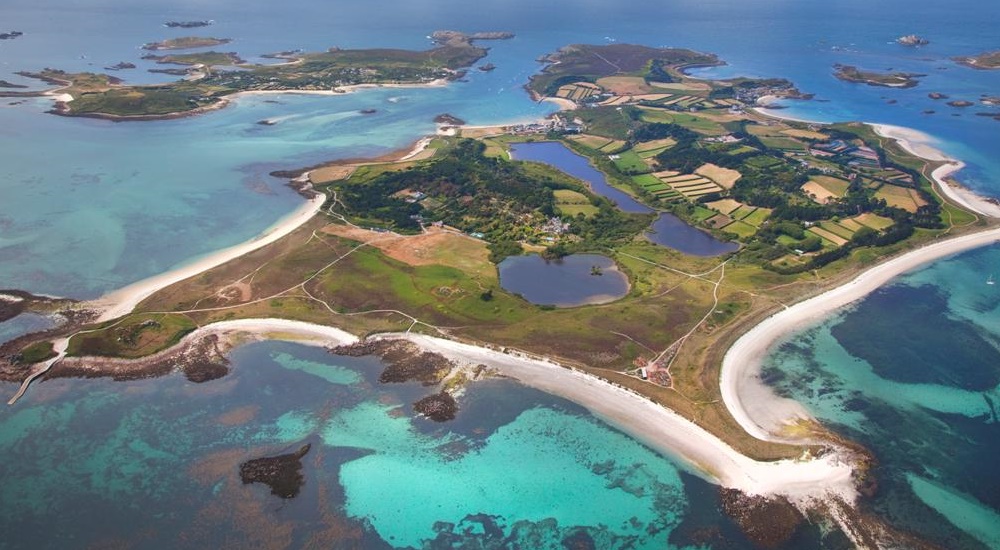
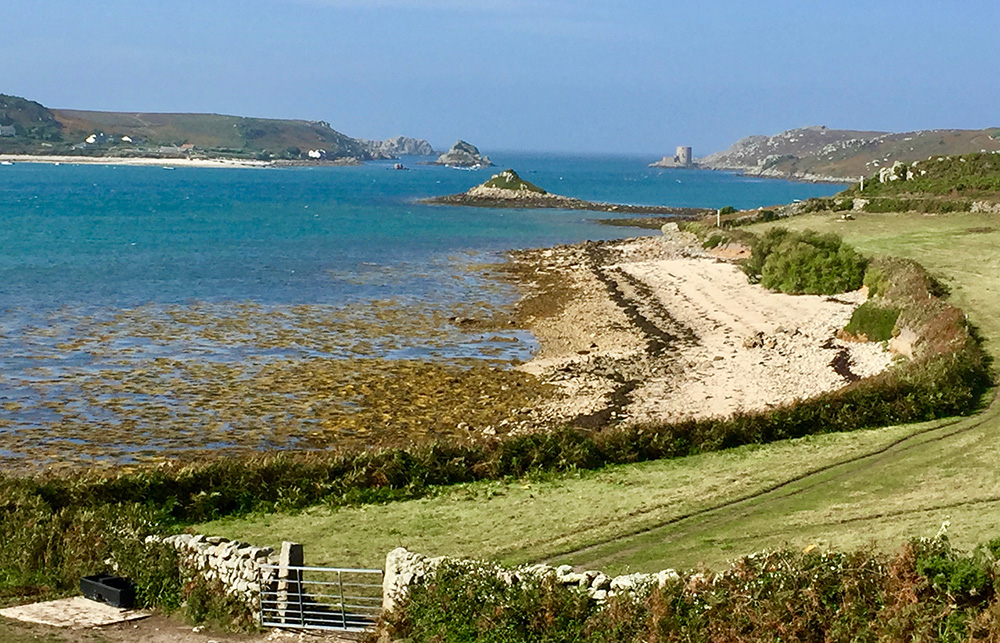
On a recent garden tour of Cornwall, England, I was delighted to visit the glorious Tresco Abbey Garden on Tresco Island, one of the Isles of Scilly. The Isles of Scilly are an archipelago of five inhabited islands and many rock outcroppings located off the southwestern tip of Cornwall. Reaching Abbey Garden was no small task—a meticulously orchestrated journey by rented van, small airplane, airport transport bus, ferry boat and tractor-pulled trolley. The journey was well worth the visit to this amazing tropical garden filled with exotic horticulture.

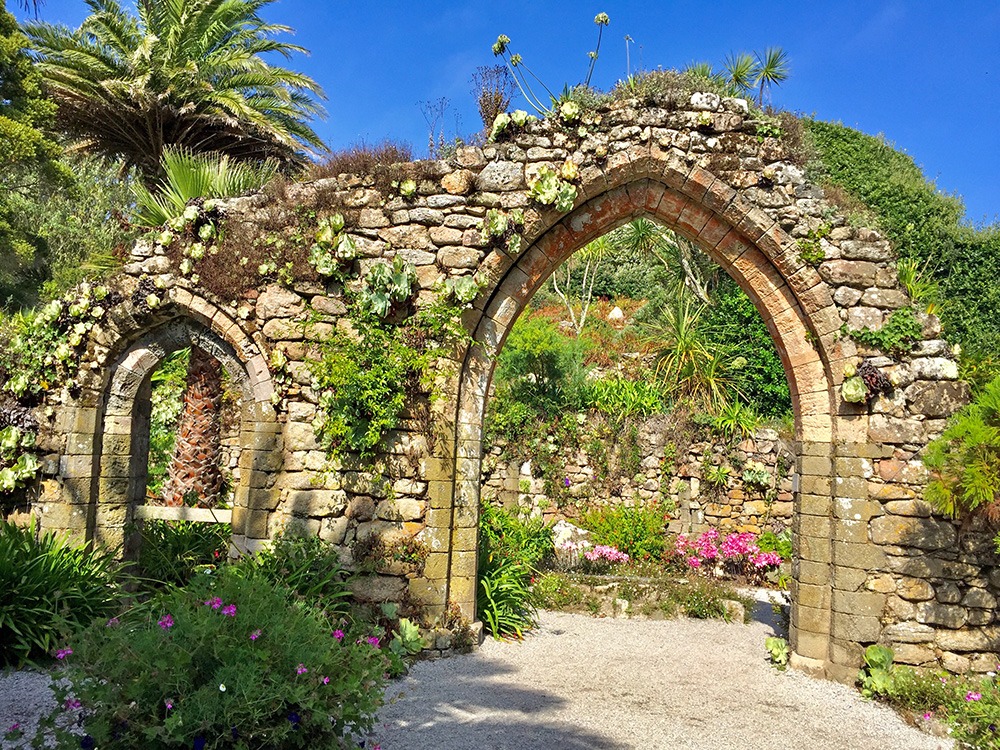
The gardens at Tresco were founded by Augustus Smith, who built a house on a rocky outcrop overlooking the Abbey ruins in 1838. He was a man of independent means and spirit, and the isolation of the island suited his temperment. The remains of the Benedictine priory, built a thousand years earlier, captured his imagination, and he became determined to create a magnificent garden.

photo courtesy of cornwalls.co.uk

photo courtesy of cornwalls.co.uk

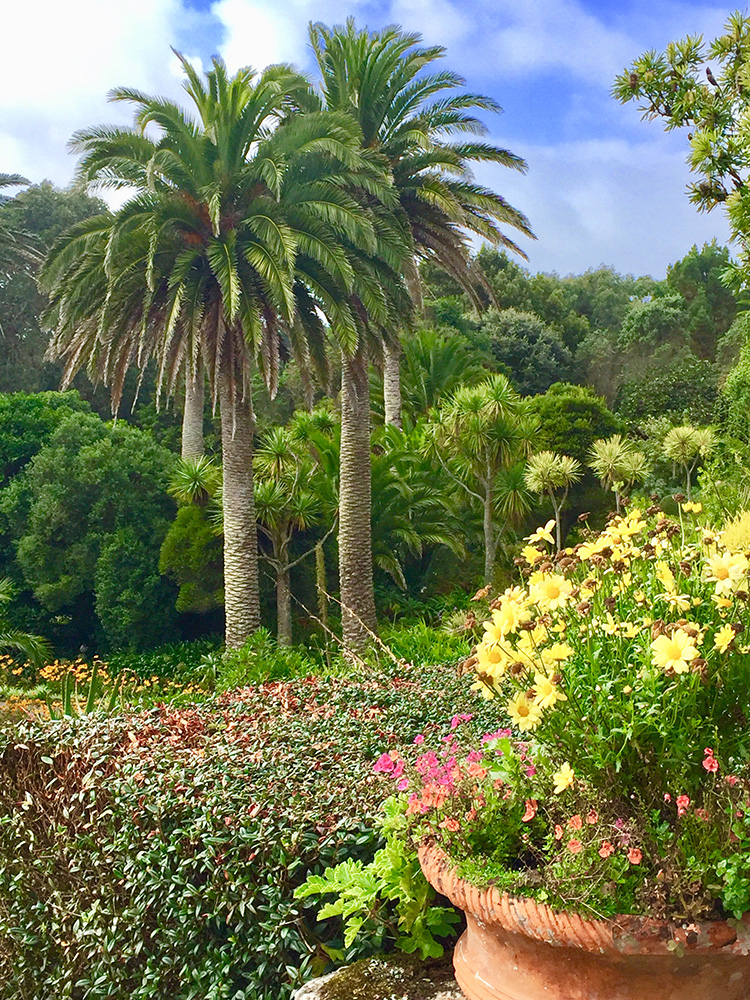
Thanks to the Gulf Stream, Tresco has a very mild climate, virtually free of frost. It is however extremely windy and subject to Atlantic gales, so a shelter-belt of quick-growing and salt-tolerant trees was imperative. Smith found the best trees for this were from California - Monterey Pines and Cypresses. He also built a granite wall around his garden to protect it from the elements.  He began by planting collections of pelargoniums and mesembryanthemums – fifty of each – and later acquired plants from all over the world through his connections with other plant collectors. At his death in 1872, the garden was essentially in the form that you see it in today.

IMG_E2266.jpg

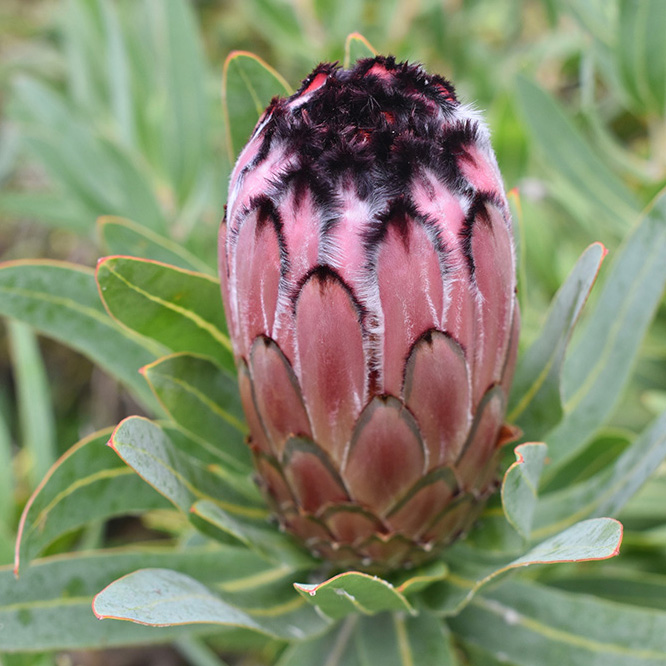
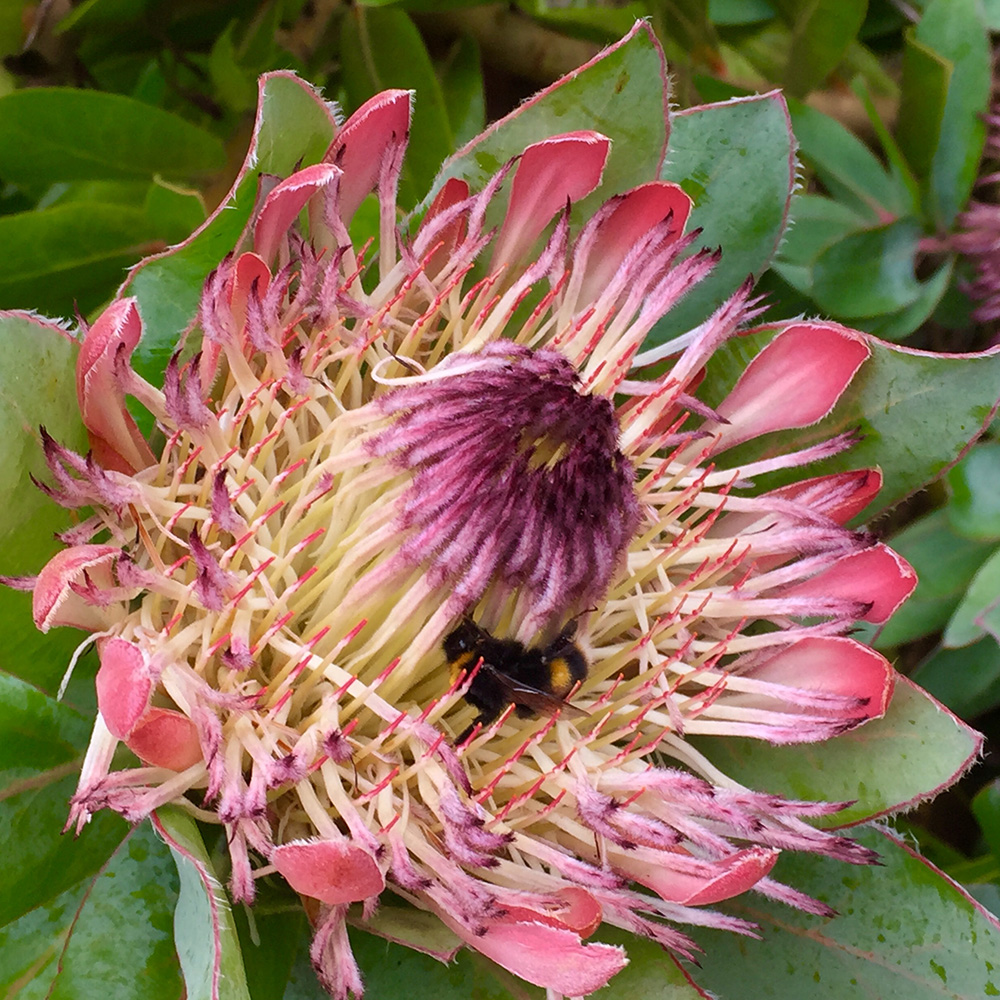
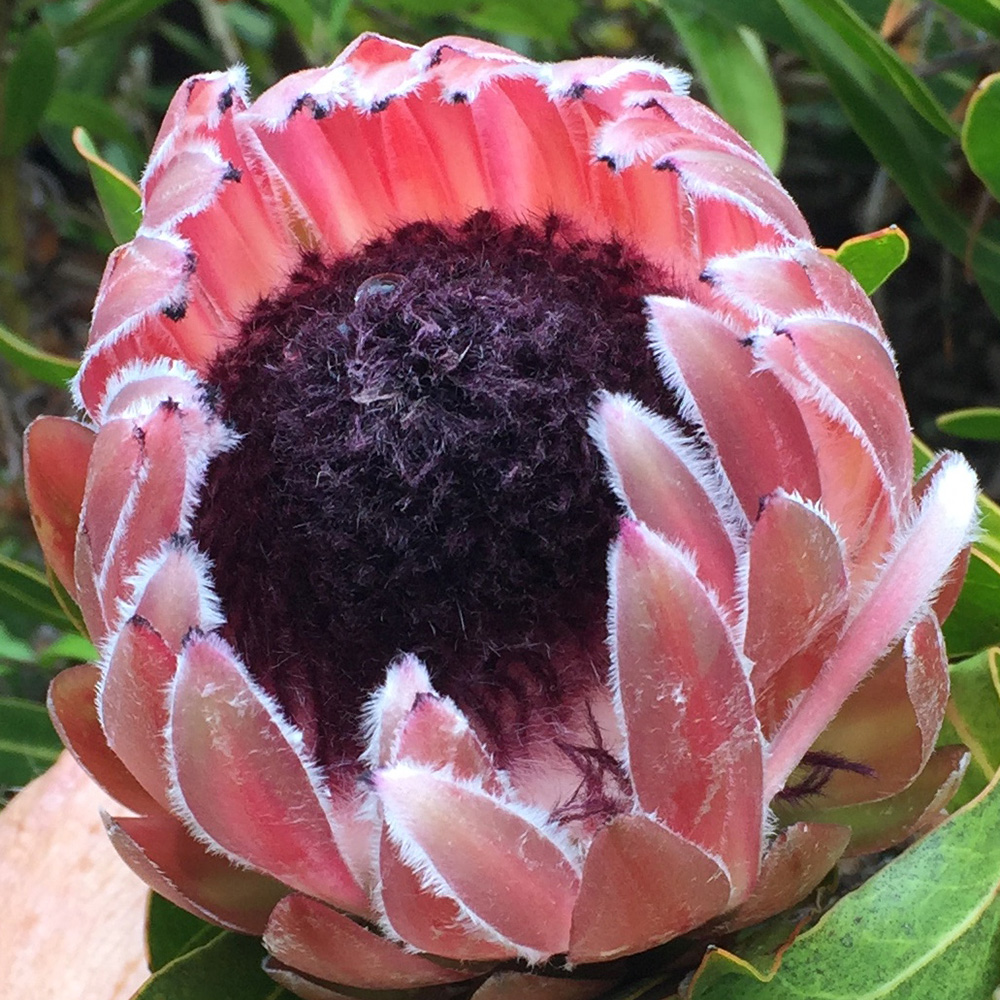
The garden has remained in the same family for five generations, and each generation has made its contribution. Augustus’ nephew Thomas Algernon (Dorrien) Smith continued with the garden, as did his son Arthur who collected plants from Australia, New Zealand, South Africa and the Americas. Those contributions include the grevillas, leucanthemums and the many varieties of proteas that we saw in bloom during our visit, as well as huge American agaves, African aloes, and aeoniums native to the Canary Islands.

IMG_E2323.JPG

The garden is protected on the north and west sides by Abbey Hill. It is laid out on 17 acres and bisected by the formal Long Walk surrounded by tree ferns and palms which grow lush in the deep soil of that area. Above the Long Walk are two terraces that span the width of the garden. The Top Terrace has the hot dry conditions and free-draining poor soil of South Africa and Australia. It is perfect for many varieties of Protea, Aloe, Cistus, and succulents, and offers beautiful views of the garden and the sea beyond.

IMG_E2306.jpg

The Middle Terrace is the heart of the Garden, with fishponds, a summerhouse and the stone Gaia sculpture, all nestled in a botanical paradise. Thousands of colorful plants from all over the world provide a lush backdrop, and even at the winter solstice, there are more than 300 species of plants in bloom. 

IMG_E2283.jpg
IMG_E2284.JPG

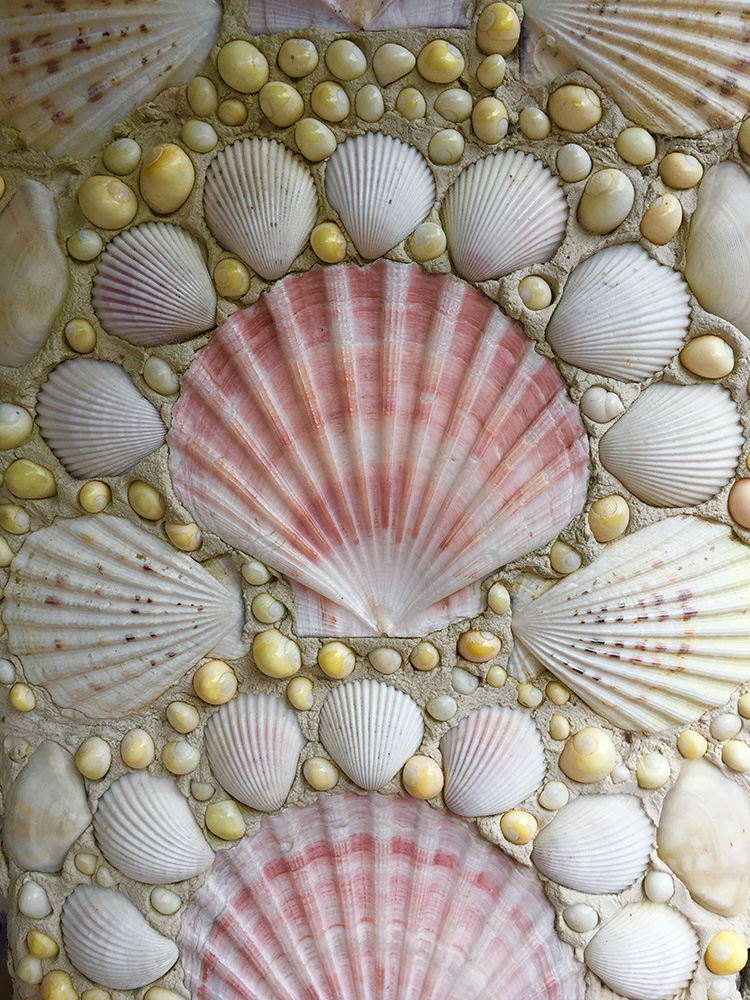
The lowest level is the Mediterranean Garden, with its Agave Fountain and the Shell House decorated with seashell mosaics created by the current owner. Here you will also find the Valhalla Museum started by Augustus Smith which contains a collection of 30 ship figureheads, name-boards and other decorative carvings. Most of the figureheads date from the late 19th century, and come from merchant sailing vessels or early steamships that were wrecked on the Isles of Scilly.

IMG_E2267.jpg

I may never see the gardens of Australia, New Zealand and South America, but thanks to a wonderful visit to Tresco Abbey Garden, I feel like I have traveled to many corners of the world and seen the richness of the plant species that they hold.
IMG_E2299.JPG

You Might Also Like

Edinburgh's Beloved Botanic Garden

Armed with an umbrella, sweater and raincoat, I toured Edinburgh's Royal Botanic Garden on Sunday. While July temperatures in the mid-50s and scattered downpours do not deter traveling gardeners from visiting botanic gardens, I was amazed to find the garden packed with city residents and tourists enjoying their Sunday outdoors. Mothers pushed babies in prams, dads chased after runaway toddlers, elderly couples strolled arm in arm admiring the delicate alpines, Spanish tourists snacked on sandwiches in the Chinese pavilion, a group of American teenagers chatted about their European adventures, and a Japanese bride and groom kissed for the photographer while the caterer distributed flutes of champagne to their guests. I walked around marveling at the 4' tall hardy geraniums, the swaths of Japanese primroses, the towering monkey puzzle trees, and the many plants from all corners of the world that I had never seen before.

The 500-foot long Herbaceous Border, created in 1902, is backed by a commanding hedge of 158 beech trees. The hedge is pruned annually to retain its 24' height.

The 500-foot long Herbaceous Border, created in 1902, is backed by a commanding hedge of 158 beech trees. The hedge is pruned annually to retain its 24' height.

Himalayan poppy (Meconopsis grandis) is popular in Scotland and grows to 4' with beautiful sky-blue flowers in June.

Himalayan poppy (Meconopsis grandis) is popular in Scotland and grows to 4' with beautiful sky-blue flowers in June.

Showcasing 128,000 plants from 156 countries, the Royal Botanic Garden Edinburgh (RBGE) is a living encyclopedia of horticulture that brings out the "plant geek" in all of us. The garden was founded in 1670 as a "physic garden" by two adventurous Scottish doctors who returned from a 'grand tour' of Europe determined to grow, study and identify plants for treatment of disease. Medical students were schooled in botany by the Head Gardener until the mid 1800s. With the expansion of the British Empire, the plant collections grew rapidly, and the garden was relocated several times to accommodate new acquisitions. It has been at its current site on the outskirts of the city center since 1821.

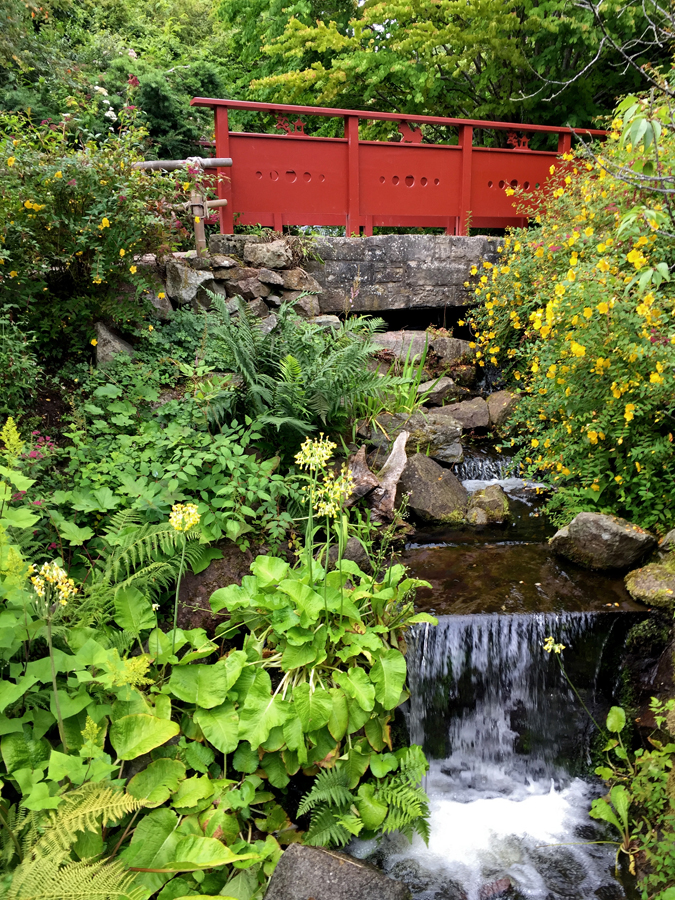
The Chinese Hillside is the result of plant hunter George Forrest's seven trips to Yunnan between 1904 and 1932. Winding paths, a waterfall, bridge and pavilion are placed among 16,000 plants collected from Yunnan, many rare and endangered.

The Chinese Hillside is the result of plant hunter George Forrest's seven trips to Yunnan between 1904 and 1932. Winding paths, a waterfall, bridge and pavilion are placed among 16,000 plants collected from Yunnan, many rare and endangered.

Young monkey puzzle trees in the Biodiversity Garden which illustrates the evolution of plants.

Young monkey puzzle trees in the Biodiversity Garden which illustrates the evolution of plants.

One of the first things that you notice when visiting the garden are the magnificent and unusual trees set in a stately, park-like setting of 70acres. Some of these trees were moved from the garden's previous location and are more than 200 years old. Others were acquired as seeds from habitats that no longer exist, such as the extremely rare Catacol whitebean. Only one other specimen of this tree exists in the wild - in a ravine on the isle of Aran.

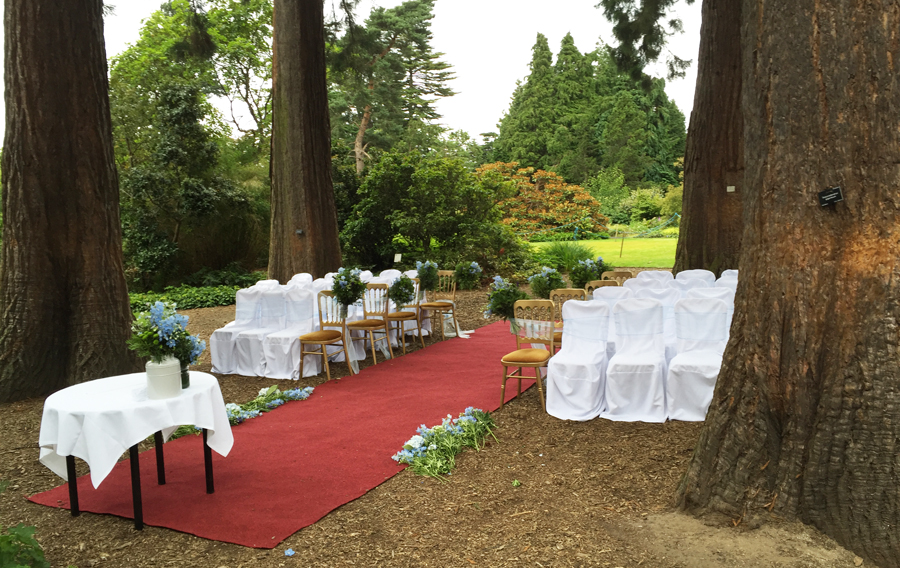
A stand of coastal redwoods planted in the 1920s creates a cathedral-like atmosphere and is a popular site for weddings.

A stand of coastal redwoods planted in the 1920s creates a cathedral-like atmosphere and is a popular site for weddings.

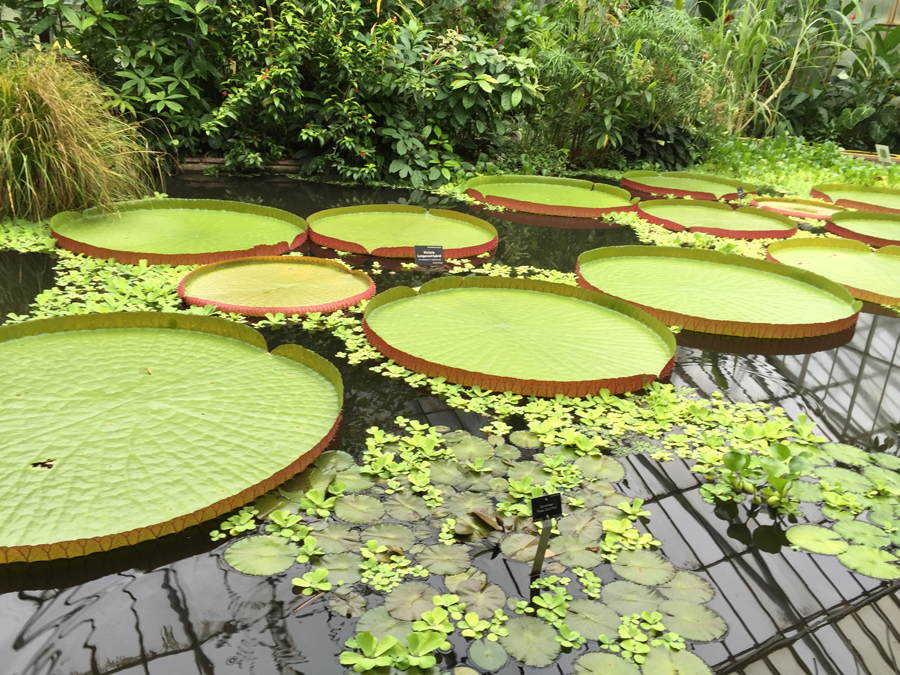
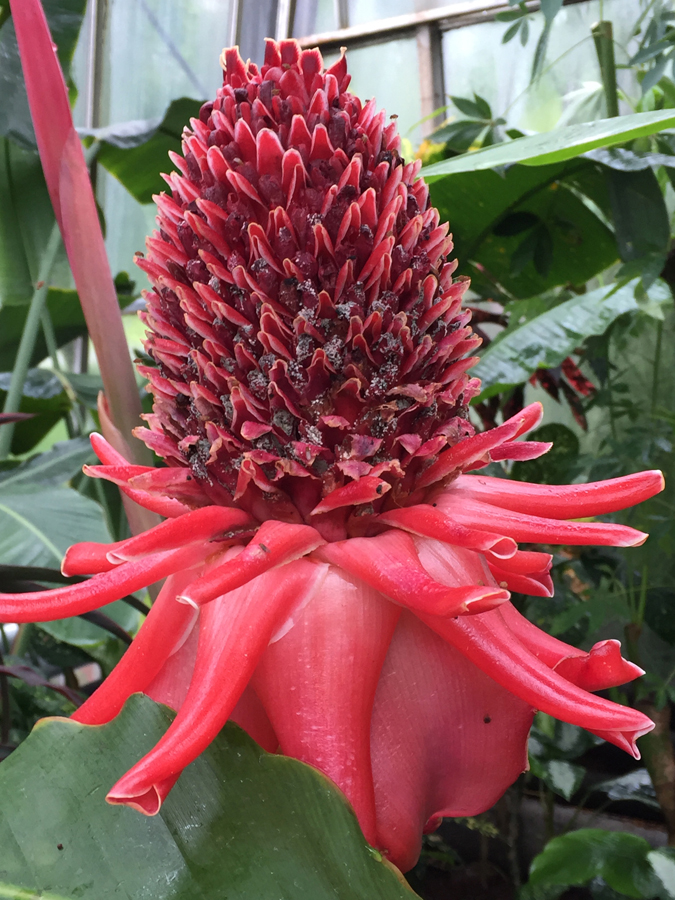
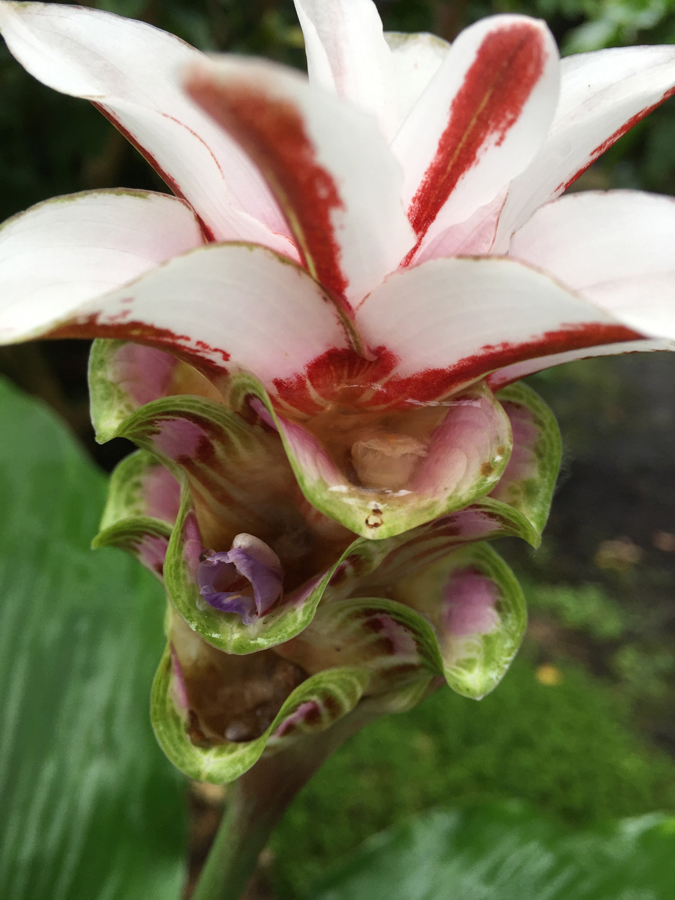
RBGE's glasshouses offer ten distinct climatic zones with thousands of flowering plants, cycads and ferns. The Temperate Palm House, currently under renovation, was built in 1858 and is one of the tallest in the world. The Plants and People House showcases plants that are integral to our daily lives - sugar, cocoa, rice and coffee, as well as giant water platters. Other glasshouses feature plants of the desert, the rainforest and mountain regions. My favorite was the Lowland Tropics House and its collection of gingers that sported the most unusual flowers (see red pinecone below).

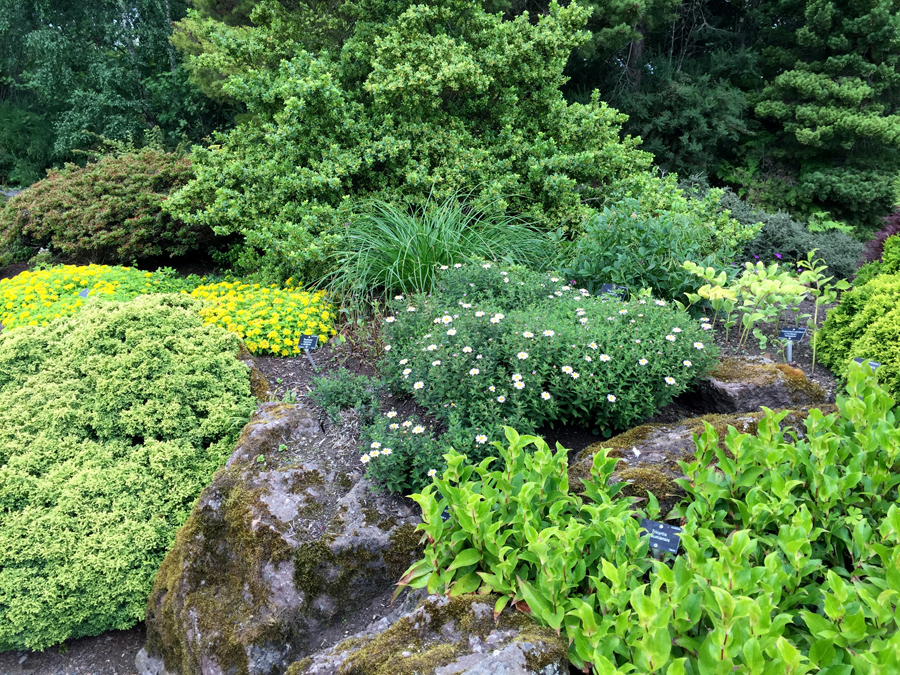
Themed gardens illustrate various habitats from around the world. The Alpine Garden exhibits plants from high mountain tops which are a real challenge to grow in Edinburgh's maritime lowlands climate. Alpines are important to RGBE's conservation work, as they can be indicators of global warming. The Alpine House and Tufa House protect these tender plants from the wet Scottish climate. Troughs are used to create individual landscapes representing miniature mountain tops.

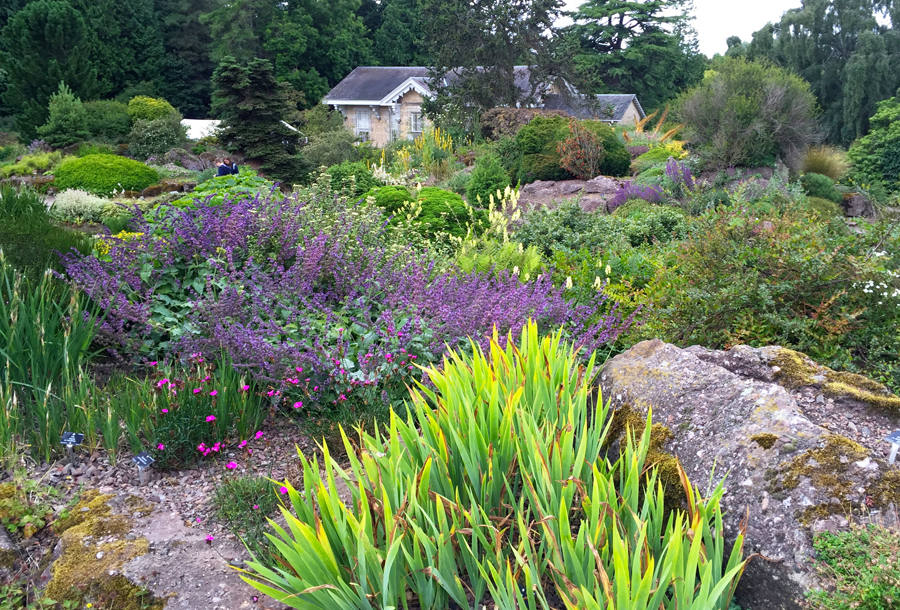
The Rock Garden features 5,000 plants from the great mountain ranges of Chile, China, Europe, Japan, South Africa and North America. Dwarf conifers, bulbs and rhododendrons complement true alpines. The neighboring Scottish Heath Garden shows off Scotland's iconic shrub.
The Queen Mother's Memorial Garden was formally opened in 2006, and reflects the Queen Mother's love of gardening. A Celtic-style labyrinth planted with bog myrtle is surrounded by perennial beds and a charming pavilion.

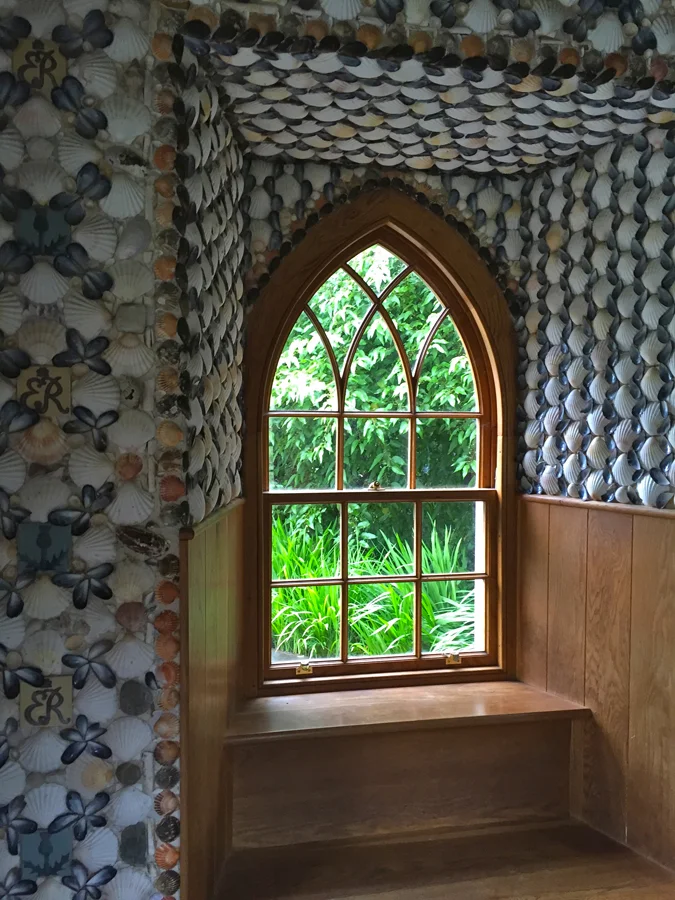
The Memorial Pavilion within the Queen Mother's Garden is decorated with shells collected by schoolchildren from around Scotland. The ceiling is lined with pine cones from RBGE's gardens.

The Memorial Pavilion within the Queen Mother's Garden is decorated with shells collected by schoolchildren from around Scotland. The ceiling is lined with pine cones from RBGE's gardens.

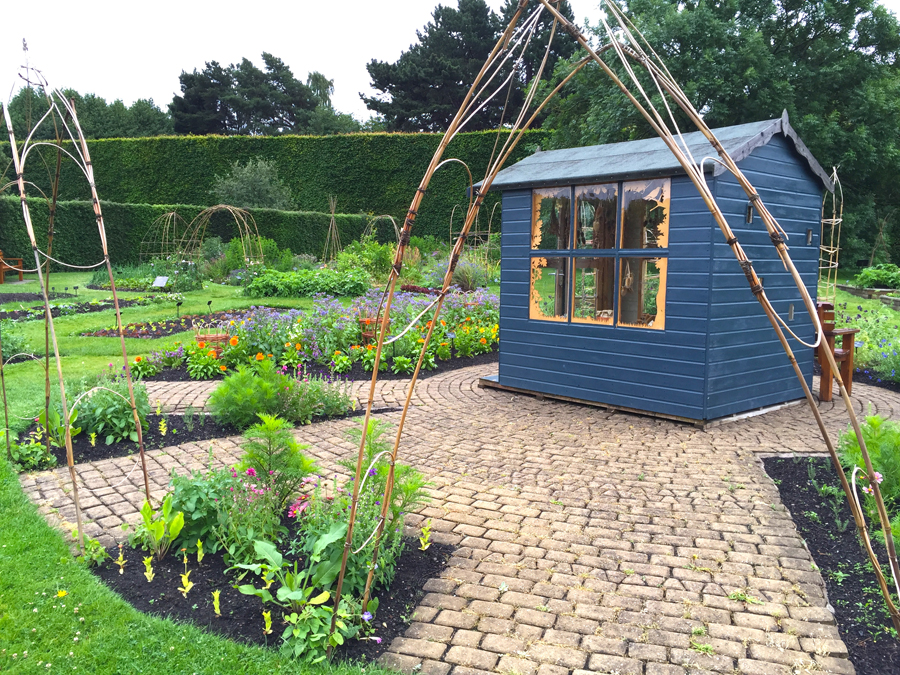
The Demonstration Garden is used by local schools and students in RGBE's Horticulture and Herbology courses to experiment with growing crops and medicinal plants.

The Demonstration Garden is used by local schools and students in RGBE's Horticulture and Herbology courses to experiment with growing crops and medicinal plants.

Swaths of primroses, trilliums and other shade lovers thrive in the woodland garden, along with rhododendrons and magnolias. Many of these plants look like they are on steroids: Edinburgh's mild, wet climate provides ideal growing conditions.

Swaths of primroses, trilliums and other shade lovers thrive in the woodland garden, along with rhododendrons and magnolias. Many of these plants look like they are on steroids: Edinburgh's mild, wet climate provides ideal growing conditions.

The Royal Botanic Garden Edinburgh is open daily except Christmas and New Year's Day, and features a restaurant, cafe, shop stocked with gifts and plants, and seasonal exhibitions and events. Admission is free, with a small fee for the glasshouses. See rgbe.org.uk/edinburgh for more info.


You Might Also Like

Hampton Court's Romantic Gardens

hampton-court-5

The sixty acres of gardens and grounds surrounding Henry VIII's Hampton Court Palace in Britain are majestic and inspiring. 

The earliest gardens, relatively modest gardens, were created for Cardinal Wolsey, but it was under the auspices of Henry VIII that today's ground plan largely took shape. Henry VIII was not much interested in beautiful flowers - he was more keen on the sport that took place in the Deer Park and Tiltyard, the scene of jousting competitions.

The gardens were formalized in the baroque manner under William and Mary and subsequent changes were made as 500 years of royals gardened on the property. Today's gardens may not be true to one particular era, but they are stately and awe inspiring. Even if your own garden is a small plot, you can learn from the lovely plant combinations, the cultural practices in the vegetable and herb garden, and appreciate the beauty and pageantry of the garden and palace.

hampton-court-1

The walled formal rose garden is punctuated with beautiful statuary and was in full bloom in September.

hampton-court-2

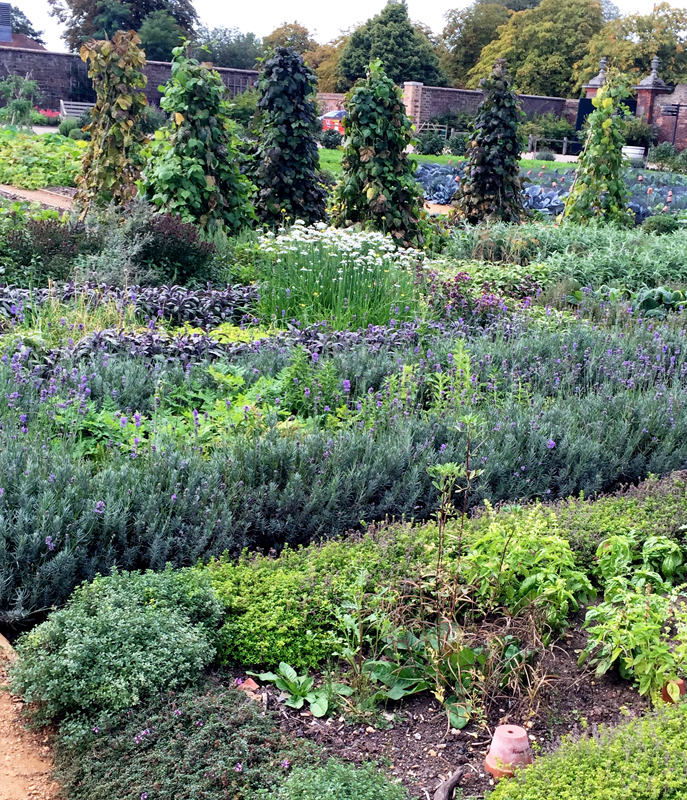
The herb garden's formal layout is reminiscent of Victorian-era bedding gardens.

hampton-court-4

The Kitchen Garden grew all of the produce and fruit for Henry VIII's court.

hampton-court-6

The ornamental bed decorated the river gateway to the palace grounds.

hampton-court-4

Ornate Victorian-style bedding gardens decorate the Fountain Garden, a strolling garden that original showcased 13 magnificent fountains and clipped yews.

hampton-court-7

The Orangery Garden (above) shows Queen Mary II's passion for rare and exotic plants. She had an orangery built to house her orange and lemon trees and cactuses.

hampton-court-8

The Privy Garden (above) has existed on the south side of the palace since it was first created by Henry VIII in 1533. The recreation that is seen today has all of the original plant varieties, statues and hedges that were installed by William III.

hampton-court-9

The Knot Garden (above) was laid out in 1924 to show the type of garden that Henry VIII may have had at the palace.

hampton-court-10

These sunken gardens (above and below) were originally ponds used to hold freshwater fish such as carp, to feed Henry VIII and his court.

hampton-court-11

Hampton Court is easily accessible from London by train. You can also visit the palace by Thames riverboat - just like the court members and royalty of centuries past.


You Might Also Like

September in Kew Gardens

kew-gardens-1

Thanks to my daughter's decision to spend a Semester Abroad in London, I was able to visit several wonderful English gardens in September. The first was the Royal Botanic Gardens in Kew - regarded as the world's number one botanical garden with the largest and most comprehensive plant collection. What began as a "physic garden" of 9 acres in 1759 is now a 300 acre property with an arboretum, woodland, rock garden, Holly Walk, Winter Garden, numerous perennial beds and formal display gardens.

In addition to the plants, the garden is home to beautiful conservatories, museums, palm houses, Kew Palace and several temples. Since we had only one afternoon to spend there, we focused on the horticulture. Below are some views of the fabulous garden in September.

kew-gardens-7

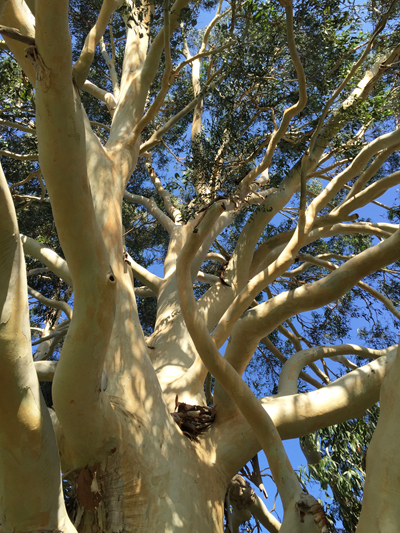
Kew's arboretum is a living library of trees that stretches over the majority of the Gardens and is a wonderful place to see many different species of trees including rare and ancient varieties.

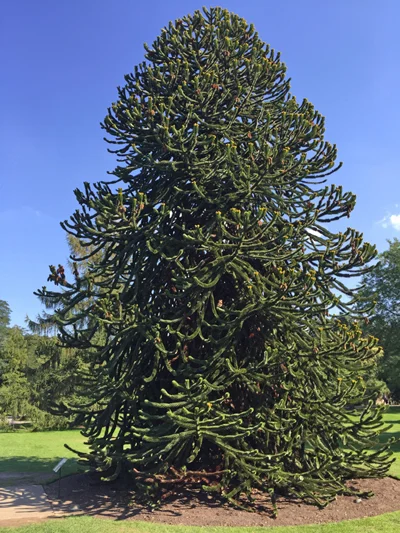
This specimen monkey puzzle tree was planted in 1978. The first monkey puzzle trees were brought to the UK in 1795 from chile.

This specimen monkey puzzle tree was planted in 1978. The first monkey puzzle trees were brought to the UK in 1795 from chile.

kew-gardens

There are more than 2,000 species of trees in the vast arboretum including a collection of "Old Lions". These magnificent trees are the oldest trees with known dates in the Gardens, dating back to 1762.

kew-gardens-4.jpg

Grasses and perovskia sway in the breeze and create a soft foreground for the collection of trees and shrubs.

kew-gardens

The Duke's Garden showcases perennials with beautiful foliage such as the bergenia and heuchera above.

kew-gardens

The large rock garden displays a range of mountain plants, Mediterranean plants, and moisture-loving species from around the world.

kew-gardens

The beautiful Japanese Garden is comprised of three areas. Above we see the Garden of Peace, reminiscent of a traditional Japanese Tea Garden with stone lanterns and a dripping water basin.

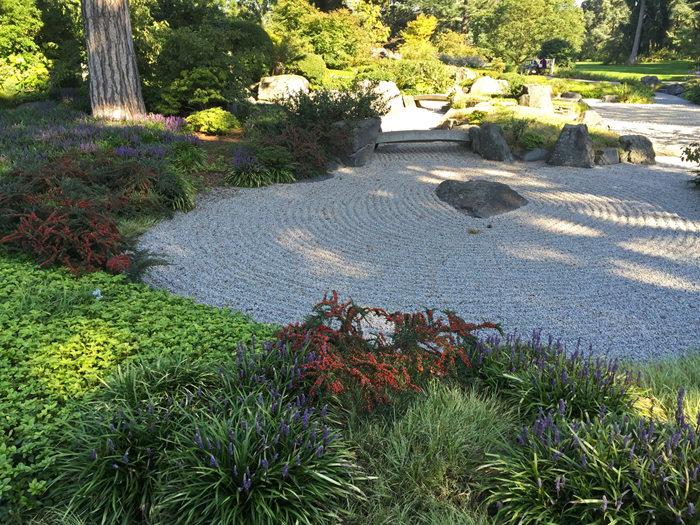
Below, is a glimpse of the Garden of Activity, symbolizing the elements of the natural world such as waterfalls, mountains and the sea. The raked gravel and large rocks represent the motion of water as it swirls and tumbles.

kew-gardens