Villa Garzoni: A Baroque Garden of Theatrical Splendor
/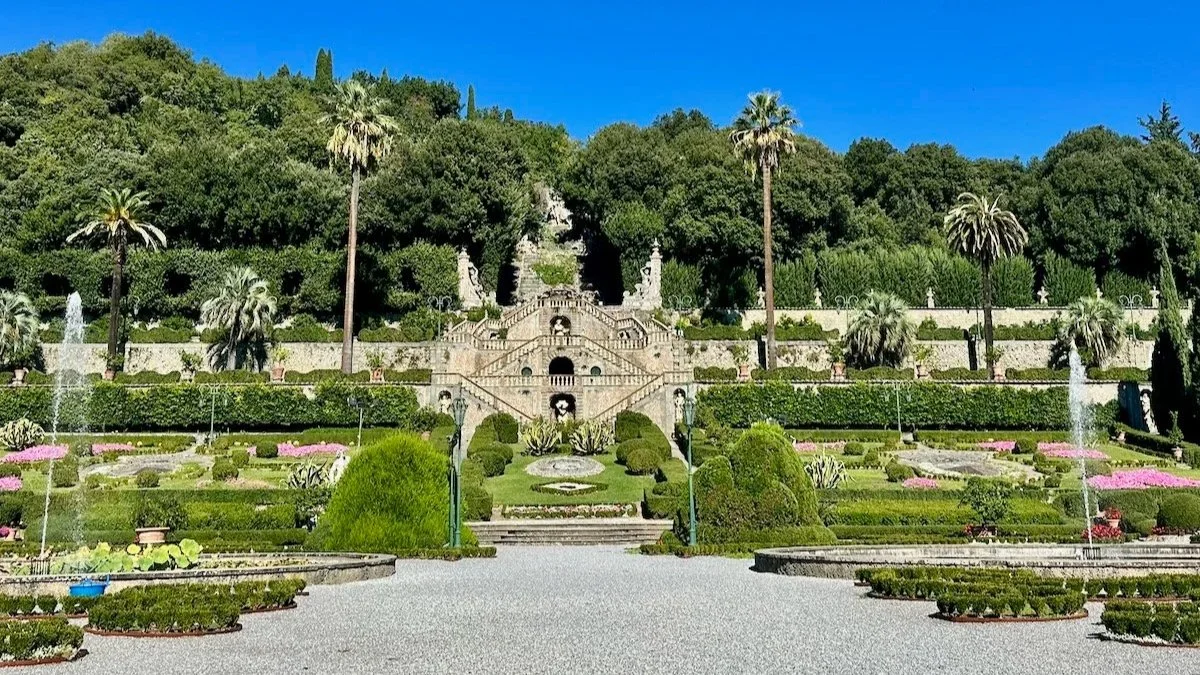
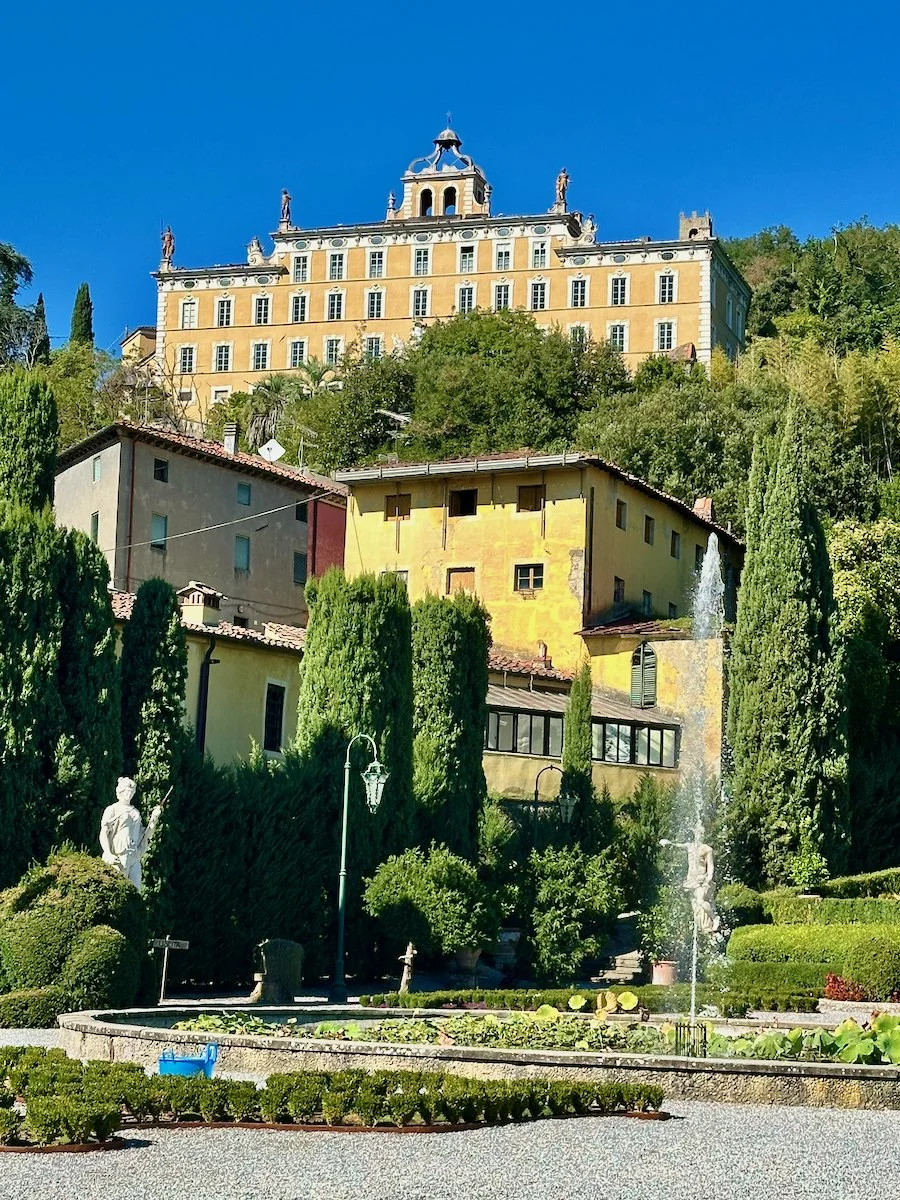
In the Tuscan village of Collodi, near Lucca, Villa Garzoni boasts one of Italy’s most spectacular Baroque gardens. Built on a steep hillside, the garden transforms challenging terrain into a dramatic sequence of terraces, monumental staircases, fountains, sculpture, and clipped greenery. Created in the seventeenth century and embellished over subsequent decades, it is a remarkable example of how Italian garden designers turned landscape architecture into theatrical entertainment.
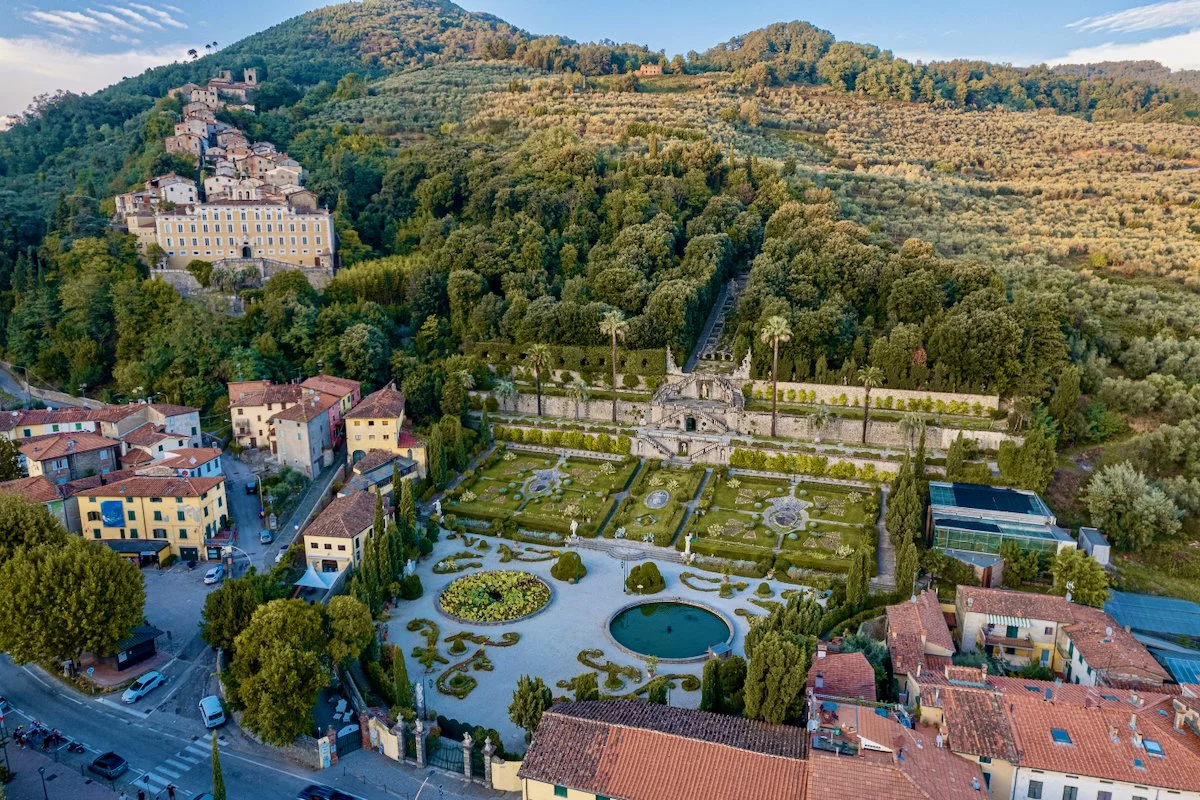
Photo by pescia 1977/wikipedia
The garden was developed under the Garzoni family, with its principal layout established by the mid-seventeenth century. Later additions, including the elaborate water garden, enhanced its dramatic character. Rather than concealing the hillside, the designers used its steep gradient to create a succession of visual surprises, drawing visitors upward from the formal lower garden toward the wooded slopes above.
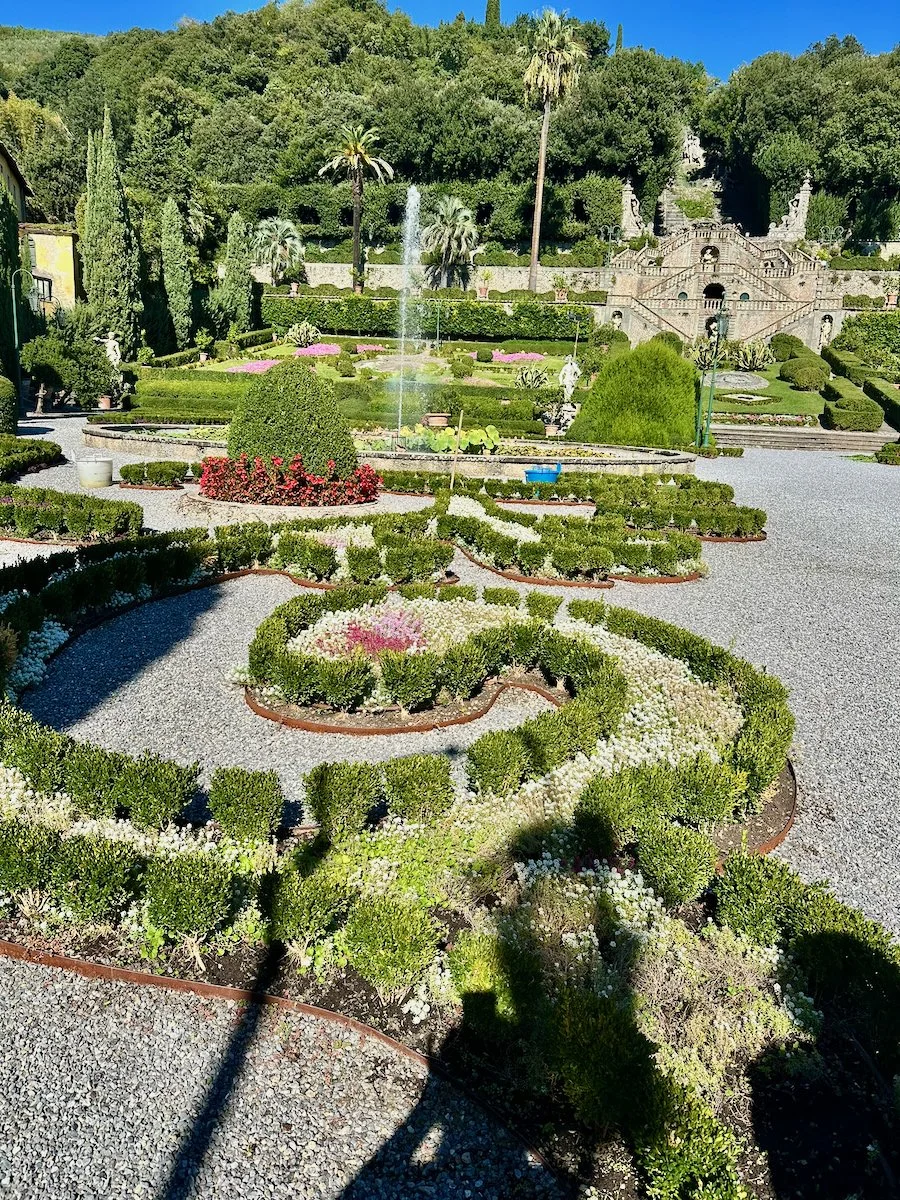
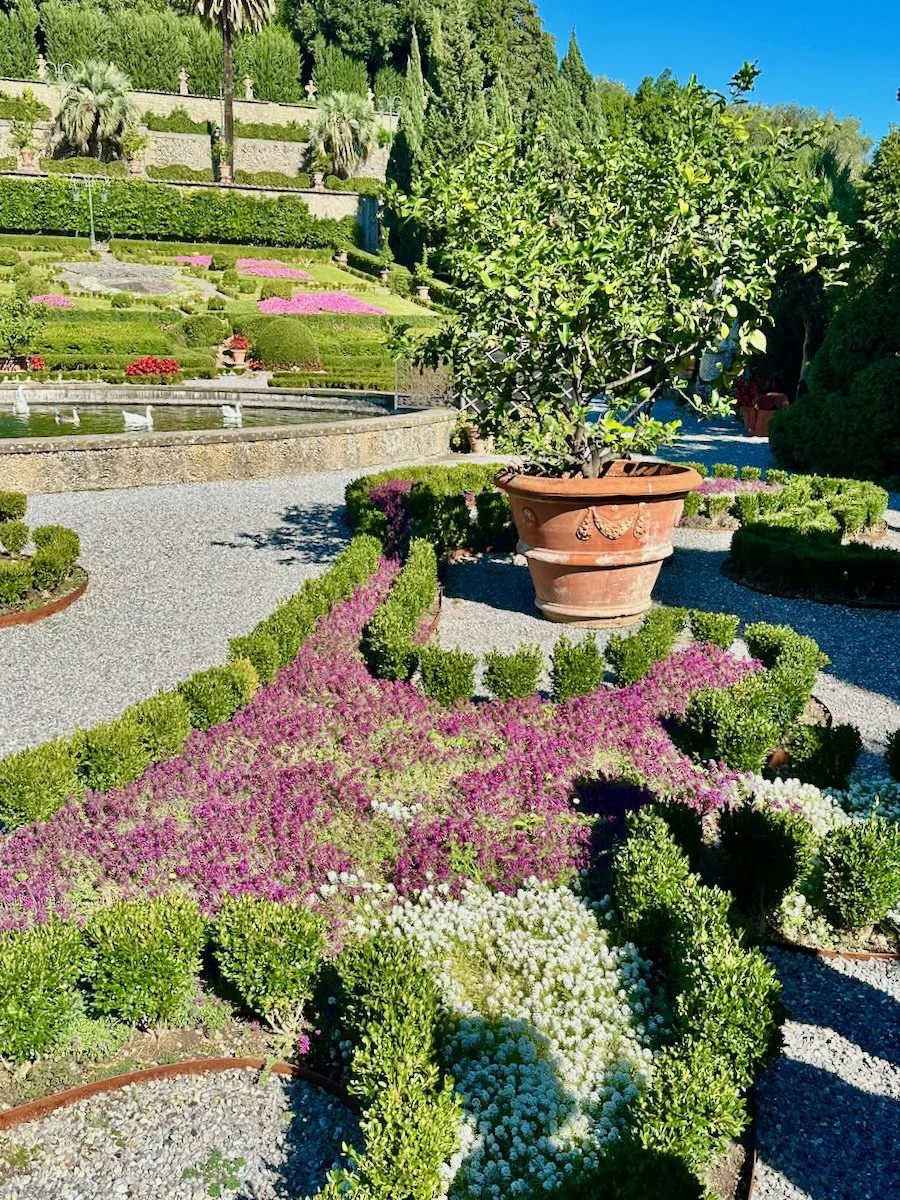
The visit begins with a striking formal parterre de broderie, a central theme of French-inspired Baroque gardens. Set in a gravel-covered esplanade, clipped boxwood outlines intricate floral patterns patterns which are planted with colorful annuals. Two circular pools with fountains frame the central axis of the garden—one planted with water lilies, the second offering a pool for white geese. Statues of classical deities introduce the garden’s mythological themes. This entire lower level of the gardens is enclosed by a high wall of yew hedges with strong vertical accents. From this carefully ordered space, the eye is drawn toward the extraordinary staircase that connects the lower terraces with the upper garden.
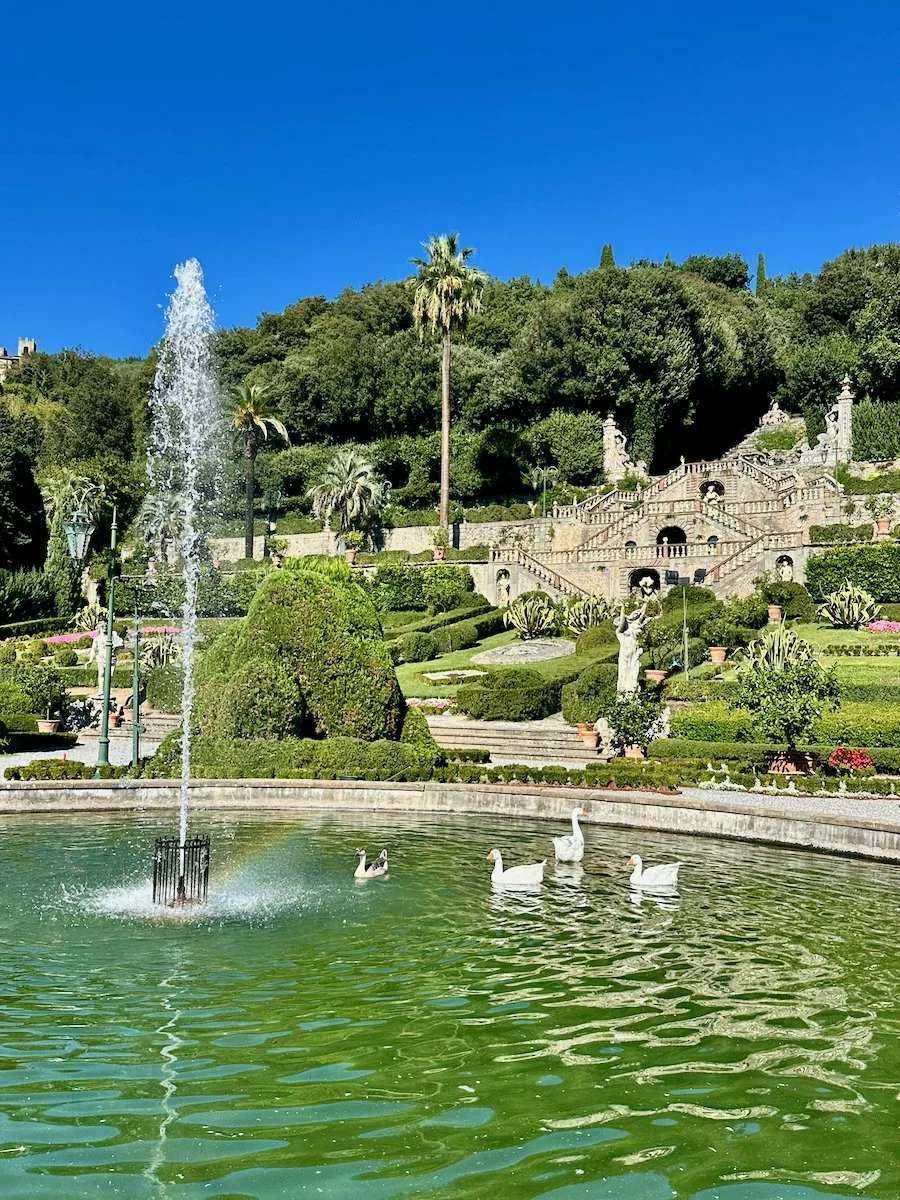
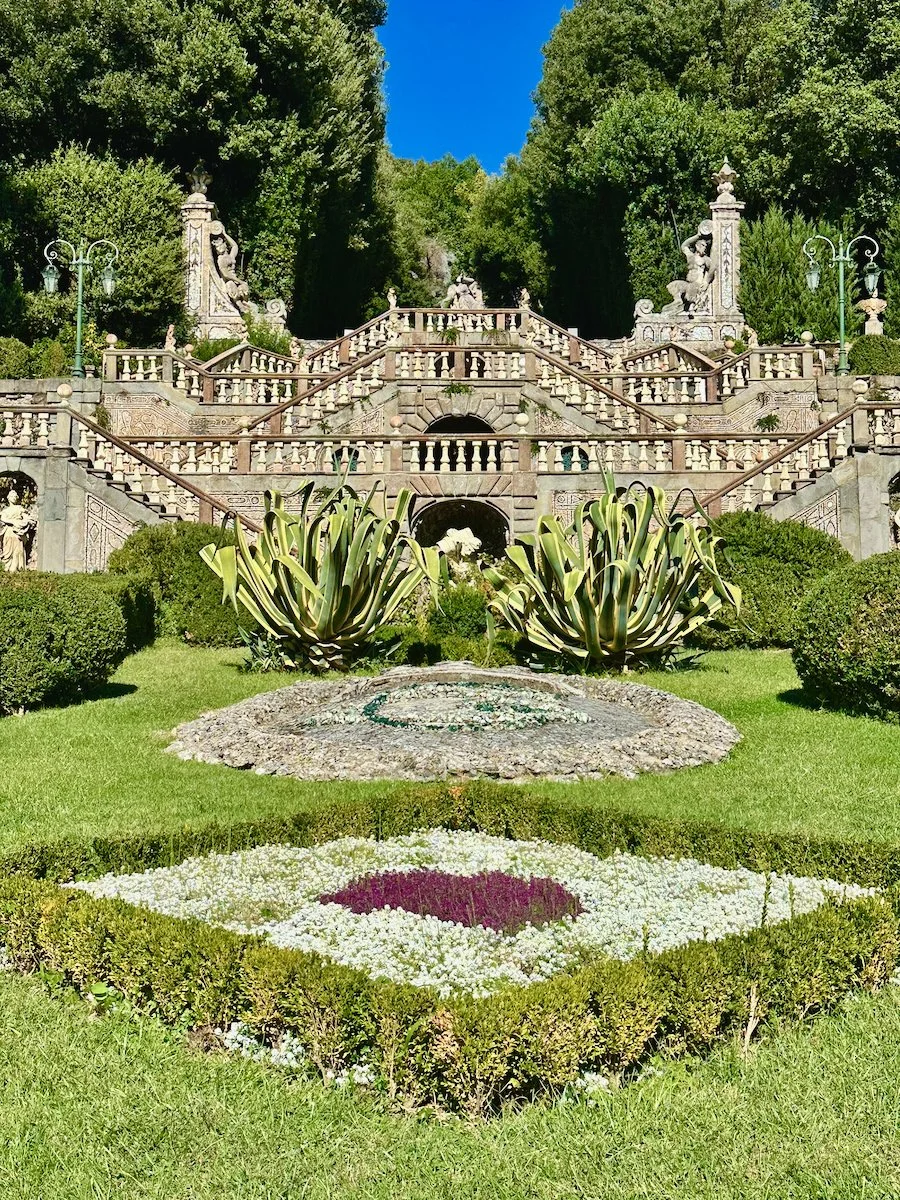
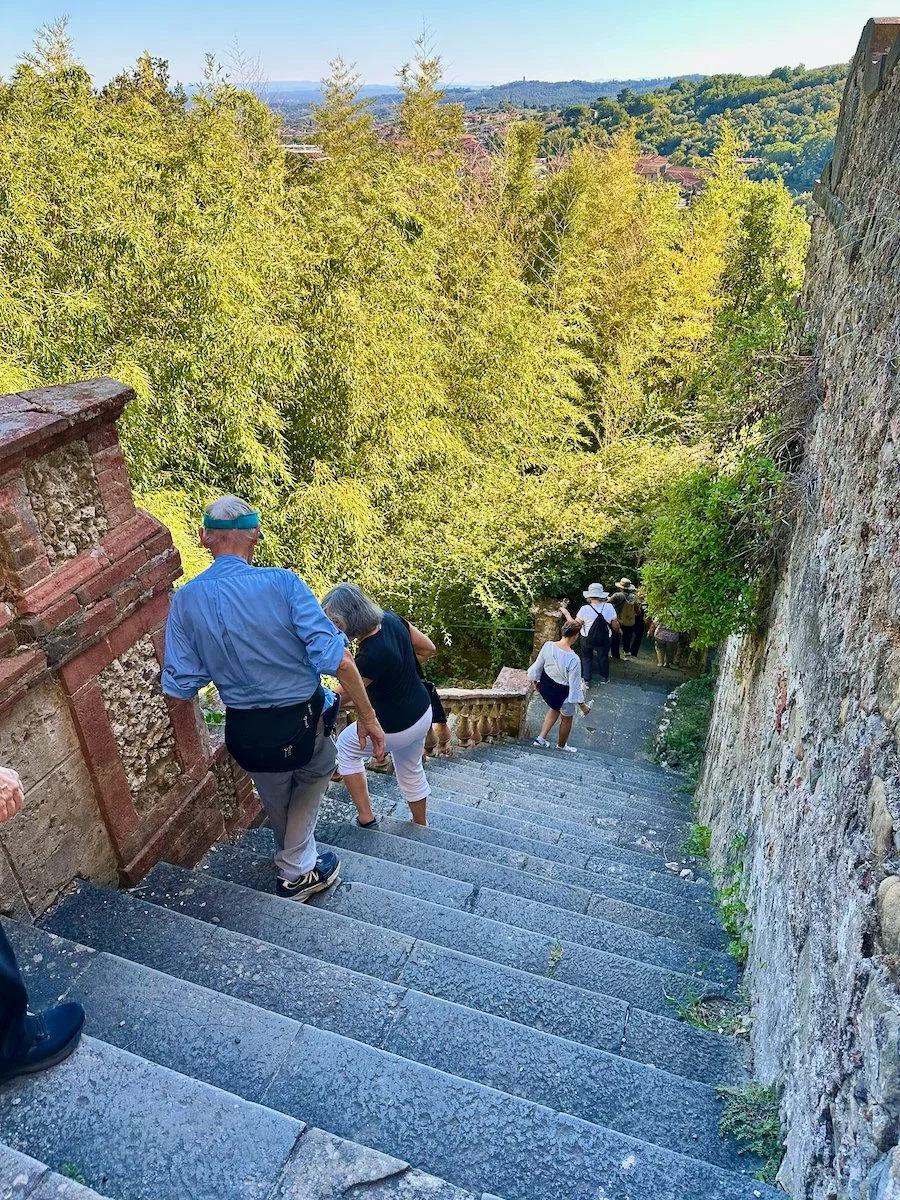
The monumental staircase is Villa Garzoni’s signature feature. Its sweeping flights, balustrades, landings, and decorative niches create an architectural spectacle as impressive as the villa itself. Stone and terracotta statues accent the stairways, including mythological figures and representations of everyday rural life. Decorative mosaics made from colored stones add intricate patterns underfoot, while the changing viewpoints reveal new perspectives on the garden below.
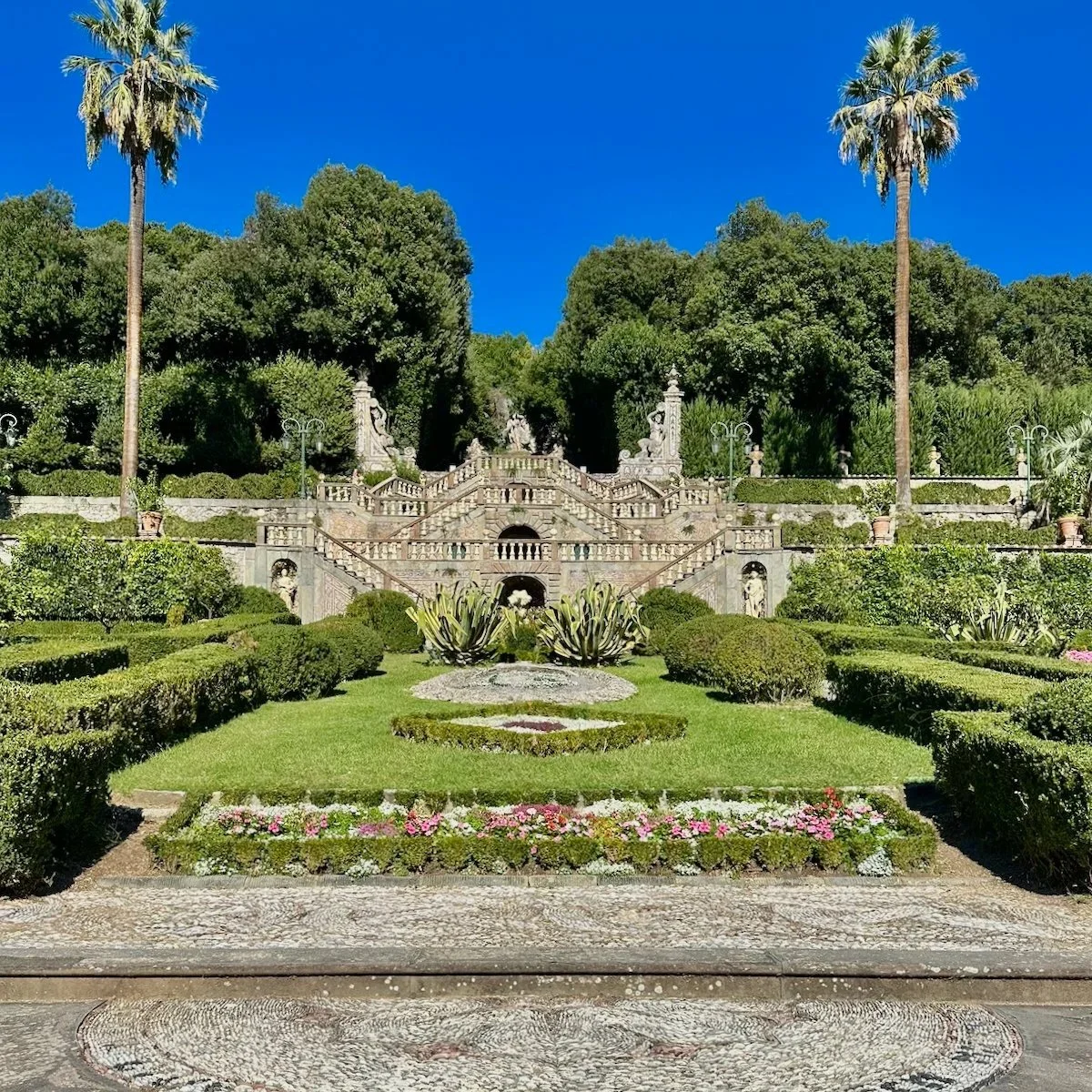
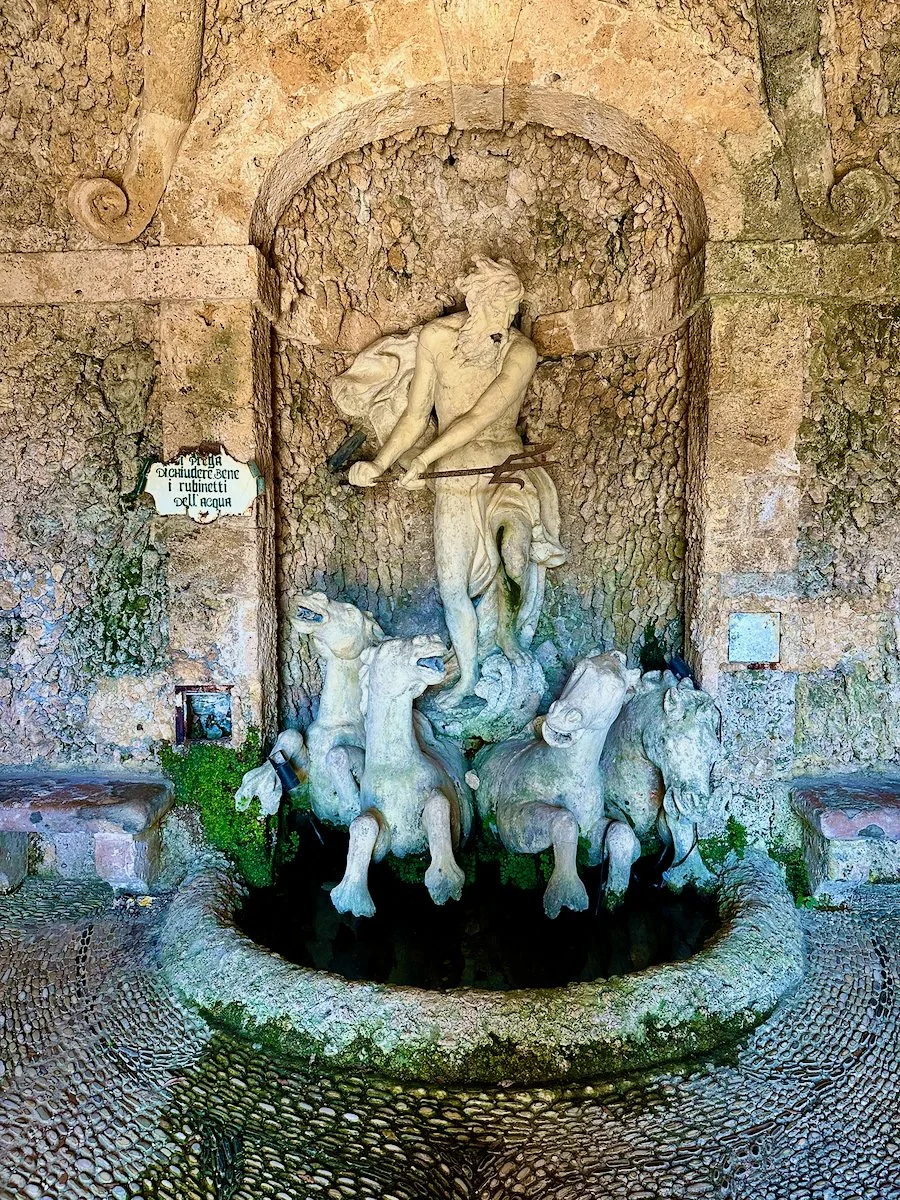
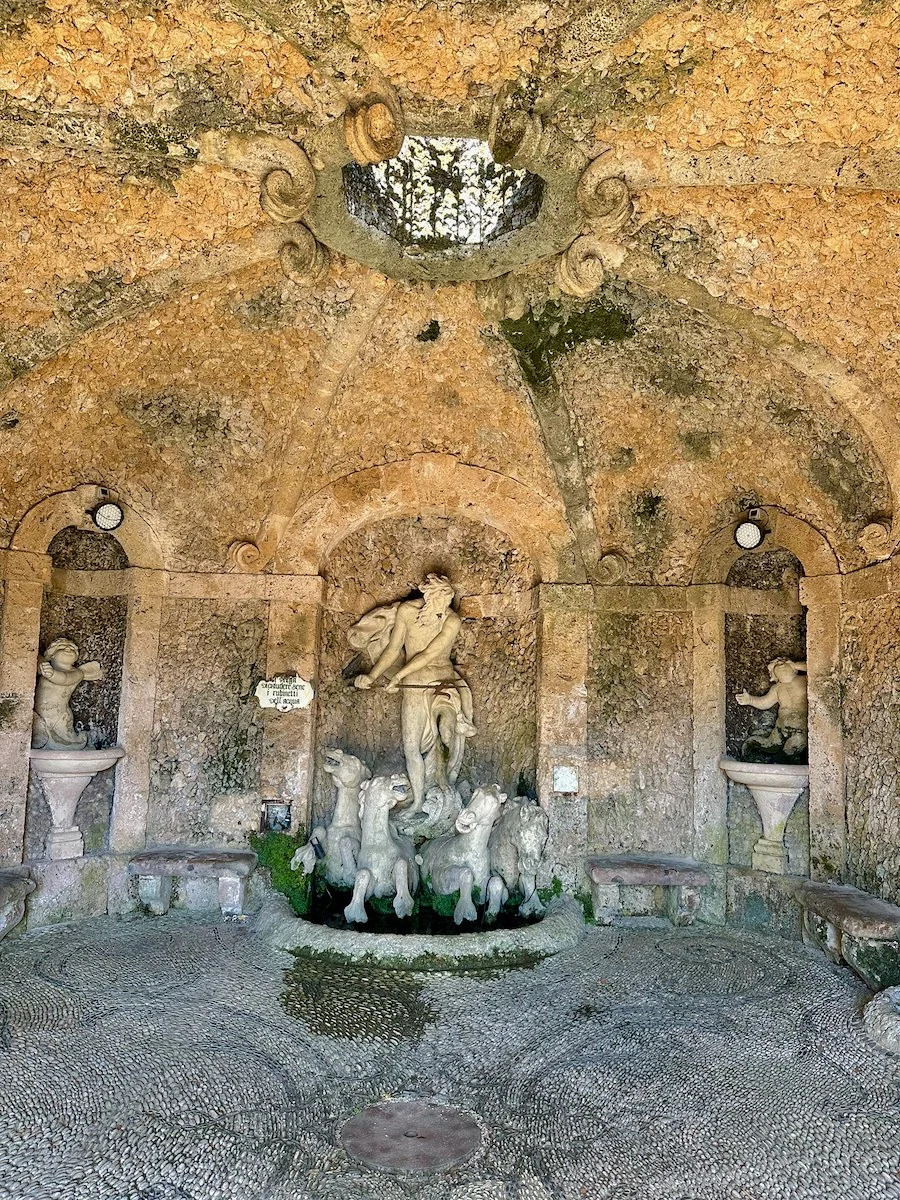
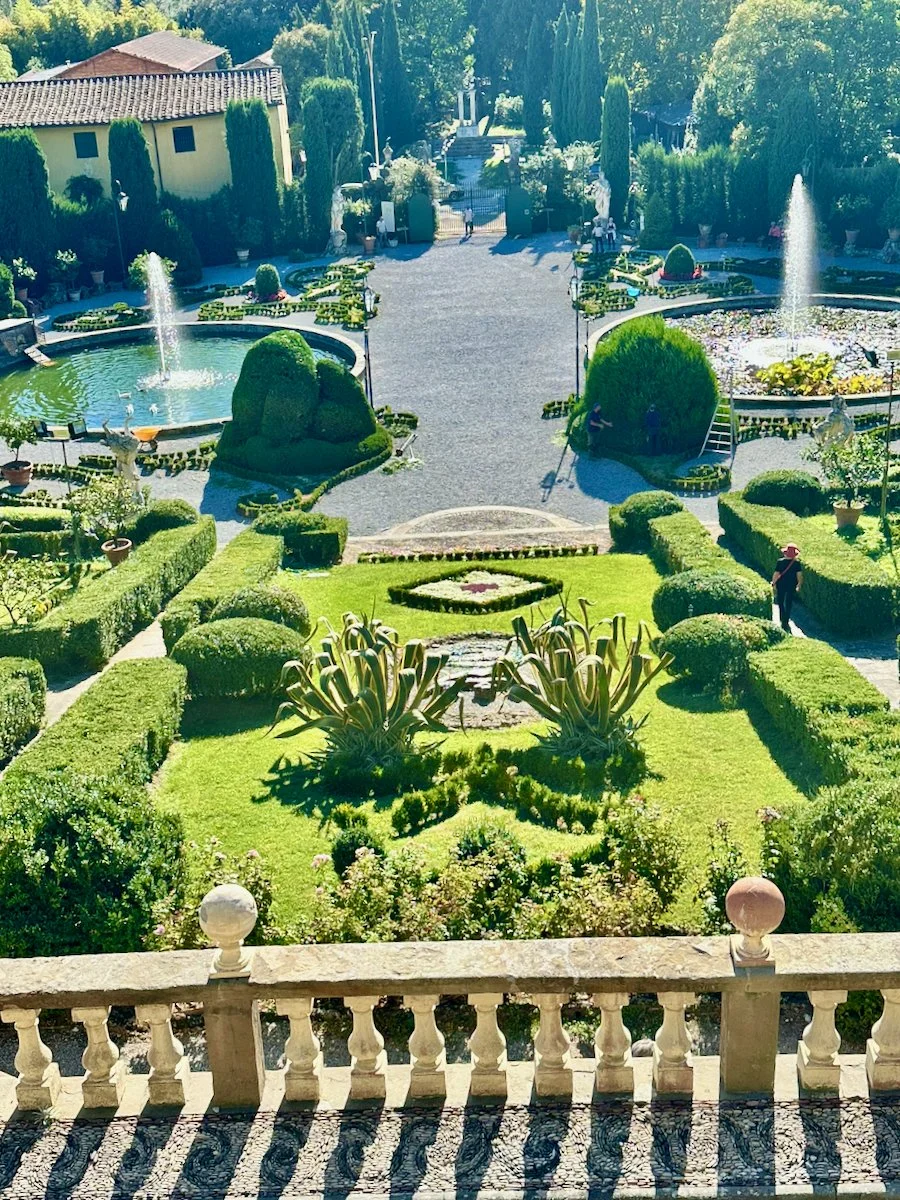
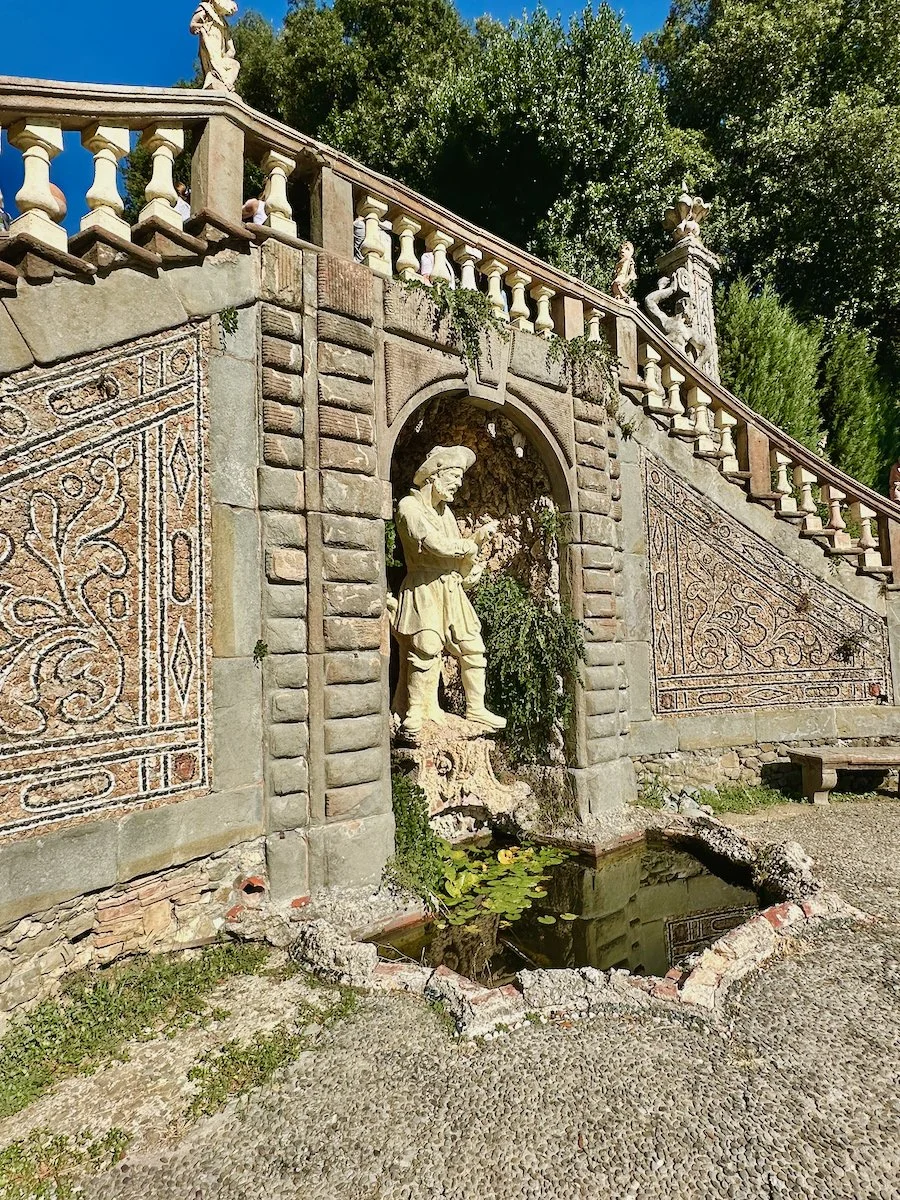
The bottom terraces offers views of two vast parterre gardens enclosed by boxwood hedging. One of these features the Garzoni coat of arms created from a mosaic of heathers, annuals and colorful pebbles. Here the staircase is flanked by walkways featuring tall palm trees. The large stone grotto of Neptune offers a more mysterious experience, with sculptures and concealed jets that surprise visitors as they explore.
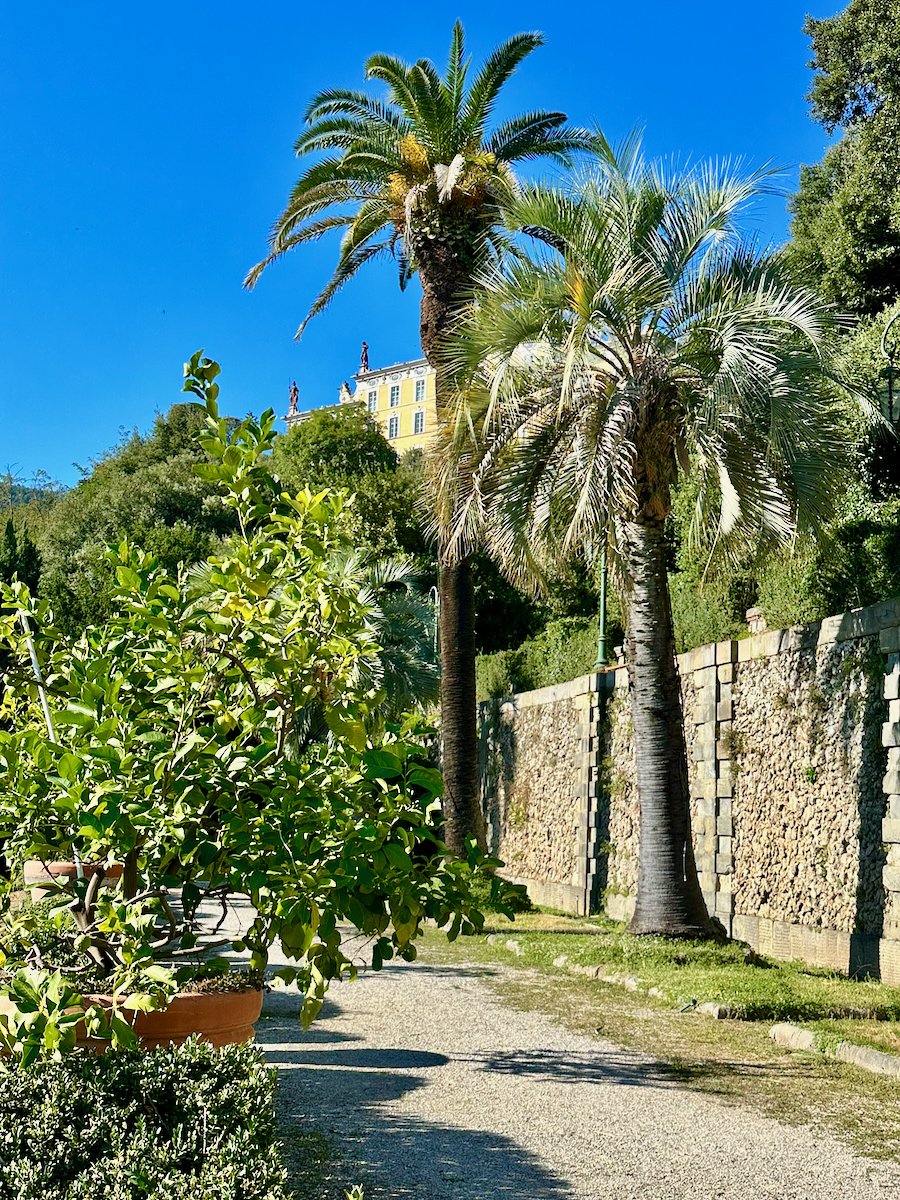
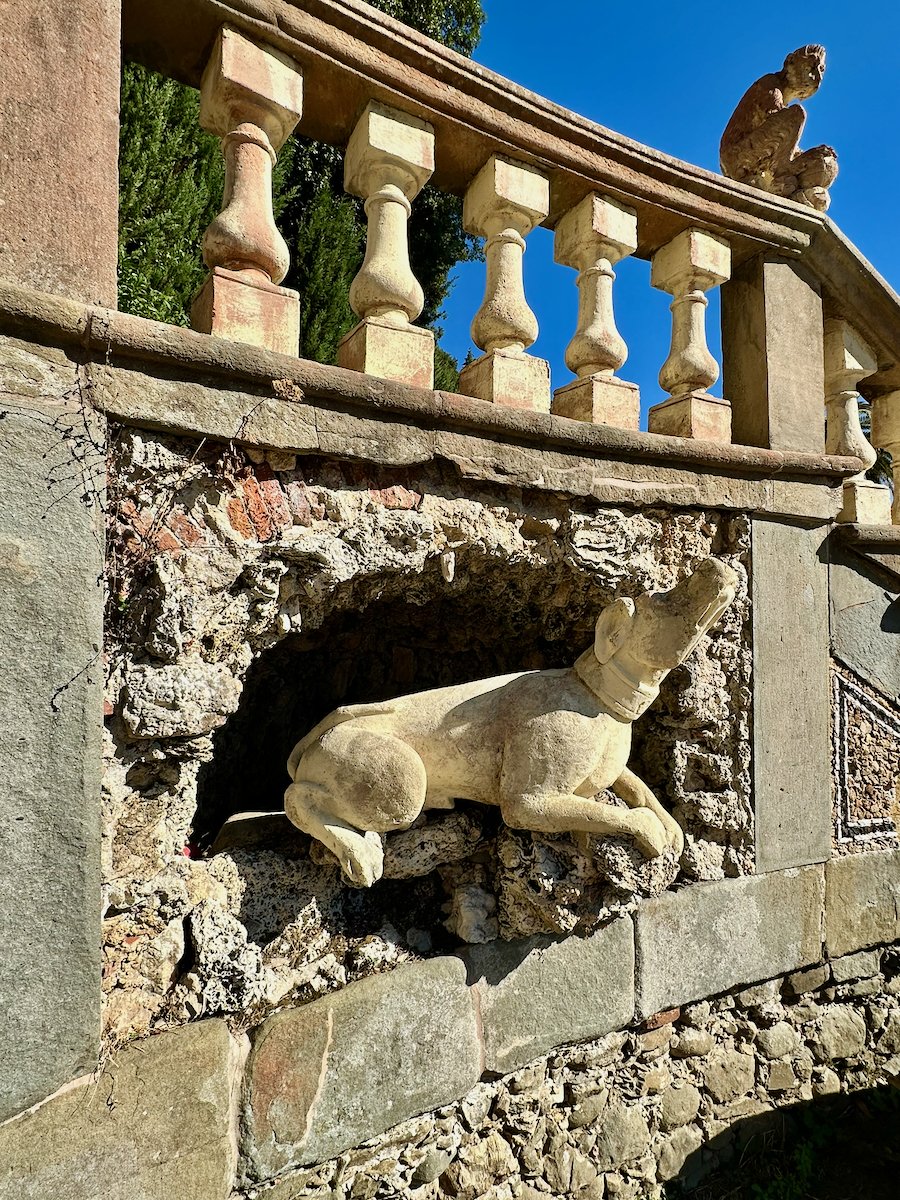
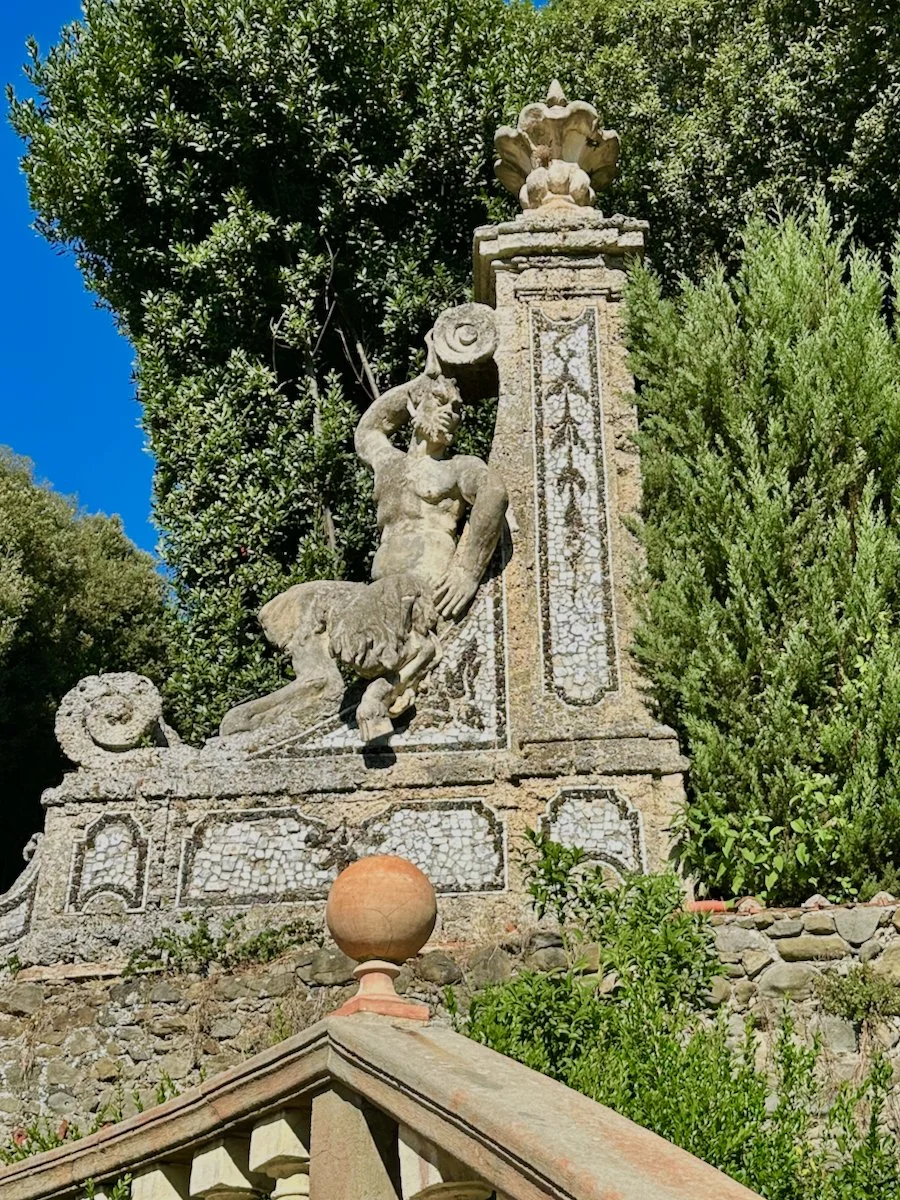
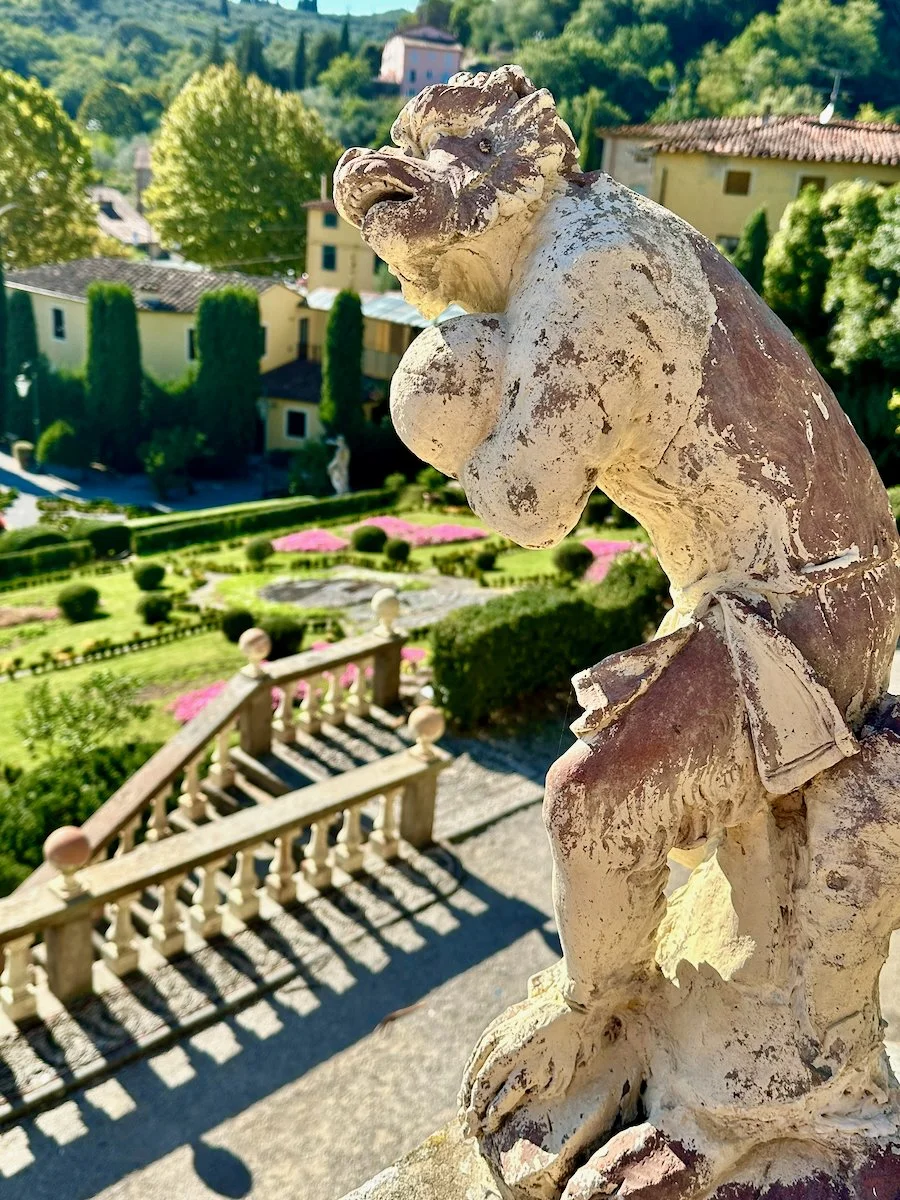
The second level is flanked by the Alley of Pomona with potted lemon trees. The third level features a pair of indolent satyrs, while life-size monkeys perch on the balustrade and dogs peek out from grottoes beneath. Further up, the design is more naturalistic with mossy stones and two enormous stone statues personifying the rival cities of Florence and Lucca. The statues hold cornucopias with flowing water, and the emblematic animals of the cities lie at their feet—the panther of Lucca, and the lion of Florence. This spot offers a stunning view through the surrounding trees of the parterres below, and the Tuscan hills in the distance.
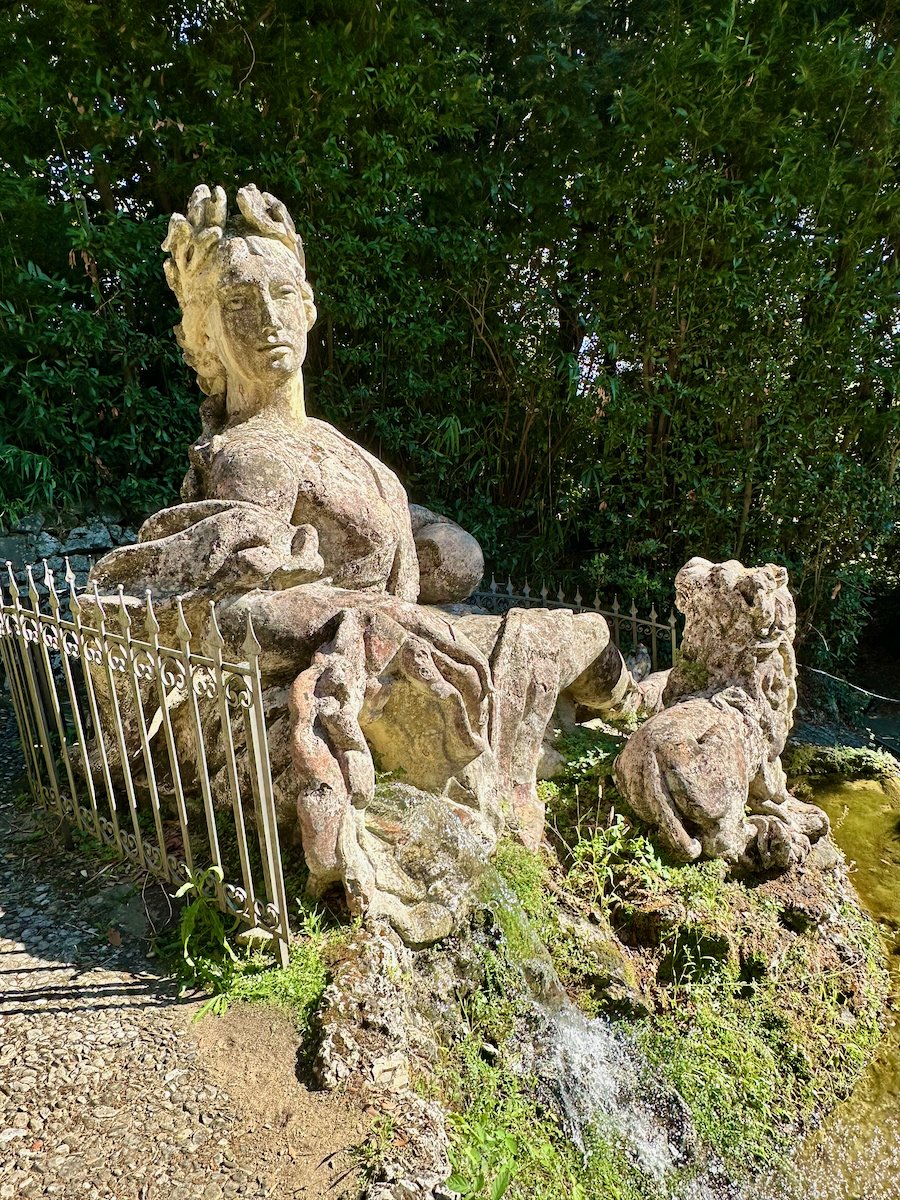
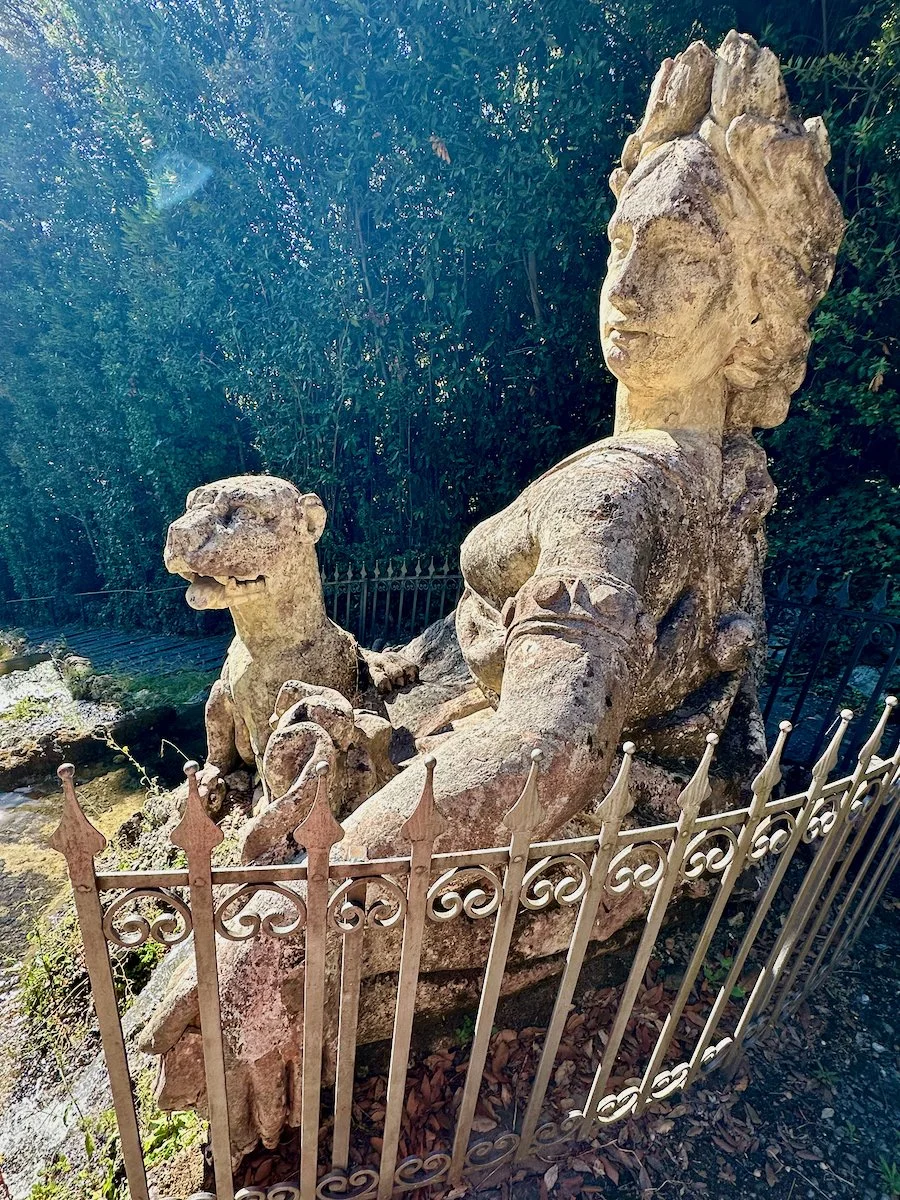
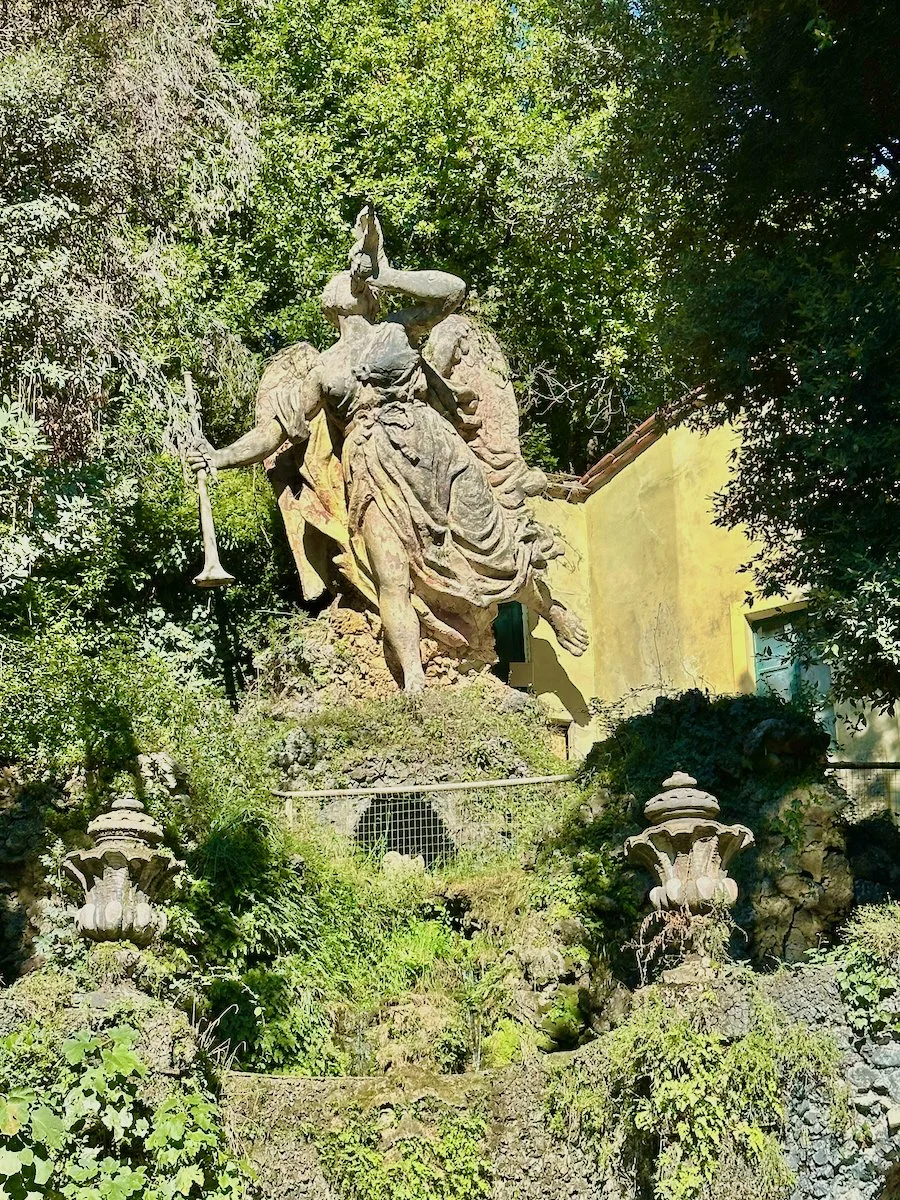
Water provides the garden’s most theatrical performance. Cascades descend the hillside through channels and small basins, creating movement and sound. At the summit, a monumental statue of the goddess Fame blows into a seashell, with a stream of water running into a pool and the cascade below. The combination of fountains, grottoes, and descending water demonstrates the ingenuity of Baroque garden engineering.
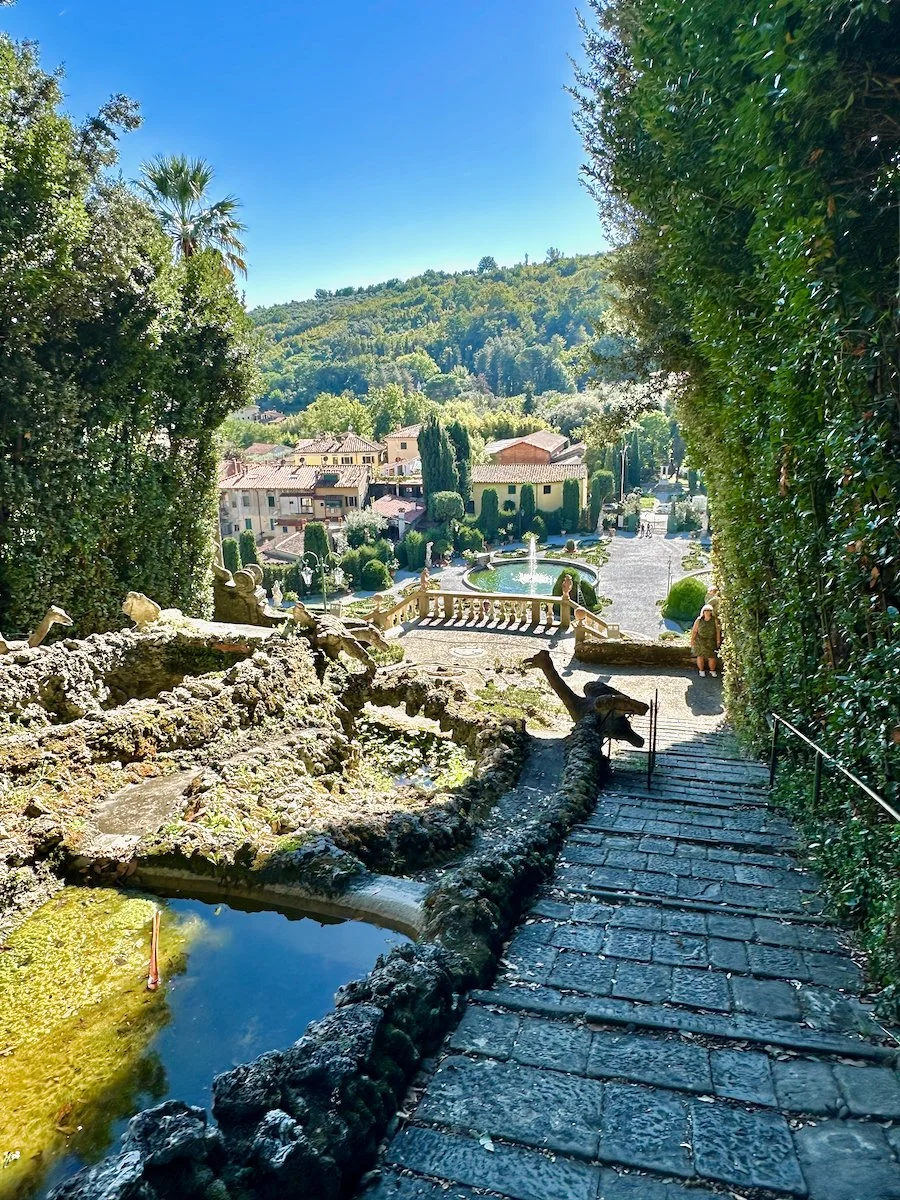
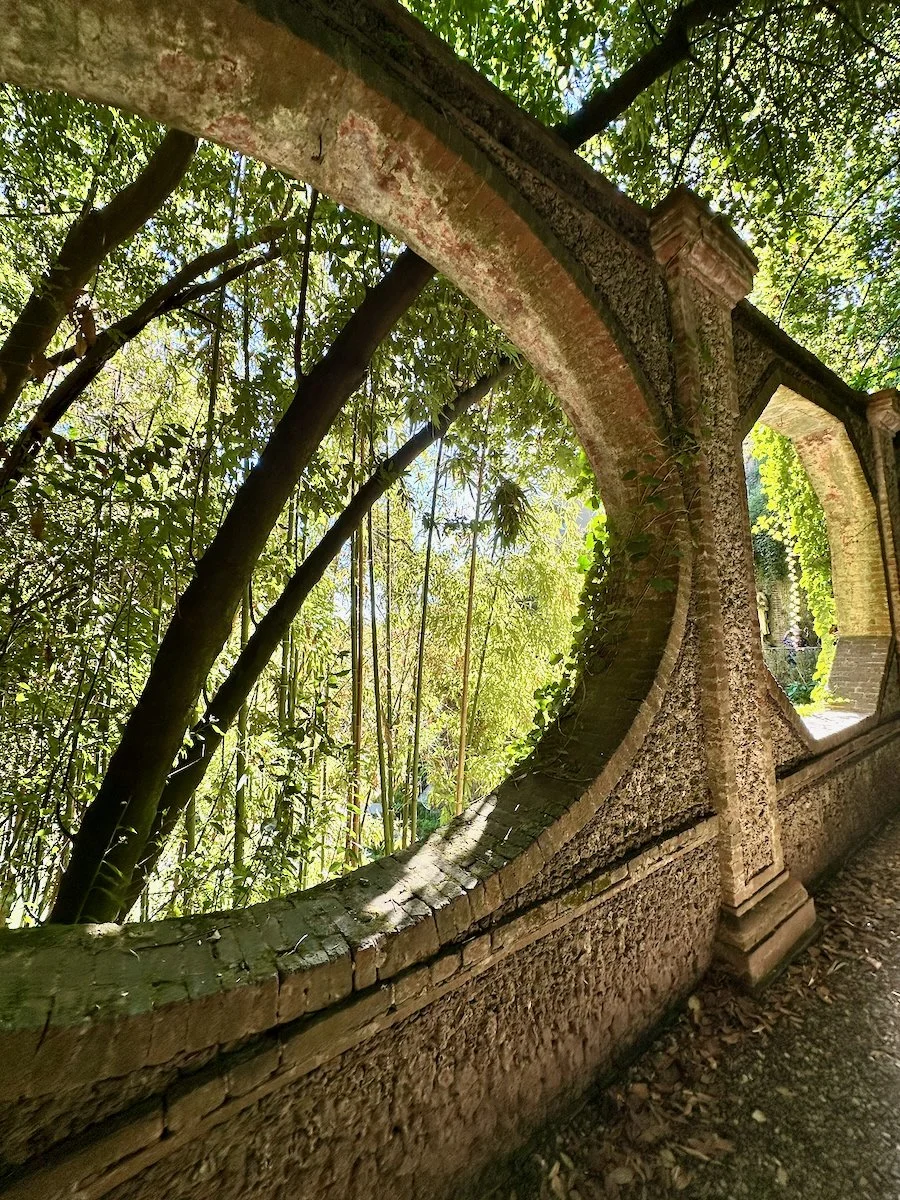
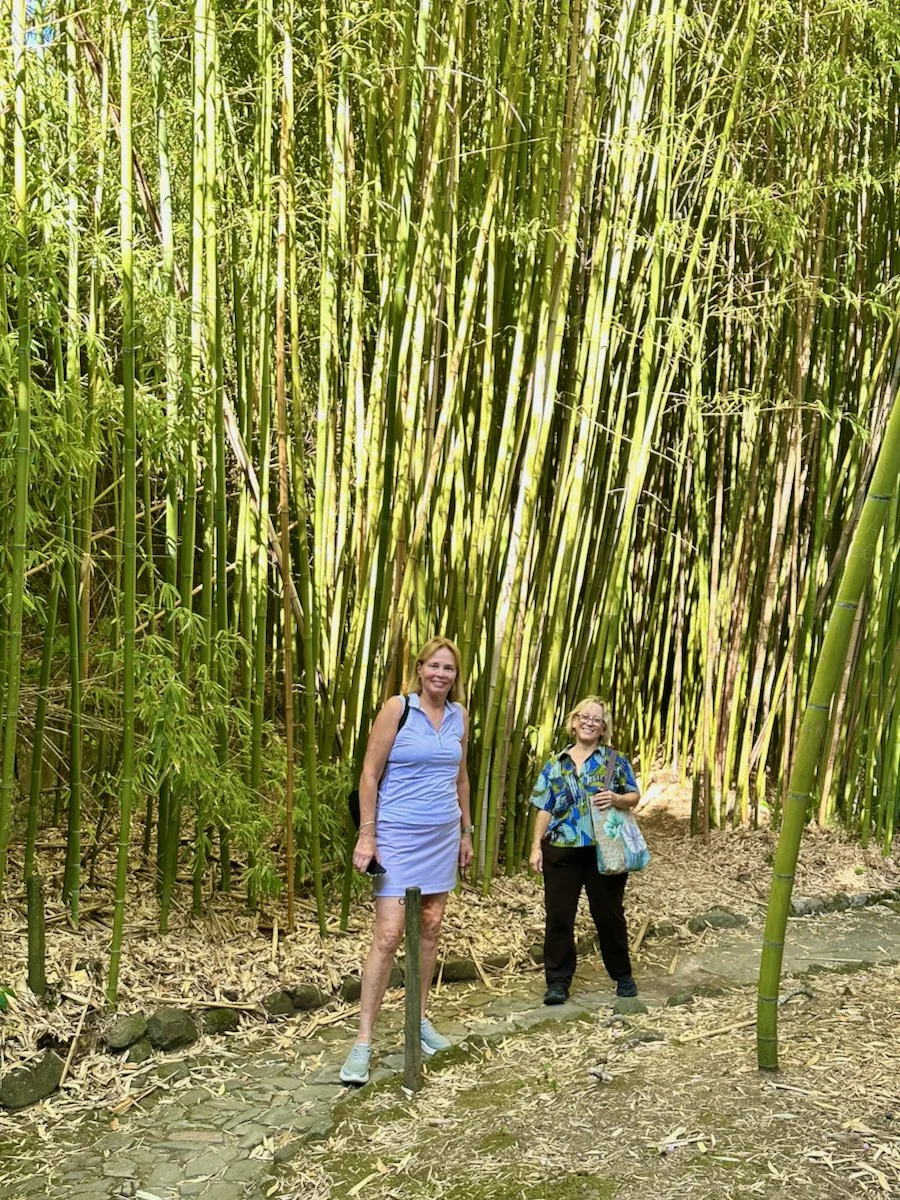
Not every area is formal. Beyond the main staircase, wooded sections provide shade and contrast with the carefully clipped terraces. Paths wind through evergreen plantings, and over a terrace which offers views of the bamboo forest below.
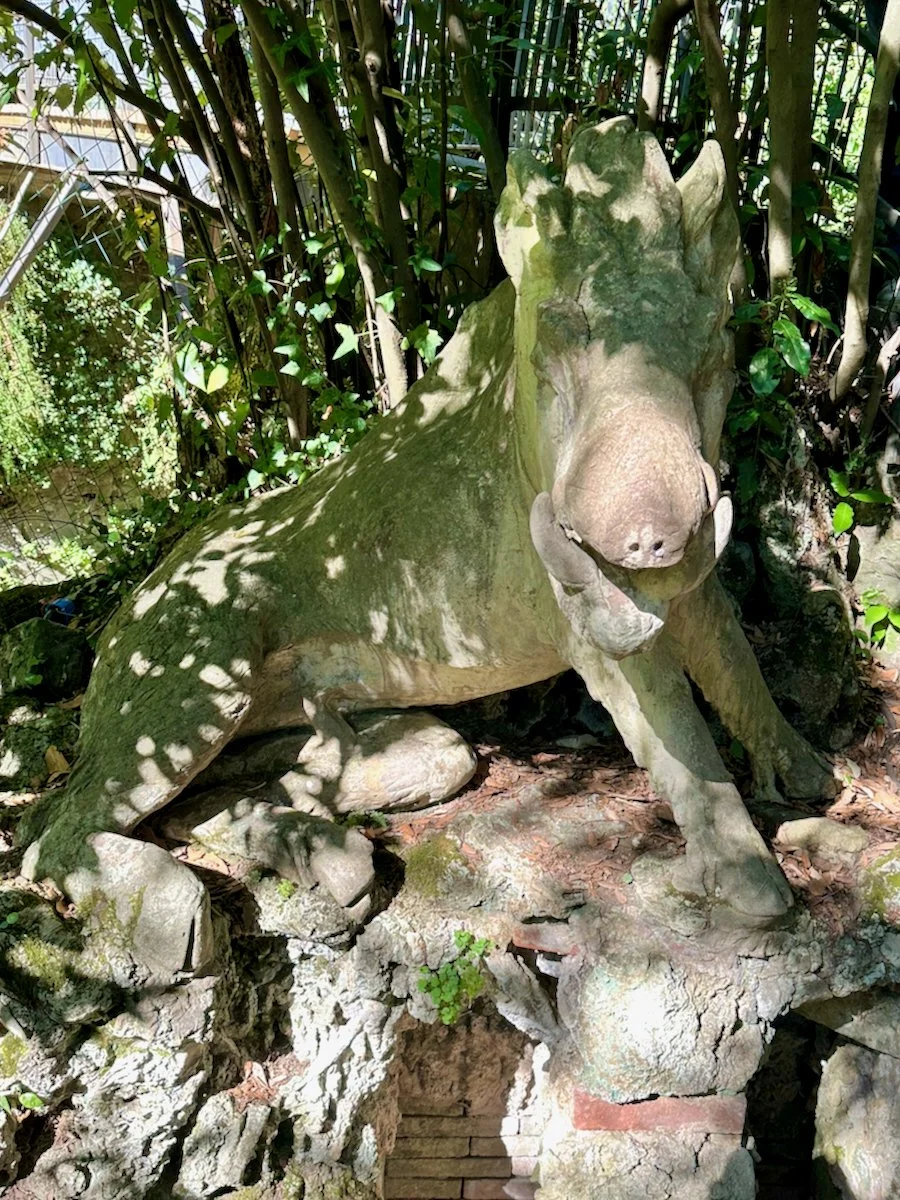
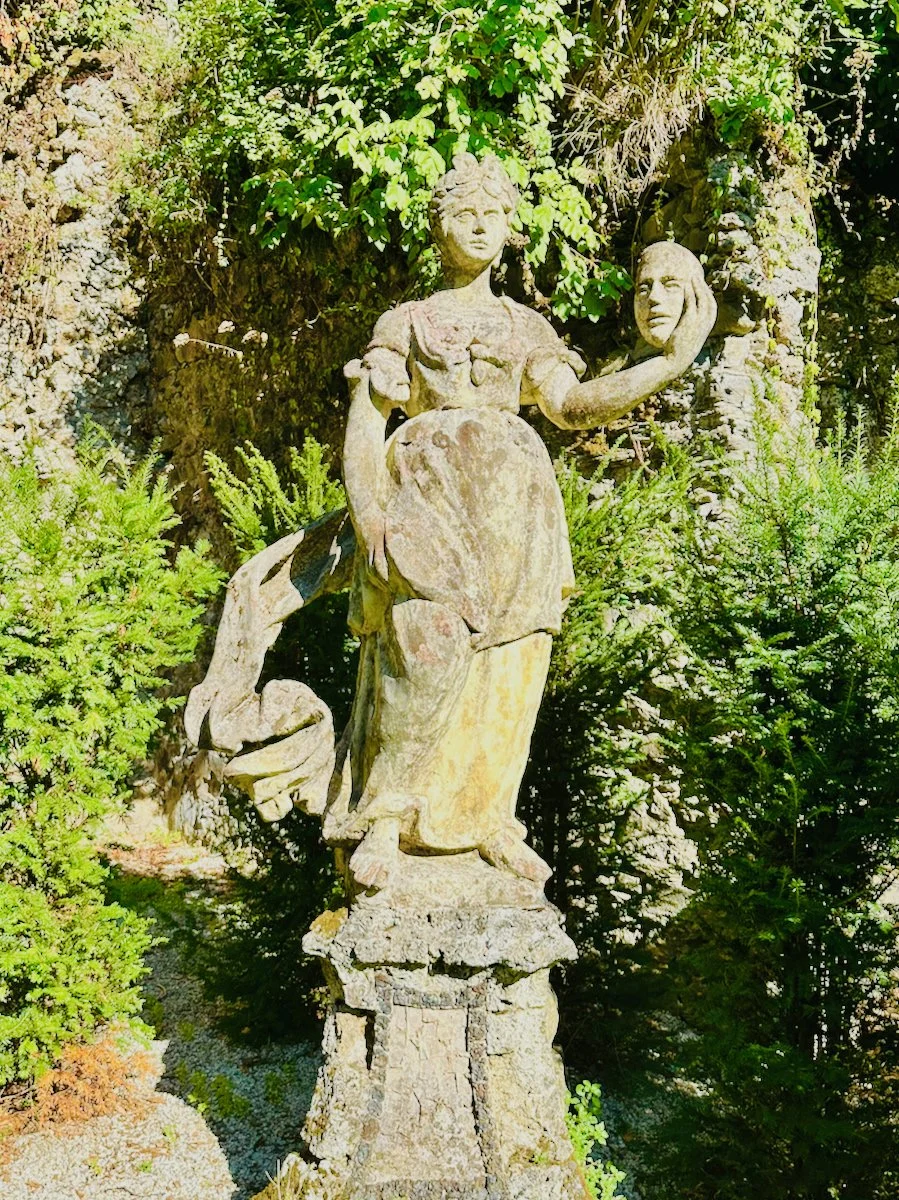
The statue of a boar guards the entrance to the teatro di verzura, or green theater. Here, clipped hedges form living wings around a small stage framed by statues of Comedy and Tragedy holding the mask and the crown.
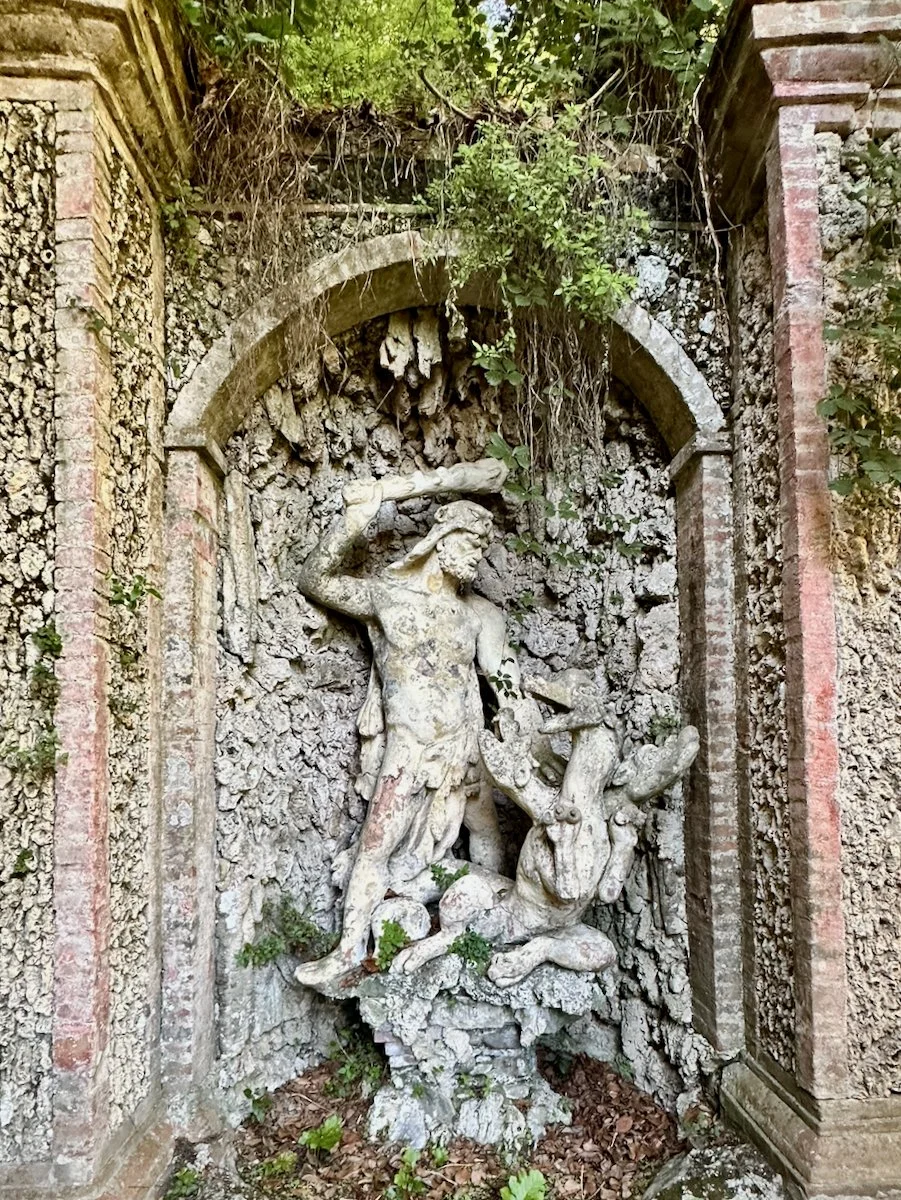
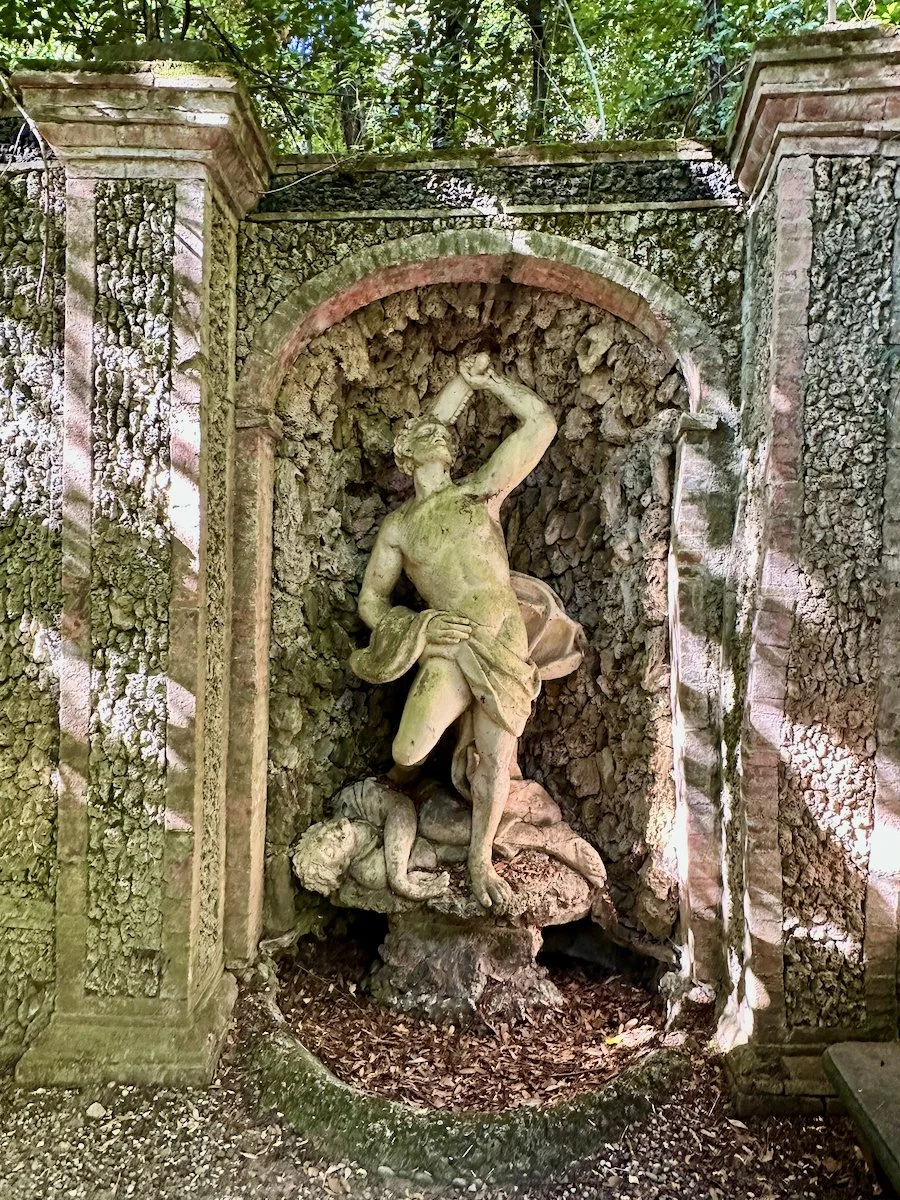
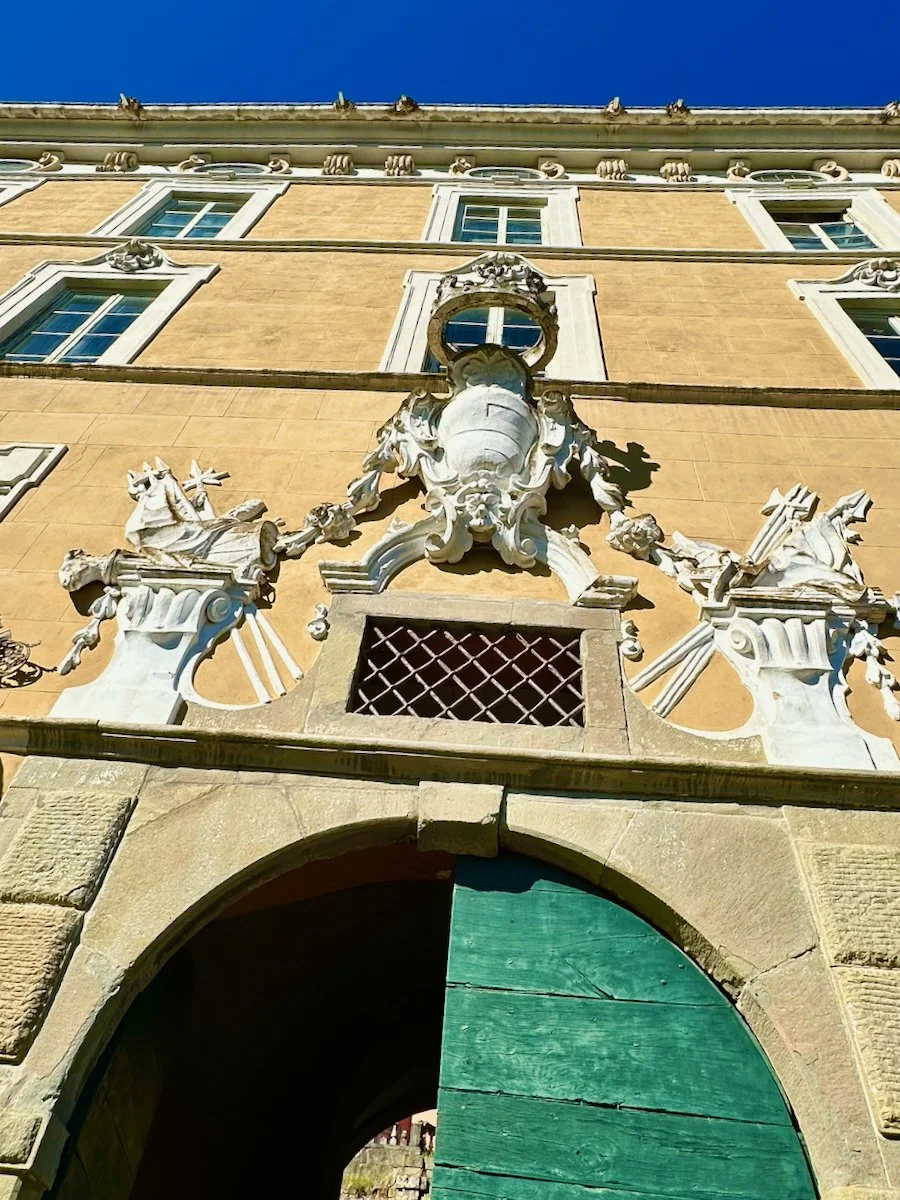
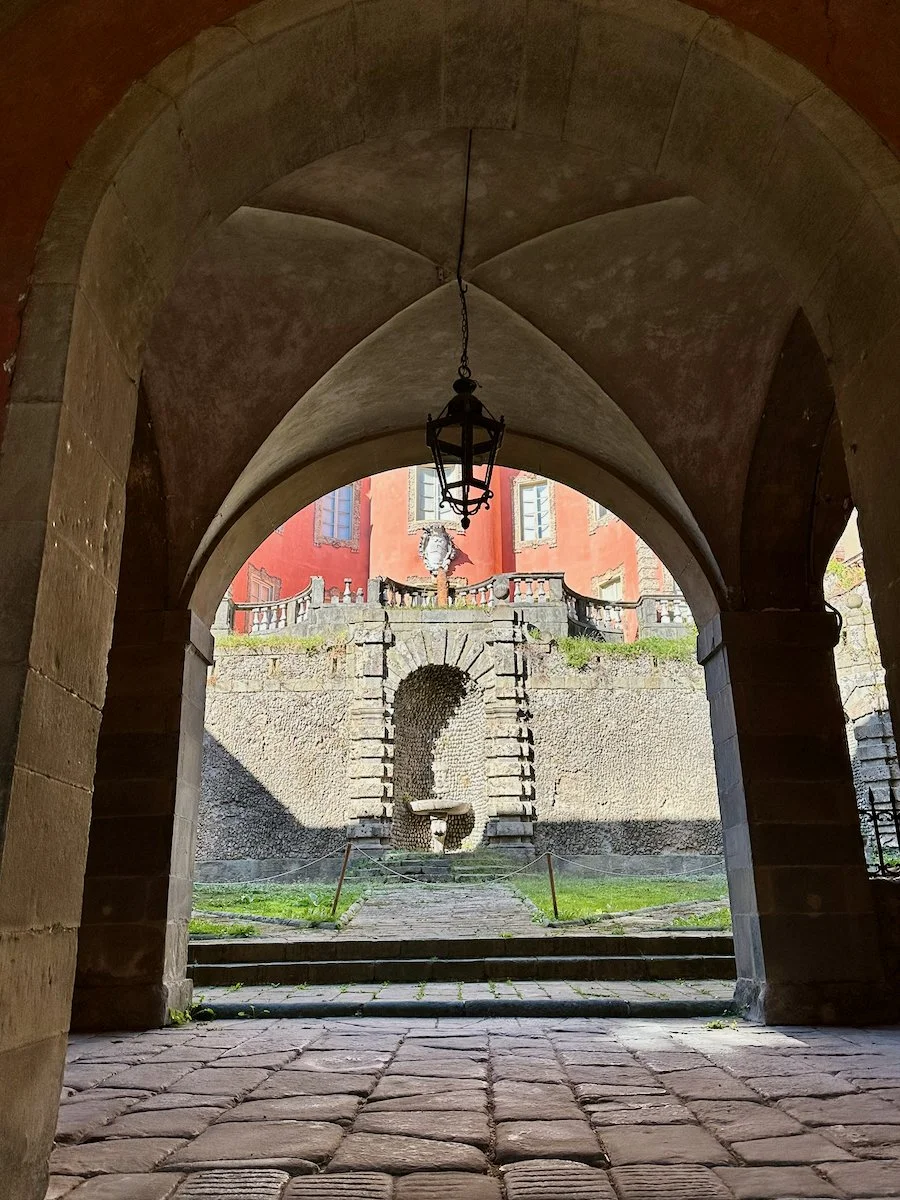
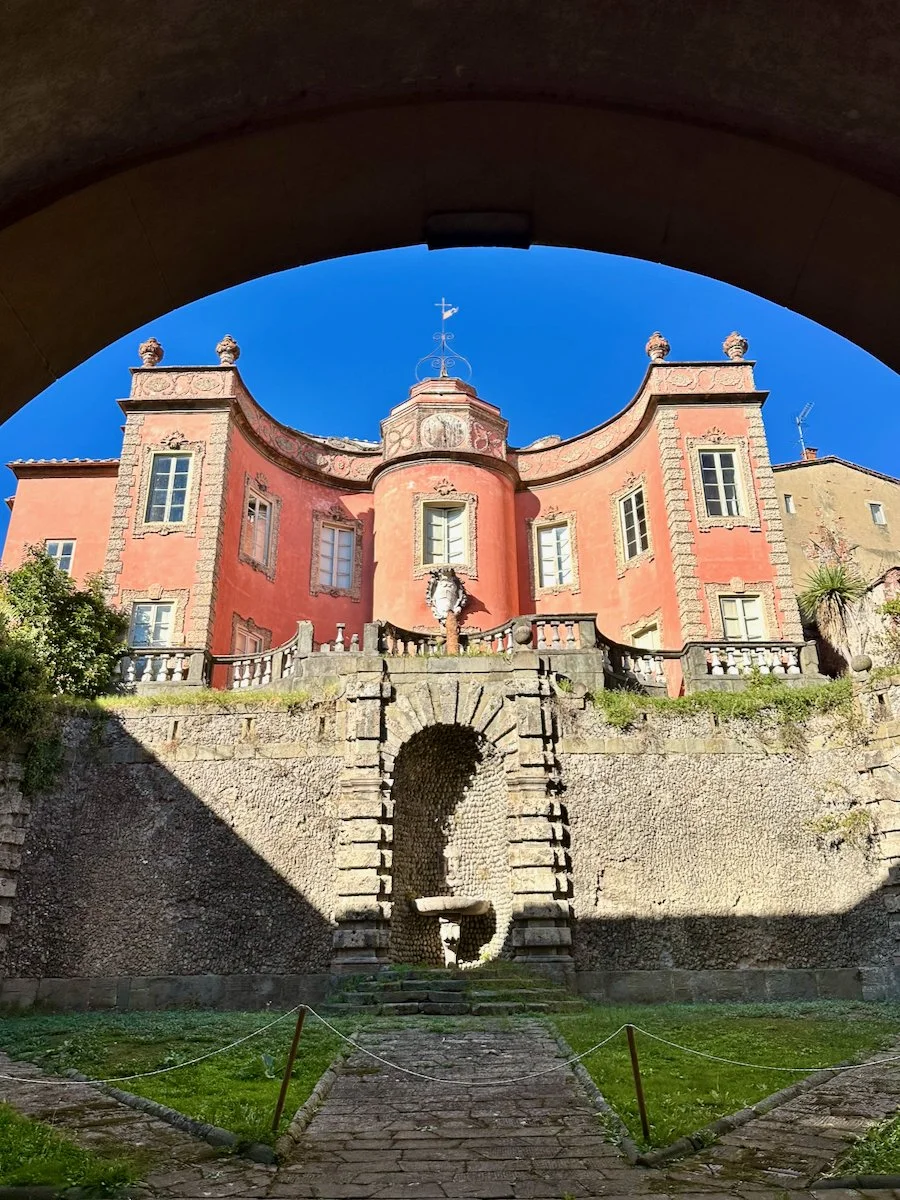
The villa and gardens are privately owned, and the villa is currently closed for reconstruction. You can walk through the vaulted hall which opens up on an inner courtyard with a terraced wall punctuated my niches with fountains.
The embankment is crowned with a rococo summer pavilion with an intricate curved shape which screens the villa from the overhanging town above it. This folly, with its patinated brigh red facade, was added at the end of the 18th century,
For gardeners, Villa Garzoni offers enduring lessons in design. Evergreen hedges provide structure throughout the year, terraces make steep ground usable, and fountains and statuary create focal points that reward exploration. Most importantly, the garden shows how a strong central composition can unite many different experiences—from formal parterres to shaded woodland, from playful topiary to monumental waterworks.
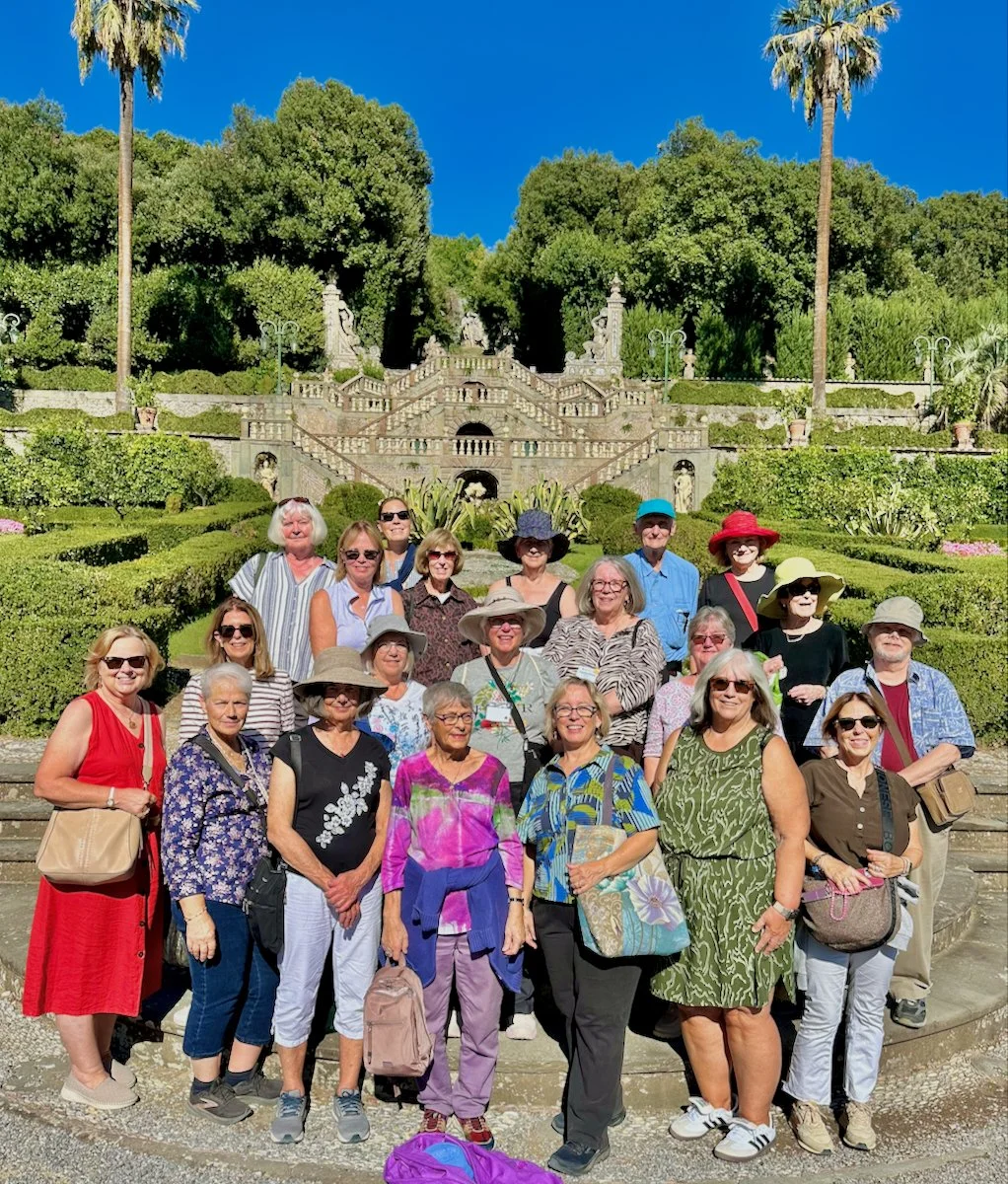
With its bold layout and imaginative motives, Villa Garzoni and its gardens are a form of theater: every staircase, fountain, and carefully framed view contributes to a landscape designed to astonish and delight. It is one of the most spectacular Baroque landscapes of 17th-century Italy, and was one of the destinations of the 2026 tour The Garden Tourist’s Tuscany.