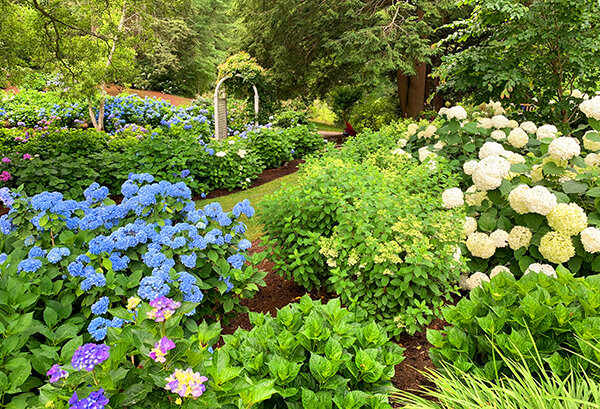
The Avon Flower House: A Garden of Passion, Color, and Conifers
/
all photos by chrissie d’esopo unless noted
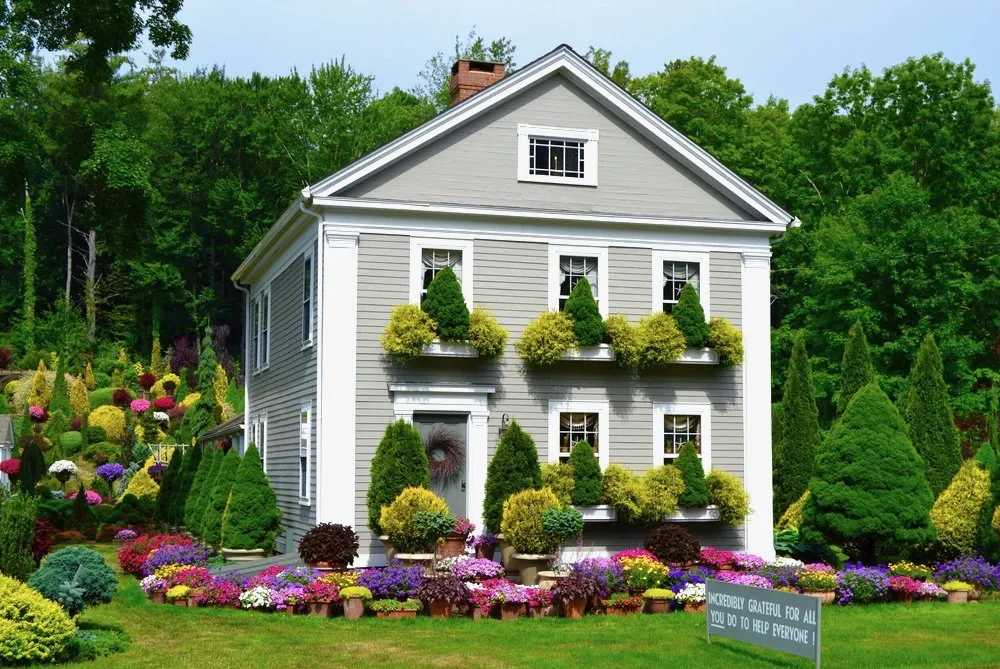
On a recent trip to Connecticut, I was fortunate to enjoy an impromptu tour of The Avon Flower House, a local legend along Route 167 in Avon. Even at highway speed, the garden demands attention. Bursting with color and exuberant plantings, it seems to leap from the landscape and beckon passing motorists to stop. That irresistible garden is the life’s work of Chrissie and John D’Esopo, who have spent more than four decades transforming their three-acre property into an extraordinary expression of their creativity, curiosity, and love of plants.
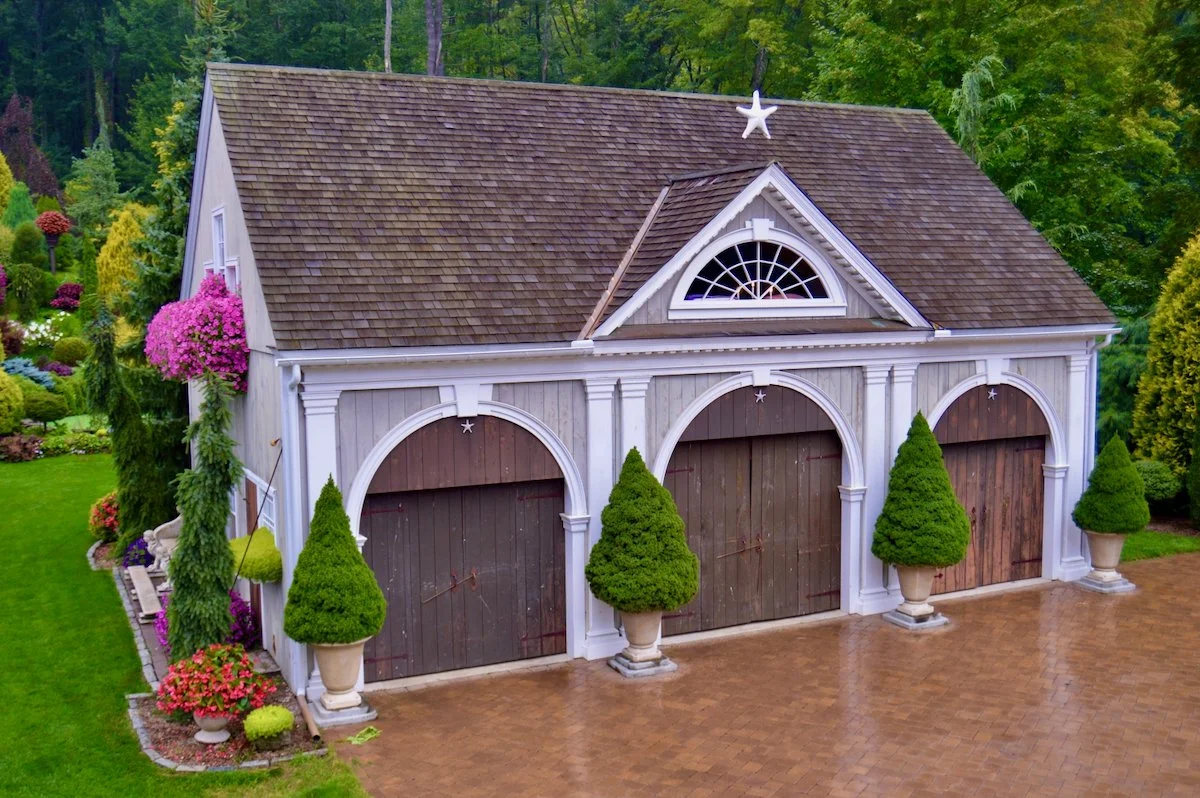
The D’Esopos purchased the property in 1985, including a long-neglected Greek Revival house that had been abandoned for years. The rear wing dated to 1760, and the house had neither electricity nor plumbing or heat. Fortunately, John was a builder, and together he and Chrissie undertook the daunting restoration. They reglazed the windows, refinished the floors, restored the woodwork, and built cabinetry. Chrissie painted every inch of the house herself. Once the interior was brought back to life, they turned their attention outdoors, creating walkways and stone walls from materials salvaged from structures on the property. Over the years, they added a large barn, potting sheds, a water garden, decorative arbors, and fencing.
From Petunias to a Passion for Plants
The garden began almost as soon as the D’Esopos arrived. Chrissie had loved gardening since childhood, inspired by her mother and by an experience she still remembers fondly. Her Sunday School teacher promised each student a petunia plant after completing the first year of Sunday School. On the last day, Chrissie loaded her Radio Flyer wagon with toys and walked three miles to school. While her classmates left clutching their single petunia, Chrissie began trading. By the time she headed home, she had exchanged her toys for 24 petunias—and the beginnings of a summer garden.
That early enthusiasm grew into a lifelong passion. For 25 years, Chrissie and John designed, planted, and maintained three acres of exuberant ornamental gardens filled with hundreds of annuals and perennials. Gardening became Chrissie’s creative outlet and eventually led to a career in landscape design. She operated her own landscape business for ten years, but working in clients’ gardens left little time for her own. She eventually turned to decorative painting, another way to express her artistic talent.
Then, in 2011, everything changed.
A New Obsession: Conifers
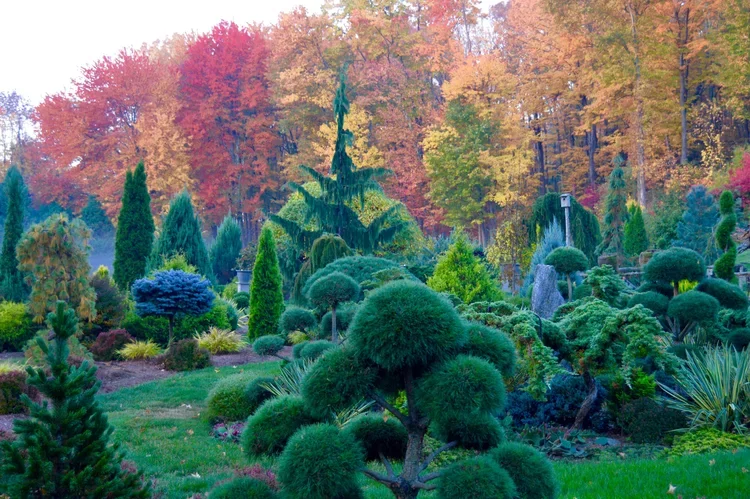
During a trip to Portland, Oregon, Chrissie and John discovered Iseli Nursery, renowned for its collection of rare and dwarf conifers. They were immediately captivated by the possibilities. Conifers offered everything Chrissie loved about plants—color, structure, texture, and form—but with the added advantage of year-round interest.
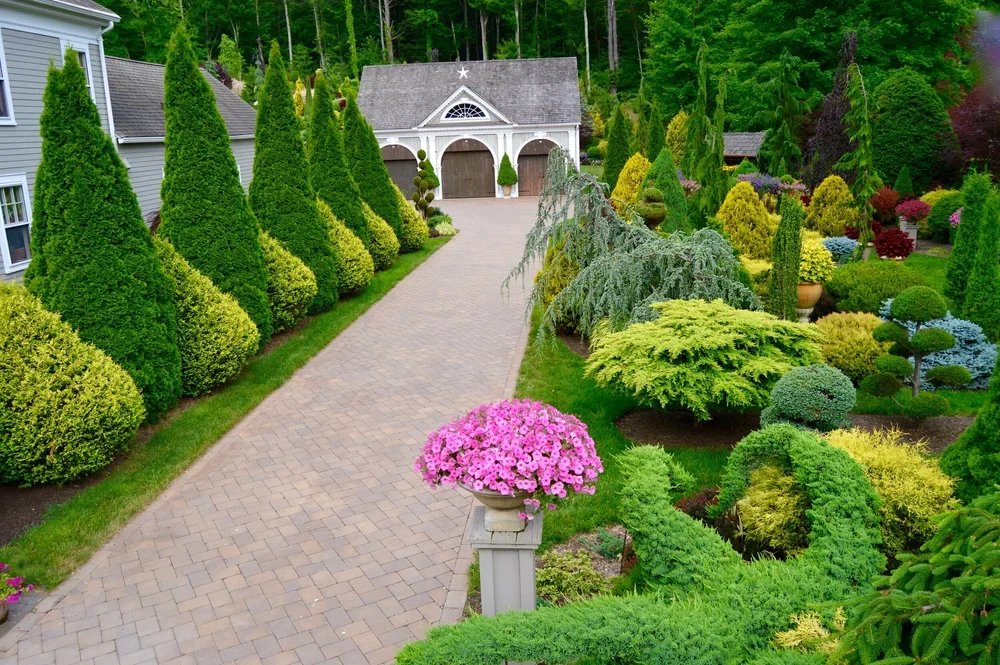
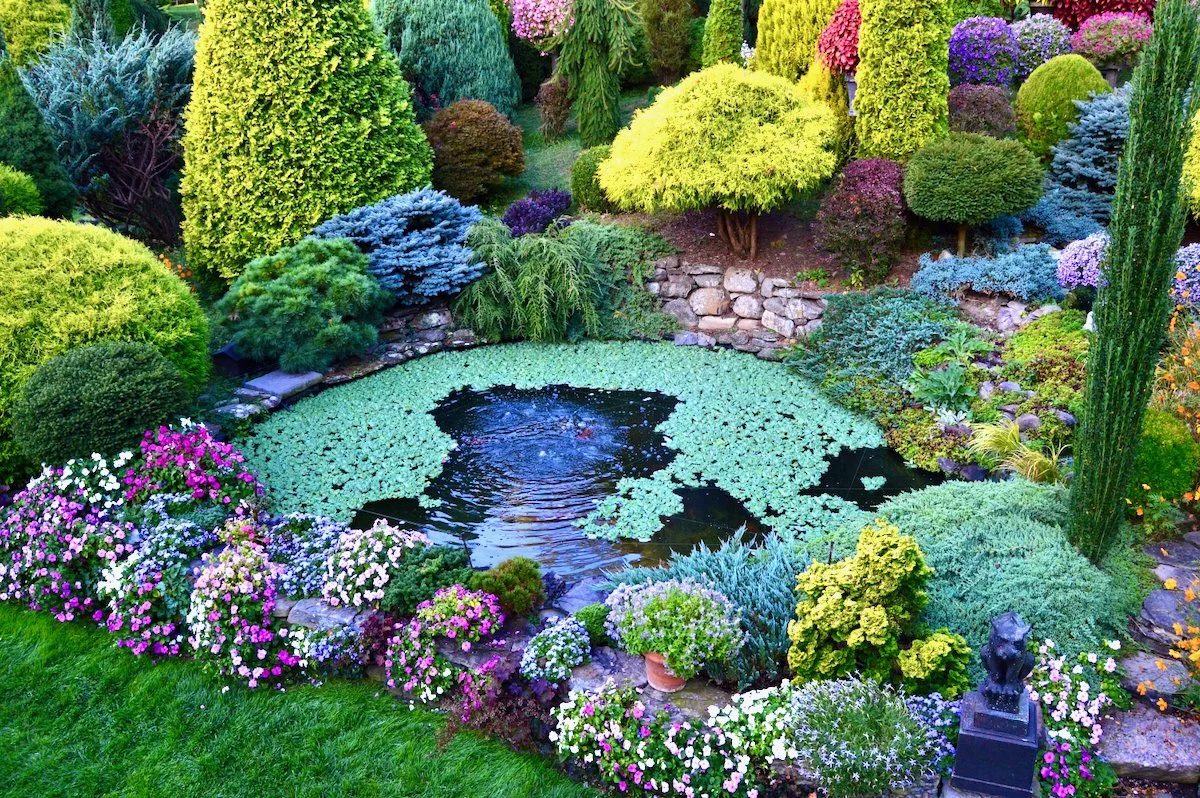
The flower gardens were dismantled, and hundreds of perennials were donated to local daylily and hosta societies, friends, and fellow gardeners. In their place came a remarkable collection of conifers. Over the next several years, the D’Esopos visited nurseries throughout the region, collecting hundreds of trees and shrubs in an astonishing array of shapes, sizes, colors, and forms. Many were purchased as four-foot specimens and carefully positioned to create an immediate impact.
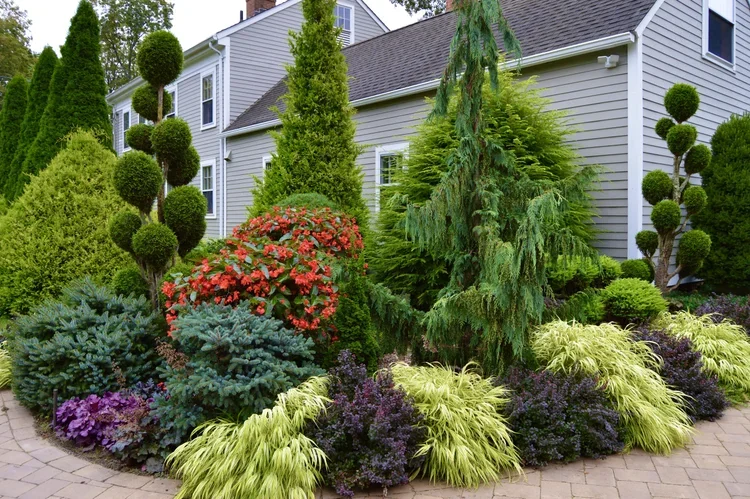
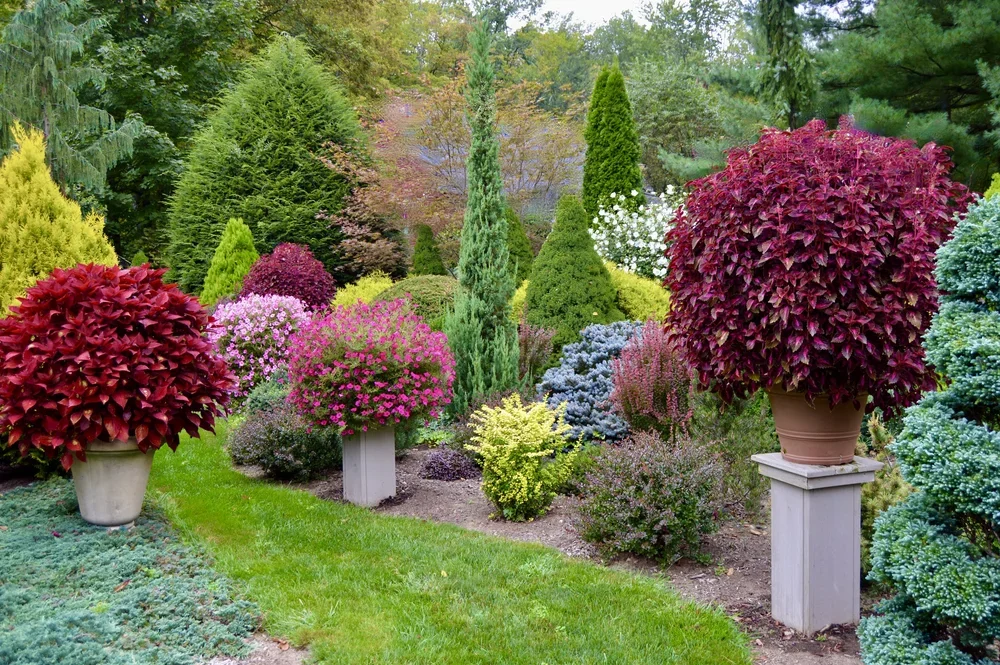
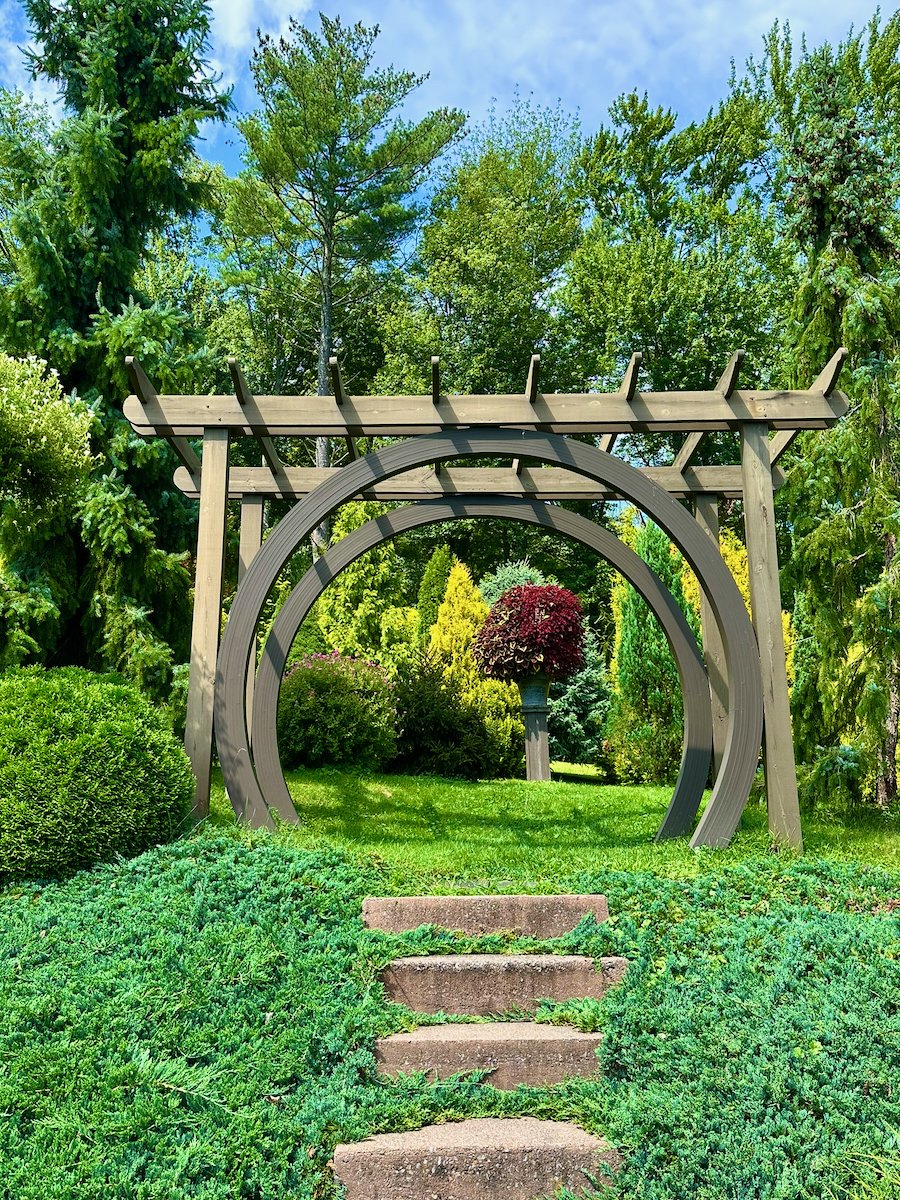
The rear slope of the property became Chrissie’s canvas. She designed the planting much as an artist might compose a landscape painting, creating undulating beds filled with carefully considered combinations of form and color. Brilliant contrasts of blue, yellow, and green conifers are punctuated by oversized pots overflowing with crimson and pink annuals. The result is a garden that remains colorful and compelling in every season.
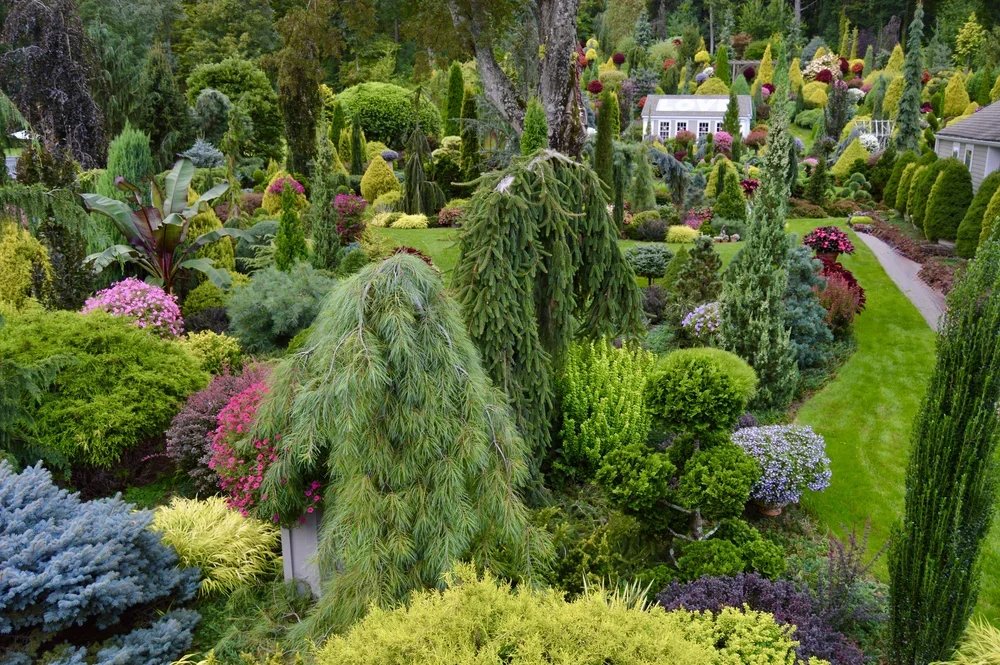
Chrissie is particularly drawn to weeping and fastigiate conifers, appreciating the strong architectural forms they bring to the landscape. Among her favorites are:
Weeping Alaska Cedar or Nootka Cypress (Cupressus nootkatensis)
Trautman Juniper (Juniperus chinensis ‘Trautman’)
Taylor Juniper (Juniperus virginiana ‘Taylor’)
Sky Pencil Japanese Holly (Ilex crenata ‘Sky Pencil’)
Weeping White Spruce (Picea glauca ‘Pendula’)
Yellow Ribbon Arborvitae (Thuja occidentalis ‘Yellow Ribbon’)
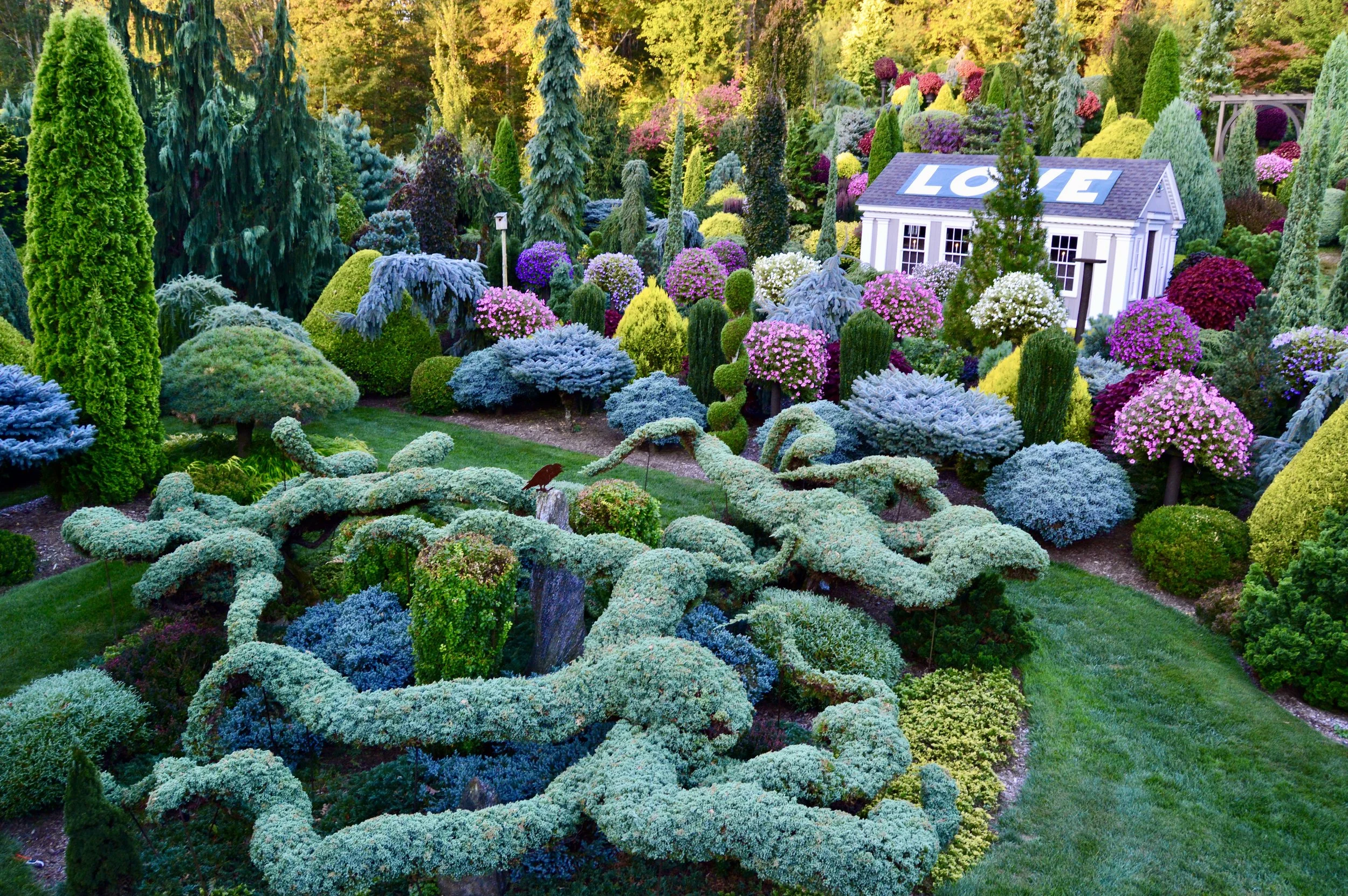
Chrissie has even transformed some of her conifers into whimsical living sculptures. In one circular garden, three Nana junipers have been pruned into intertwining octopuses, while a weeping spruce elephant appears to peer from behind a Japanese maple. These living sculptures demonstrate the versatility of conifers and the playful spirit that characterizes the entire garden.
Conifer Care from a Conifer Collector
Chrissie and John perform all the garden maintenance themselves, including pruning, mowing, mulching, planting, and watering. For Chrissie, caring for the garden is not simply work—it is part of the pleasure of gardening.
Her advice to fellow conifer enthusiasts is straightforward:
Prune conifers annually to maintain their health, beauty, and desired size.
Most conifers are pruned in late winter or early spring, although timing varies by species and cultivar.
Topiary forms require annual pruning to preserve their distinctive shapes.
For lightweight, precise hedge trimming, Chrissie’s favorite tool is a Japanese ARS KR-1000 hedge trimmer.
Pots Packed with Color
Although conifers provide the garden’s backbone, Chrissie has not abandoned her love of flowers. She adds bursts of seasonal color with hundreds of annual containers. Some line the front of the house and outbuildings; others are strategically placed throughout the garden as bright punctuation marks.
The containers are substantial—18 to 30 inches in diameter—and many are elevated on wooden pedestals and posts built by John. Their heights vary according to location, creating layers of color and drawing the eye upward. Some posts reach 15 feet high. To protect the containers from Connecticut’s winds and storms, the pots are permanently secured to their posts.
Watering such an extensive collection is a labor of love. All the containers are hand-watered using custom-designed long watering wands created by John.
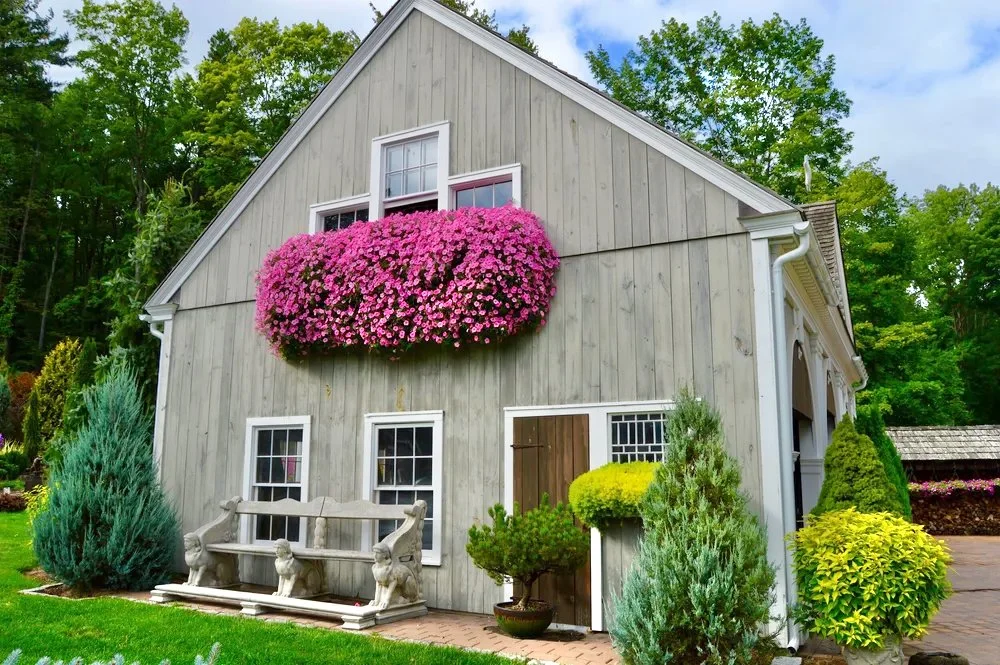
Chrissie’s favorite container plants include seven varieties of sun coleus, which can reach four feet tall and wide; Supertunias; impatiens; and blue scaevola. After years of experimentation, she has also developed her own fertilization regimen for producing vigorous annual displays.
Chrissie’s fertilizer formulas
Coleus and Supertunias: At planting, mix a generous amount of Osmocote slow release fertilizer into the pot using the following proportions:
50 percent Osmocote 18-6-12
50 percent Osmocote 14-14-14
Impatiens: At planting and every three weeks water with Schultz fertilizer, diluted in water as directed, using a combination of:
50 percent Schultz 10-54-10
50 percent Schultz 20-20-20

Gardening with Bears
Even a garden as carefully tended as The Flower House has its challenges. With such a large collection of conifers, fungal problems can occasionally develop. But the garden’s most surprising—and destructive—visitors are black bears.
Bears have become increasingly common in Connecticut, and mother bears with cubs visit the D’Esopos’ property every year. The cubs apparently find the conifers irresistible climbing structures. When a cub refuses to come down, its mother simply climbs after it. The D’Esopos lose several mature conifers to this annual spectacle.
Rather than becoming discouraged, however, they have adopted a gardener’s philosophy of resilience. Each damaged tree becomes an opportunity to plant something new and exciting.
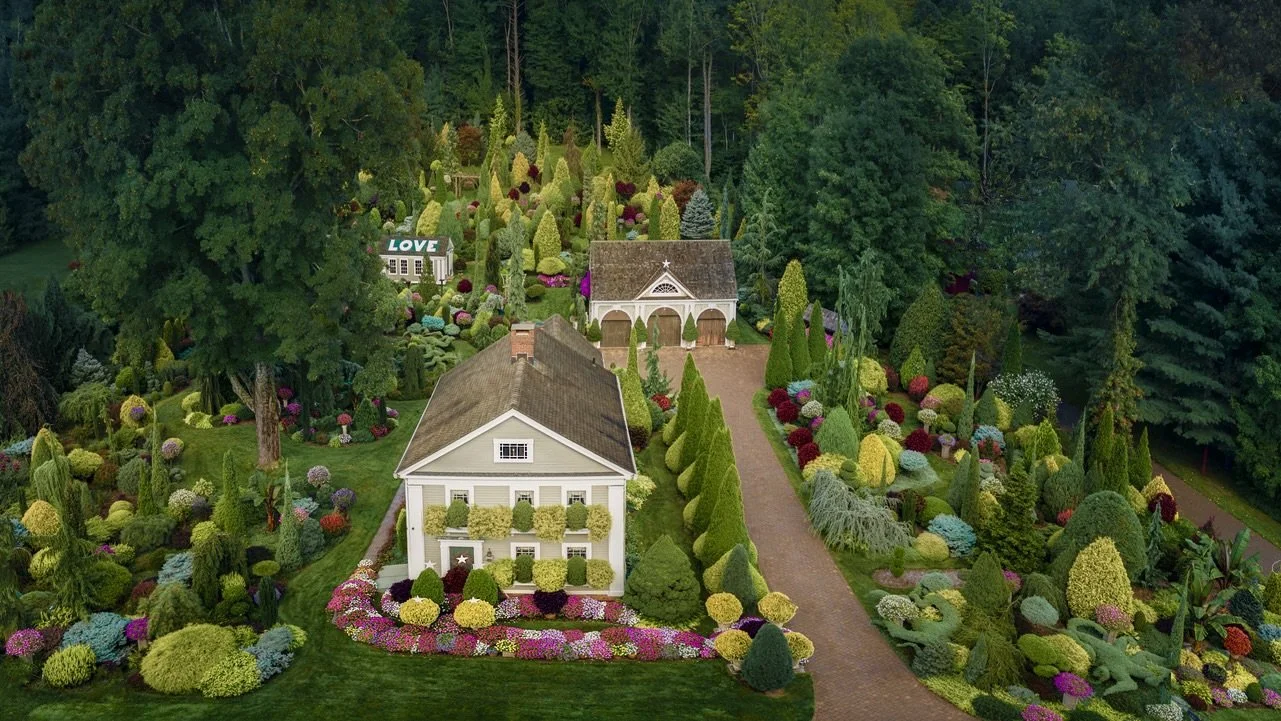
photo by steve silk
A Garden Meant to Be Shared
Perhaps the most appealing quality of The Avon Flower House is that it is a garden meant to be shared. Chrissie and John welcome friends, neighbors, garden enthusiasts, and curious visitors, having hosted people from around the world. They open the garden through Garden Conservancy Open Days and for scheduled garden club tours.
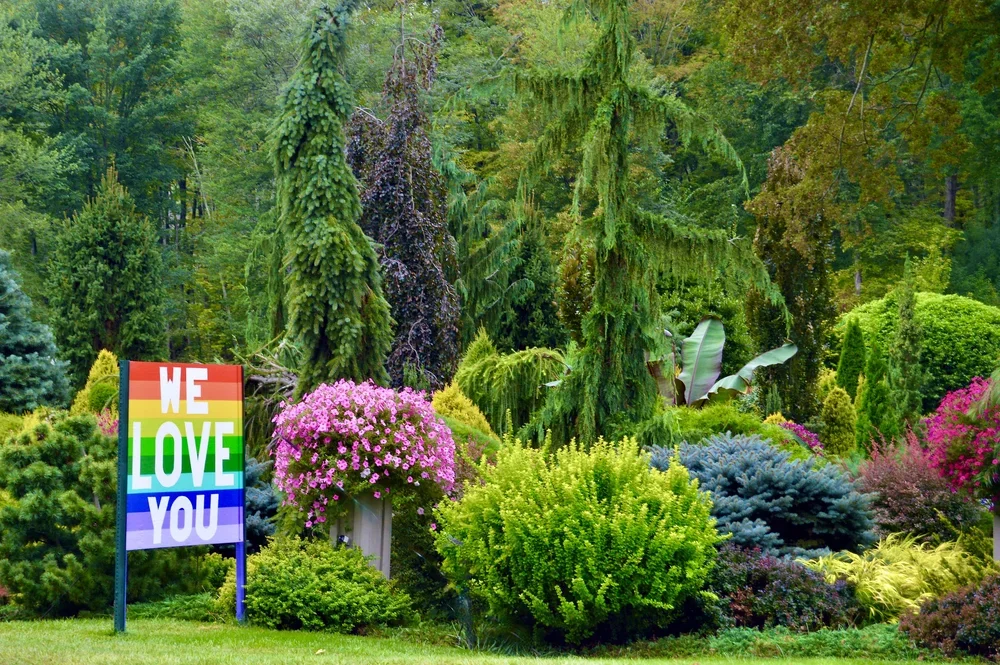
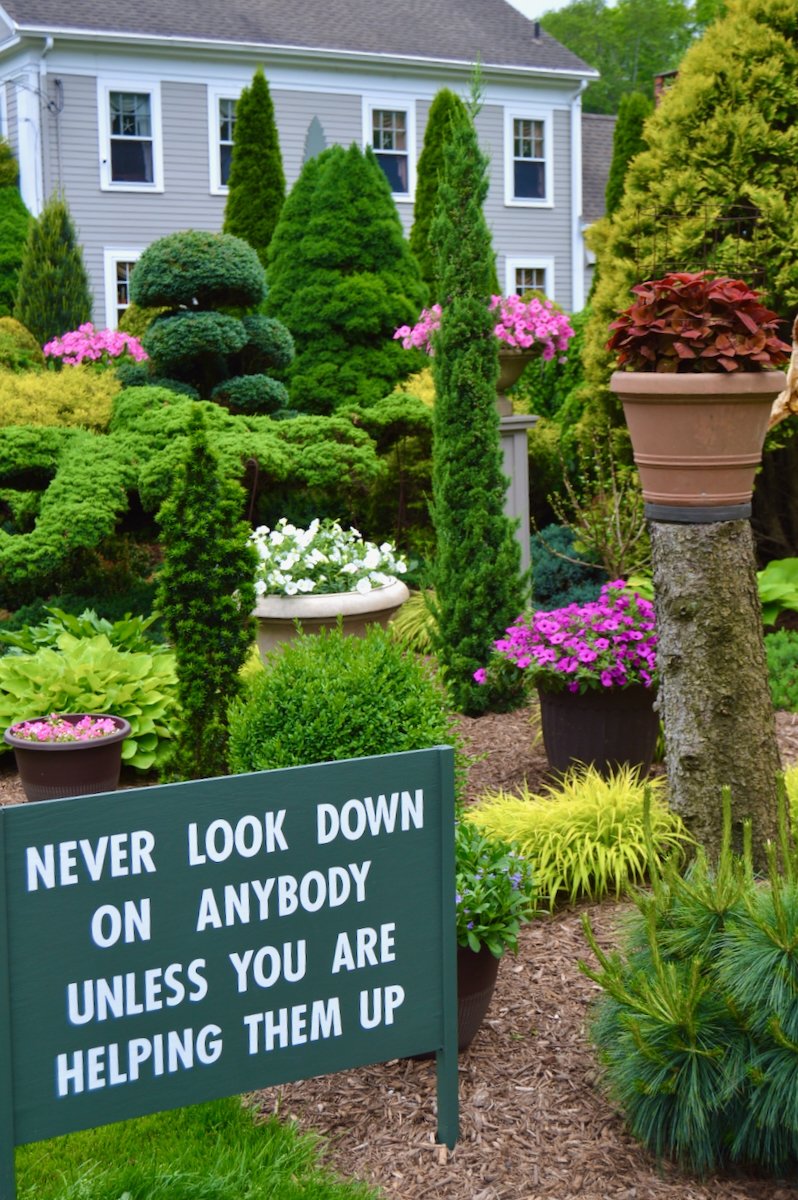
Throughout the property are signs bearing messages of love, encouragement, and affirmation. They began appearing after Chrissie experienced a serious illness and have become an integral part of the garden’s character. Like the plants themselves, they offer beauty, hope, and inspiration to everyone who passes by.
After four decades of planting, pruning, restoring, experimenting, and dreaming, Chrissie and John D’Esopo have created far more than a remarkable garden. The Flower House is a portrait of two gardeners who followed their passions wherever they led—from petunias to perennials, from flowers to conifers, and from conventional planting to living sculpture. Most of all, it is a reminder that the greatest gardens are often those in which the gardener’s personality shines through every path, plant, pot, and carefully pruned branch.

To arrange a group tour of this private garden, please contact Chrissie at chrissie.desopoatgmail.com